Ask any farmer what he hates most about spraying, and it's almost never the chemical. It's the pumping. Up, down, up, down, one arm on the handle, the other holding the lance, and the sun sitting right on your neck. By the third tank your shoulder is gone, and the spray is patchy anyway.
That's why more farmers are now looking at a battery sprayer. But there are plenty of models out there, and a wrong pick costs you more than money. It costs you a whole season of tiring work. So let's keep things simple and talk about what really matters.
What Does It Actually Do?
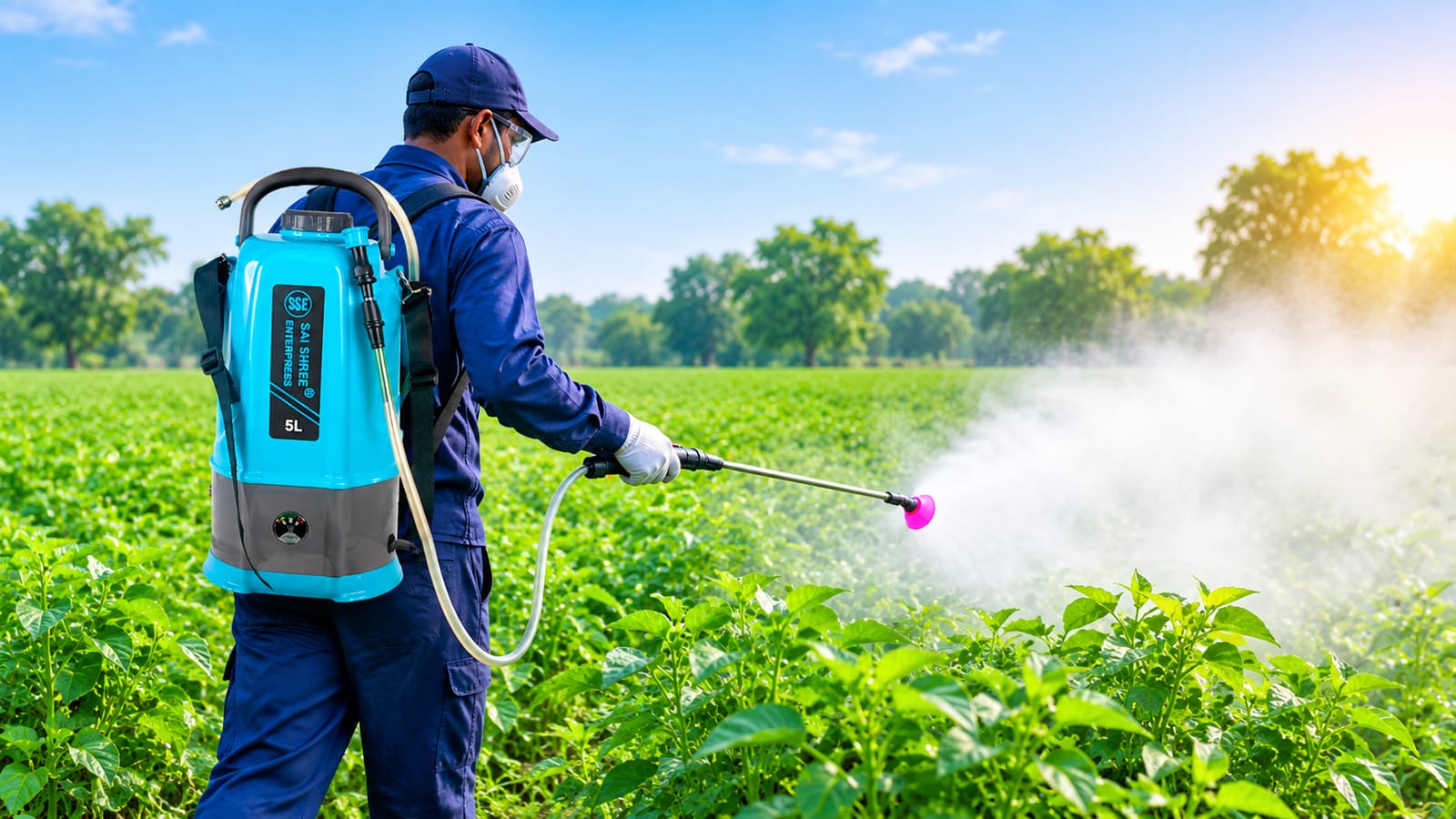
A battery sprayer is simply a spray pump that runs on a rechargeable battery, so you don't have to hand-pump it. Fill the tank, press the trigger, and a small motor keeps the pressure steady. You can use it for pesticides, fertiliser mix, weedicide, or even sanitiser in a poultry shed or godown.
Tank Size: Don't Just Go Big
A 5 litre tank is plenty for a home garden, a nursery or a few vegetable beds. For bigger plots, most farmers choose 12 to 16 litres. Bigger sounds better because you refill less. But a full 16 litre tank on your back is heavy, and by afternoon you'll feel every kilo. Pick the size you can carry for a full day, not the one that looks good in the shop.
The Battery Matters More Than You Think
The battery is the heart of the machine. Go for lithium-ion if you can. It's lighter, charges quicker and lasts longer than the old lead-acid type. A removable battery is even better, because you can charge a spare while you work.
Ask the seller one plain question: how many hours on a single charge? If he can't answer, walk away. A good battery sprayer should last through your normal spraying day without begging for a socket.
Nozzles and Pressure
One nozzle can't do every job. Pesticide needs a fine mist so it sticks to the leaf. Weedicide needs a wider, softer spray so it doesn't drift onto your crop. So check that the machine comes with a few nozzles and lets you control the pressure. Otherwise you'll end up buying extras from the local market, and those rarely fit well.
Build, Weight and Straps
Pick it up in the shop. Really. Tap the tank: thick, sun-resistant plastic lasts many seasons, while thin plastic cracks. Look at the joints and seals, because leaks start there. And check the straps. Wide and padded is good. Thin and rough will cut into your shoulder within an hour.
Spares and Service
Everything wears out in the end: seals, nozzles, the pump, the trigger. What matters is how fast you can get a replacement. A spray pump lying idle in peak season is a real loss. Choose a company that keeps spares in stock and actually picks up the phone.
Which Size Suits Your Farm?
Choosing the right tank size depends on your farm type and spraying requirements.
Home Garden or Nursery (5 Litre): Look for a lightweight sprayer that is easy to carry and comes with multiple nozzle options for convenient spraying.
Small Vegetable Farm (12 Litre): Choose a sprayer with a strong battery and padded straps for comfortable use during regular spraying tasks.
Large Field Crops or Orchard (16 Litre): Opt for a sprayer with a spare battery, sturdy construction, and easy access to servicing for efficient operation over larger areas.
Mistakes to Avoid
Buying the cheapest model and replacing it next year.
Never asking about a spare battery.
Skipping the rinse after spraying, then wondering why the nozzle chokes.
Mixing chemicals without reading the label.
Keep It Running Longer
Rinse the tank with clean water after every use. Clean the nozzle. Charge the battery fully before you store it, and keep the machine in shade, away from rain. Do this much, and a good battery sprayer will give you many seasons of work.
Conclusion
We're based in Indore, and we've been working with agricultural equipment since 2011. Everything we make is proudly Made in India, and spares are always in stock, so you're never left waiting. Our 5 litre battery spray pump comes with a removable rechargeable lithium-ion battery, multiple spray nozzles and a light body that's easy to carry. It works well for gardening, farming and sanitisation.
If you want a dependable battery sprayer at an affordable price, visit saishreeenterprises.in We'll help you pick the right one.
FAQs
Which tank size is best for a battery sprayer?
It depends on your land. A 5 litre tank is enough for gardens and small plots, while 12 to 16 litres suits bigger farms. Choose what you can carry comfortably.
How long does one charge last?
That depends on the battery size and the pressure you set. Check the maker's rating, and keep a spare battery if you spray for long hours.
Can I spray pesticides and fertilisers with it?
Yes, in most cases. Use the right nozzle for each job and follow the label on the chemical. Rinse the tank well when you switch from one product to another.
Is it better than a manual pump?
For most farmers, yes. It cuts hand fatigue, keeps the pressure steady and covers more area in less time.
How do I make the battery last longer?
Charge it fully, keep it out of direct sun, and don't let it drain to zero again and again.