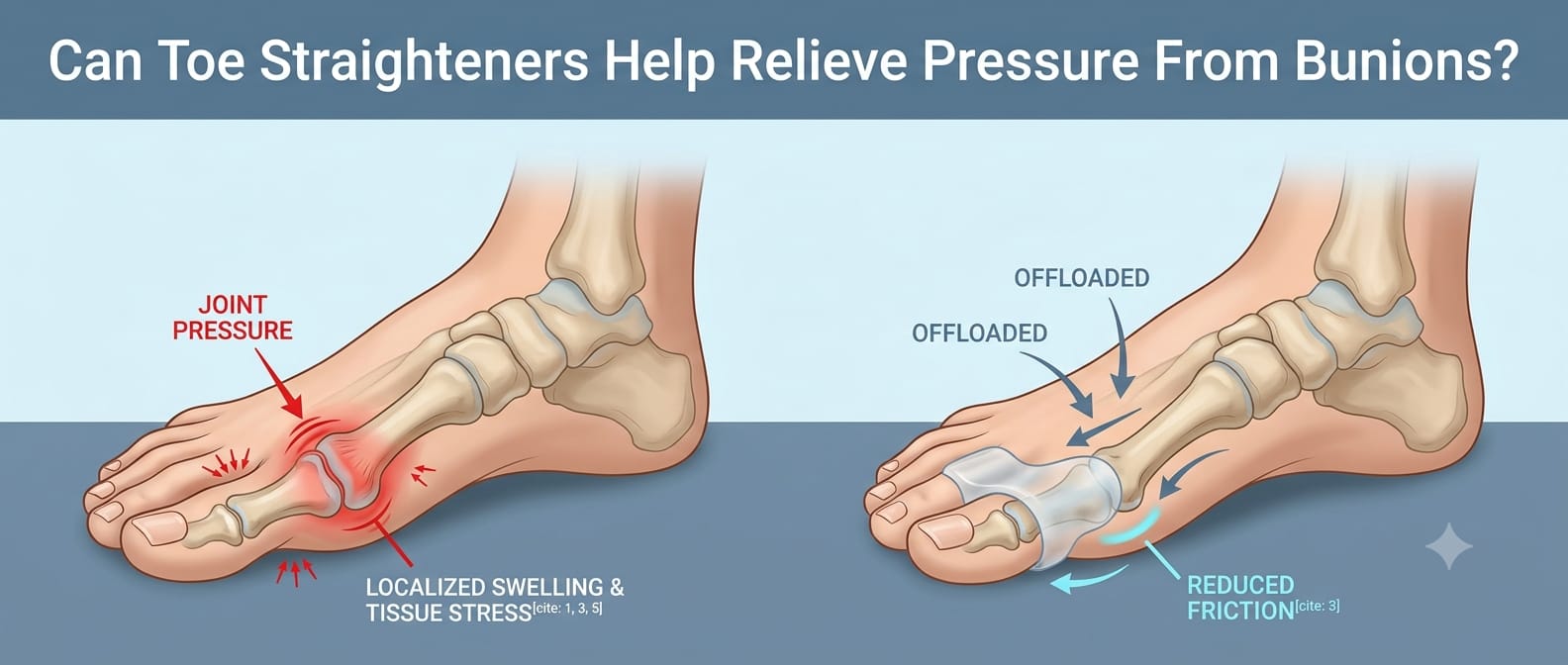
Bunions can make everyday activities such as walking, standing, and wearing shoes uncomfortable. The bony bump that forms near the base of the big toe may become irritated when footwear presses against it. For some people, a Toe Straightener may help reduce friction between the toes and provide temporary comfort. However, understanding how these devices work, what they can realistically do, and when to seek professional advice is important before adding one to your foot-care routine.
What Are Bunions and Why Do They Cause Discomfort?
A bunion, medically known as hallux valgus, develops when the bones around the big toe joint gradually shift out of alignment. This can cause the big toe to angle toward the smaller toes, creating a noticeable bump on the side of the foot.
Bunions can develop for several reasons, including inherited foot structure, differences in foot mechanics, and conditions that affect the joints. Shoes with narrow or pointed toe boxes may increase pressure on the affected area and make existing symptoms more noticeable.
Common symptoms include:
Pain or tenderness around the big toe joint
Redness and swelling near the bony bump
Rubbing or irritation caused by shoes
Stiffness or reduced movement in the big toe
Difficulty finding comfortable footwear
Discomfort during prolonged standing or walking
Not everyone with a bunion experiences pain. However, when pressure and friction become persistent, choosing suitable footwear and protective products may help make everyday movement more comfortable.
How Can a Toe Straightener Help With Bunion Pressure?
A Toe Straightener is a device designed to separate the toes or gently encourage a more comfortable toe position. Depending on its design, it may fit between the big toe and the second toe or provide support around the toes.
For some users, a toe straightener may help reduce rubbing between neighboring toes and make toe positioning feel more comfortable. Certain designs may also provide a cushioning barrier between areas that frequently come into contact.
However, toe straighteners have limitations. They generally cannot reverse the bone changes responsible for a bunion, and they should not be expected to permanently correct the condition. The amount of relief varies according to the person's foot structure, bunion severity, device design, and fit.
A toe straightener should feel comfortable rather than force the big toe into position. If it causes pain, numbness, swelling, or skin irritation, remove it and stop using it until you have received appropriate advice.
Tips for Choosing and Using a Toe Straightener
Selecting a suitable device can make a difference in comfort. A product that is too tight or poorly fitted may increase pressure instead of reducing it.
Consider the following tips before using a toe straightener:
1. Choose a comfortable fit
Look for a design that fits your toes without squeezing them. The device should not dig into the skin or place excessive pressure on the bunion.
2. Start with short periods of use
If the product instructions permit, begin with a short period and check how your foot responds. Increase use only if it remains comfortable and follows the manufacturer's guidance.
3. Wear shoes with enough room
A toe straightener may take up additional space inside footwear. Shoes with a wide toe box can help prevent extra pressure on the toes and bunion.
4. Check your skin regularly
Remove the device and inspect the area for redness, blisters, or irritation. People with reduced foot sensation or circulation problems should seek professional advice before using products that apply pressure to the foot.
5. Do not force toe alignment
A toe straightener should not cause pain or force a rigid toe into an uncomfortable position. Ask a podiatrist whether the device is suitable if your bunion is painful or your toes are significantly misaligned.
Other Ways to Reduce Bunion Discomfort
A toe straightener is only one possible option for managing discomfort. Everyday footwear choices and other conservative measures may also help reduce pressure around the big toe joint.
Choose Shoes With a Wide Toe Box
Shoes with enough room for the toes can reduce rubbing against the bunion. Avoid footwear that squeezes the front of the foot or presses directly against the bony bump. A comfortable fit is often more helpful than trying to accommodate the foot in a narrow shoe.
Consider Protective Padding
Bunion pads or suitable cushioning products may help reduce friction between the shoe and the affected area. Check that any padding fits comfortably and does not make your shoes tighter.
A silicone heel protector is designed to cushion the heel and reduce friction or pressure in that area. Although it may be useful for heel comfort, it does not directly treat bunions because bunions affect the joint at the base of the big toe.
Adjust Activities When Necessary
If prolonged standing or walking increases discomfort, consider taking breaks and adjusting activities while symptoms settle. Gentle movement may help maintain joint mobility, but avoid exercises that worsen pain. A healthcare professional can recommend appropriate exercises based on your condition.
Use Support Products for Their Intended Purpose
Products designed for different body areas should be selected according to the problem being addressed. For example, elastic knee braces support the knee and may help with selected knee-support needs, but they do not relieve bunion pressure.
Similarly, post op shoes are designed to protect the foot after certain operations or injuries. They may be recommended during recovery when regular footwear is unsuitable, but they should be used according to a healthcare professional's instructions rather than as a routine bunion treatment.
Bodyassist offers support and comfort products for different everyday needs. When choosing a product, consider the body area it is designed for, its fit, and whether it suits your specific needs.
When Should You Seek Professional Advice?
Consult a healthcare professional or podiatrist if bunion pain continues, becomes more severe, or affects your ability to walk or wear comfortable shoes. You should also seek advice if the area becomes increasingly swollen, red, or painful.
A professional can assess your foot structure and discuss suitable options, which may include wider footwear, padding, orthotics, or other treatments. Surgery may be considered when a bunion causes significant ongoing problems and nonsurgical measures have not provided enough relief.
If you have diabetes, reduced circulation, or decreased sensation in your feet, ask a healthcare professional before using a toe straightener or other device that applies pressure to the skin.
The most appropriate approach depends on the severity of your symptoms and how the bunion affects your daily activities. A toe straightener may provide temporary comfort for some people, but it should be part of a suitable foot-care approach rather than a substitute for professional assessment when needed.
Frequently Asked Questions
1. Can a toe straightener correct a bunion permanently?
A toe straightener generally cannot permanently correct a bunion because it does not reverse the underlying changes in bone alignment. It may help reduce rubbing or improve comfort for some users.
2. How long should I wear a toe straightener?
Follow the manufacturer's instructions and begin with short periods if permitted. Stop using the device if you experience pain, numbness, swelling, or skin irritation. Ask a healthcare professional for guidance if you are unsure how long to wear it.
3. Can I wear a toe straightener inside my shoes?
Some toe straighteners can be worn inside suitable footwear, depending on their design. Choose shoes with a wide toe box and enough space for the device. If the combination increases pressure or discomfort, remove the device.
4. What is the best way to reduce bunion pressure?
Shoes with a wide toe box, suitable protective padding, and professional advice may help reduce discomfort. The right approach depends on the severity of the bunion and your symptoms.
5. Does a silicone heel protector help with bunions?
A silicone heel protector is intended to cushion the heel, not the big toe joint. For bunion-related pressure, consider products specifically designed for the forefoot or bunion area and check their suitability with a healthcare professional.
6. When should I see a podiatrist about a bunion?
Seek advice if bunion pain persists, worsens, or affects walking and footwear choices. A podiatrist can assess the condition and recommend suitable treatment options.
7. Are toe straighteners suitable for everyone?
No. Suitability depends on foot structure, symptoms, and the design of the device. People with diabetes, reduced circulation, decreased foot sensation, or significant toe deformity should consult a healthcare professional before use.