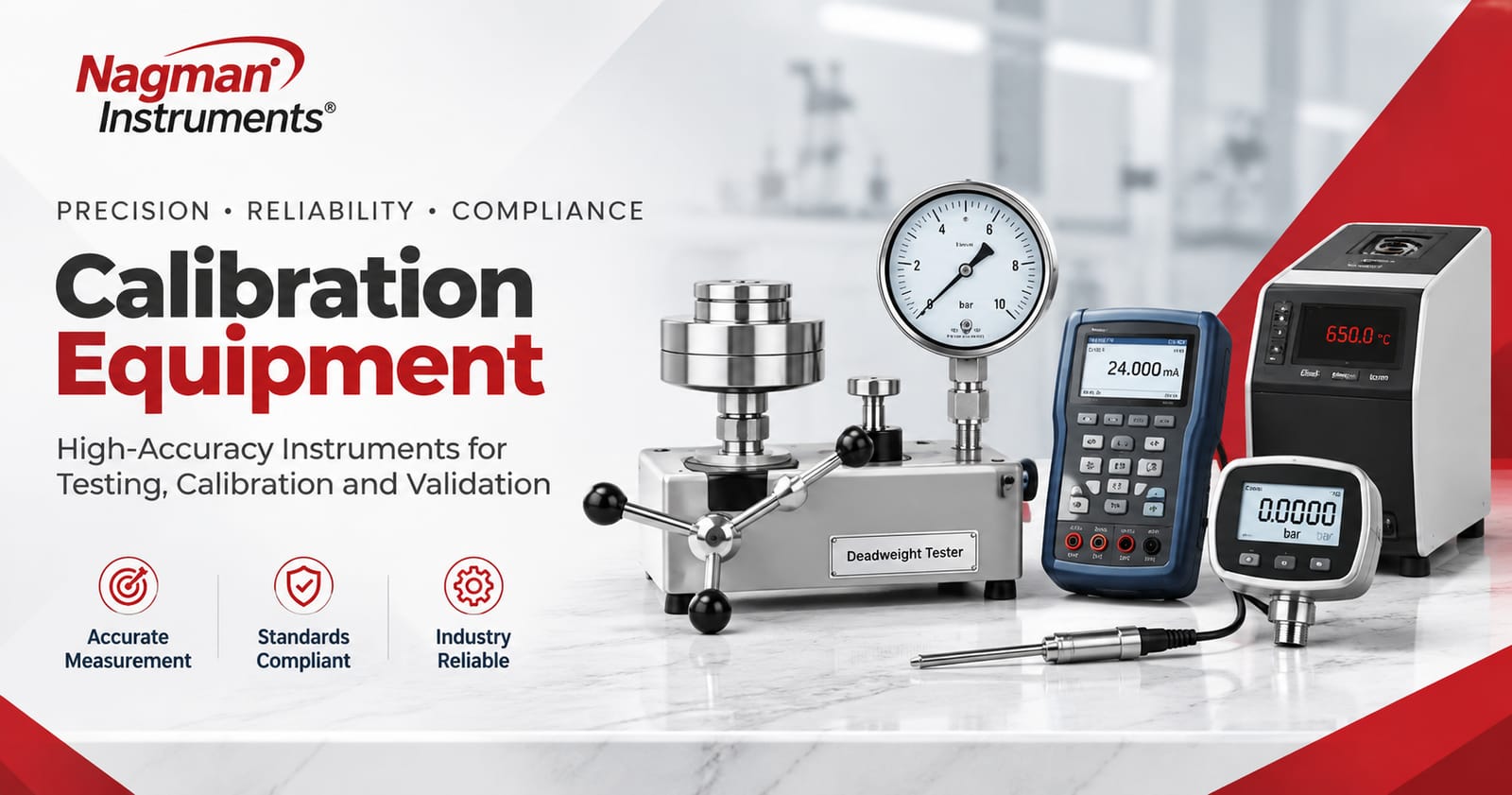
Accurate measurement is essential for maintaining quality, safety, and efficiency in industrial operations. Manufacturing facilities, process industries, pharmaceutical companies, power plants, and calibration laboratories depend on reliable instruments to monitor different operating parameters. To maintain measurement accuracy, organisations need suitable calibration equipment that can verify the performance of their instruments.
Choosing the right calibration solutions helps technicians perform testing, identify measurement errors, and maintain reliable instrumentation systems. From Calibration Test Bench equipment to level calibration systems, hand pumps, and signal calibrators, each instrument serves a specific purpose in industrial measurement applications. Nagman Instruments supports industrial and laboratory requirements with specialised measurement and calibration equipment.
Why Is Calibration Equipment Important for Industries?
Industrial instruments are regularly exposed to changing environmental and operating conditions. Over time, factors such as continuous usage, temperature variations, pressure fluctuations, and equipment ageing can affect measurement accuracy.
Calibration equipment helps technicians compare instrument readings against suitable reference standards and identify deviations.
Some important benefits include:
Measurement Accuracy: Helps maintain reliable readings across industrial instruments.
Quality Control: Supports consistent manufacturing and inspection processes.
Process Reliability: Helps identify measurement problems before they affect operations.
Equipment Performance: Supports regular instrument verification and maintenance.
Compliance: Helps organisations meet applicable quality and calibration requirements.
Selecting suitable calibration equipment is therefore important for maintaining dependable industrial measurement systems.
Calibration Test Bench for Efficient Instrument Testing
A Calibration Test Bench is a specialised setup designed to test, verify, and calibrate different measuring instruments under controlled conditions. It is commonly used in calibration laboratories, manufacturing facilities, and industrial maintenance departments.
Depending on the configuration, a calibration test bench can support pressure, temperature, electrical, and other instrumentation calibration activities.
Some important features to consider when selecting a calibration test bench include:
Compatibility with the instruments being tested.
Suitable measurement ranges and accuracy requirements.
Reference standards and measurement traceability.
Ease of operation and equipment integration.
Safety and working conditions.
Flexibility for different calibration applications.
A properly configured test bench helps technicians perform repeatable calibration procedures and organise multiple testing activities efficiently.
Level Calibration System for Accurate Level Measurement
Level measurement is important in industries that handle liquids, chemicals, fuels, and other process materials. Storage tanks, processing vessels, and industrial containers depend on level instruments to monitor material quantities and maintain process control.
A Level Calibration System is used to verify and calibrate level measurement instruments according to their operating principles and application requirements.
Different level technologies may require different calibration methods. These can include hydrostatic pressure-based instruments, level transmitters, and other electronic or mechanical level measurement devices.
When choosing a level calibration system, consider:
Supported level measurement technologies.
Required measurement range.
Reference measurement accuracy.
Compatibility with the instrument under test.
Calibration procedure and installation requirements.
Suitable calibration equipment helps technicians verify level measurement performance and maintain dependable monitoring in industrial applications.
Calibration Hand Pumps for Pressure Testing
Pressure calibration is a routine requirement in industries such as oil and gas, chemical processing, manufacturing, and power generation. Technicians need portable equipment to generate pressure and verify the performance of pressure gauges, transmitters, and other pressure instruments.
Calibration Hand Pumps are manually operated pressure generation devices used during pressure testing and calibration activities.
Depending on the model, these pumps can generate pneumatic or hydraulic pressure for different applications.
Important factors to consider when selecting calibration hand pumps include:
Required pressure generation range.
Pneumatic or hydraulic operation.
Pressure stability and fine adjustment.
Compatibility with reference pressure instruments.
Portability and ease of operation.
Connections and accessories required for the application.
Portable hand pumps are particularly useful for field calibration, maintenance work, and laboratory testing where controlled pressure generation is required.
Signal Calibrators for Electrical and Process Instrumentation
Industrial automation systems use electrical signals to transmit measurement information between sensors, transmitters, controllers, and monitoring equipment. Accurate signal testing is essential for verifying instrumentation and troubleshooting process control systems.
Signal Calibrators are instruments designed to measure and generate electrical signals used in industrial instrumentation applications.
Depending on their capabilities, signal calibrators can support voltage, current, and other process signal measurements.
They are commonly used for testing:
Pressure transmitters.
Temperature transmitters.
Process controllers.
Industrial sensors.
Automation and control systems.
When selecting signal calibration equipment, businesses should evaluate signal ranges, measurement accuracy, simulation capabilities, display features, and compatibility with their existing instruments.
Using appropriate signal calibrators helps technicians identify signal deviations and verify the performance of industrial instrumentation systems.
How to Select the Right Calibration Equipment
Before purchasing calibration equipment, businesses should understand their testing requirements, instrument specifications, and working environment.
Consider these factors:
Application Requirements: Identify whether the requirement involves pressure, level, electrical signals, or multiple measurement parameters.
Measurement Range: Select equipment that supports the required operating range.
Accuracy: Ensure that the calibration equipment meets the accuracy requirements of the instruments being tested.
Compatibility: Check connections, accessories, and compatibility with existing instrumentation.
Ease of Operation: Consider portability, operating procedures, and technician requirements.
Technical Support: Evaluate product documentation, maintenance requirements, and after-sales assistance.
A proper equipment selection process helps improve calibration efficiency and maintain reliable measurement results.
Why Choose Nagman Instruments?
Selecting a suitable calibration equipment manufacturer is important for industries and laboratories that depend on measurement accuracy. Equipment quality, application suitability, and technical support all contribute to effective calibration practices.
Nagman Instruments provides measurement and calibration equipment for industrial and laboratory applications. Whether your requirement involves calibration test benches, level measurement calibration, pressure generation, or electrical signal testing, selecting the right equipment helps support your operational needs.
Enquire About Calibration Solutions from Nagman Instruments
Looking for suitable calibration equipment for your industrial facility or laboratory? Choosing the right instruments can help improve testing efficiency, maintain measurement accuracy, and support reliable operations.
Nagman Instruments can help you explore calibration equipment based on your application, measurement range, and technical requirements.
Contact Nagman Instruments today to discuss your calibration requirements, request product information, and enquire about suitable calibration solutions for your industry.