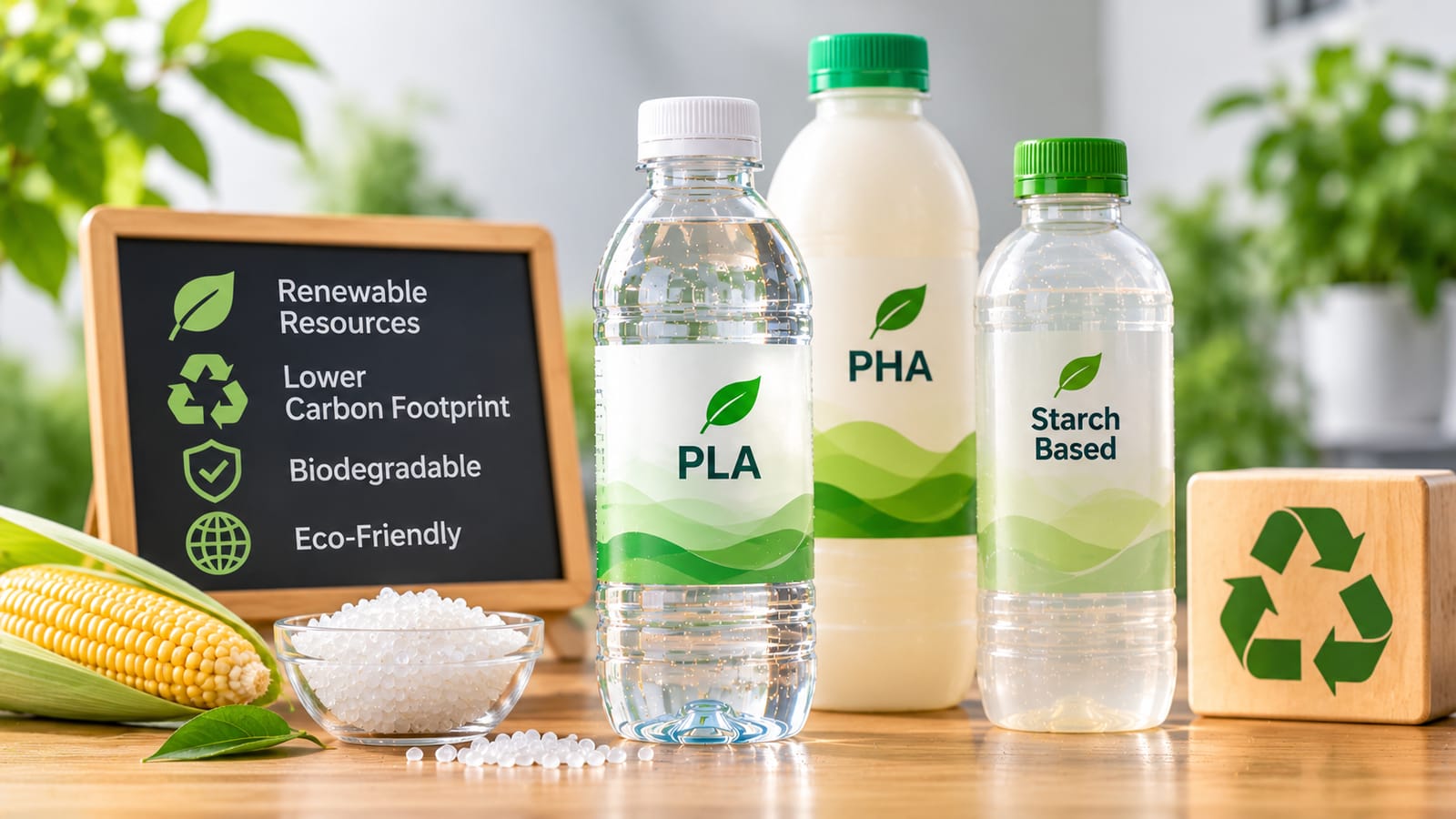
Plastic bottles are widely used across India's beverage, food, personal care and consumer goods industries. They are lightweight, convenient to transport and suitable for a wide range of packaging applications. However, growing concerns about fossil-fuel dependence, plastic waste and environmental impact have encouraged businesses to explore alternative packaging materials.
Bioplastic bottles are one option receiving attention in this shift.
Made using biological feedstocks or designed to offer specific end-of-life properties, bioplastics represent a broad category of materials rather than a single type of plastic. Some are plant-based, some are biodegradable under specific conditions, and some can be both. Others are bio-based but behave similarly to conventional plastics at the end of their useful life.
For Indian businesses evaluating alternative packaging, understanding these differences is essential before selecting a material.
This guide explains what bioplastic bottles are, the major types available, their uses, potential benefits and limitations, and what businesses should consider before adopting them.
What Are Bioplastic Bottles?
Bioplastic bottles are bottles manufactured using bioplastics. These materials are generally classified according to their biological origin, biodegradability or both.
Conventional plastics are typically produced from fossil-based raw materials such as petroleum and natural gas. In comparison, bio-based plastics use renewable biological feedstocks, which may include corn, sugarcane, cassava and other plant-derived resources.
However, the term bioplastic does not automatically mean that a bottle is biodegradable or compostable.
There are three broad categories:
Bio-based and non-biodegradable plastics: Made partly or entirely from renewable biological feedstocks but not necessarily biodegradable.
Bio-based and biodegradable plastics: Made from biological resources and designed to biodegrade under specified conditions.
Fossil-based biodegradable plastics: Made using fossil-based feedstocks but designed to biodegrade under particular conditions.
This distinction matters because the source of a material and its end-of-life behaviour are two separate characteristics.
Types of Bioplastics Used in Packaging
Different bioplastics have different properties, applications and processing requirements. Not every material is suitable for manufacturing bottles or packaging drinking water.
1. PLA (Polylactic Acid)
PLA is a bio-based thermoplastic commonly produced from plant-derived sugars and starches.
The production process generally involves extracting fermentable sugars from renewable feedstocks, converting them into lactic acid through fermentation and then processing the lactic acid into polylactic acid.
PLA is used in selected packaging applications, including food containers, cups, films and bottles.
Its plant-based origin makes it an option for businesses exploring alternatives to conventional petroleum-based plastics. However, PLA has specific temperature and processing limitations. Its biodegradation also depends on suitable conditions, and it should not be assumed to break down quickly in ordinary soil, landfills or the natural environment.
2. PHA (Polyhydroxyalkanoates)
PHA is a family of biopolymers produced by microorganisms through biological processes.
Certain PHA formulations can biodegrade in a wider range of environments than conventional PLA, although actual performance depends on the material composition and disposal conditions.
PHA has potential applications in packaging, agricultural products and selected consumer goods. However, production costs, material performance and commercial availability can influence its adoption.
3. Bio-PE (Bio-Based Polyethylene)
Bio-PE is produced using renewable feedstocks, often derived from sugarcane-based ethanol.
It has a chemical structure similar to conventional polyethylene and can be used in applications such as bottles, containers, films and closures.
An important distinction is that bio-PE is generally not biodegradable. Its renewable feedstock origin does not change the material's fundamental end-of-life behaviour.
4. Bio-PET (Partially Bio-Based PET)
Bio-PET is produced using a combination of bio-based and fossil-based feedstocks, depending on the formulation and production process.
It has properties similar to conventional PET and can be used in beverage bottles and other packaging applications.
Because it is generally chemically equivalent to conventional PET, it is not inherently biodegradable. Its suitability for existing recycling systems depends on local collection and recycling infrastructure.
How Are Bioplastic Bottles Made?
The manufacturing process depends on the type of bioplastic being used. However, the general process involves several stages.
Step 1: Sourcing Raw Materials
For bio-based plastics, manufacturers obtain renewable feedstocks such as corn starch, sugarcane or other plant-derived materials.
The choice of feedstock depends on material availability, production technology and the intended polymer.
Step 2: Processing the Feedstock
The raw material is processed to obtain the chemical building blocks needed to produce the polymer.
For PLA, this typically involves converting plant-derived sugars into lactic acid through fermentation.
Step 3: Polymer Production
The processed building blocks are converted into a polymer with properties suitable for manufacturing.
The resulting material is then prepared for further processing.
Step 4: Bottle Manufacturing
The polymer is processed into a suitable bottle format using manufacturing methods selected for the material and product requirements.
Depending on the polymer, this may involve extrusion, injection moulding, blow moulding or other specialised processes.
Step 5: Filling and Packaging
For beverage applications, the finished bottles must be suitable for the intended liquid, filling conditions, storage requirements and distribution environment.
Material selection should therefore consider more than the renewable origin of the polymer. Product safety, barrier performance, temperature resistance and supply consistency also matter.
Common Uses of Bioplastic Bottles
Bioplastics are used across different packaging categories, but their suitability varies by material and application.
Drinking Water Packaging
Selected bioplastics, including PLA, are used in bottle applications for drinking water.
Businesses exploring alternatives to conventional PET can evaluate finished drinking water supplied in PLA bottles, subject to product suitability, storage and handling requirements.
Food and Beverage Packaging
Bioplastics can be used in selected food containers, cups, trays and packaging films.
The material must be suitable for the food product and intended conditions of use. Food-contact compliance should be verified rather than assumed from the term bioplastic.
Personal Care Products
Certain bio-based polymers can be considered for packaging applications in personal care and cosmetics.
Product compatibility, chemical resistance, shelf life and manufacturing requirements influence whether a particular material is suitable.
Retail and Consumer Packaging
Brands may evaluate bioplastic packaging for selected consumer products as part of broader packaging and sustainability strategies.
The right choice depends on product protection, commercial feasibility, customer expectations and available waste-management infrastructure.
Bioplastic Bottles vs Conventional Plastic Bottles
The differences between bioplastic and conventional plastic bottles depend on the specific polymer being compared.
A plant-based bottle may reduce dependence on fossil-based feedstocks, but that alone does not establish that it has a lower overall environmental footprint.
Raw Material Origin
Conventional plastics such as standard PET are generally produced from fossil-based feedstocks.
Bio-based plastics may use renewable biological resources, including plant-derived sugars and starches.
However, the environmental impact of growing, processing and transporting those feedstocks must also be considered.
Material Performance
Conventional PET is widely used because of its established performance in beverage packaging, including strength, transparency and barrier properties.
Bioplastics have different performance characteristics depending on the polymer. PLA, for example, can be suitable for selected bottle applications but has limitations relating to heat resistance and processing.
Businesses should evaluate the finished packaging rather than assuming that all bioplastics perform identically.
Environmental Considerations
Bio-based materials can offer an alternative to fossil-derived raw materials. However, their overall environmental performance depends on several factors:
Agricultural feedstock production
Energy and water consumption
Manufacturing processes
Transportation and distribution
Product lifespan and packaging weight
Collection, recycling or treatment after use
A complete lifecycle assessment provides a stronger basis for comparing environmental performance than the material's origin alone.
End-of-Life Management
Conventional PET has established recycling streams in many markets, although actual recovery rates depend on collection and processing infrastructure.
Some bioplastics can be recycled through suitable systems, while others require specialised industrial composting conditions or different waste-management processes.
PLA, for example, should not be assumed to be compatible with conventional PET recycling streams or home composting.
Businesses should understand the available disposal route before selecting a packaging material.
Benefits of Bioplastic Bottles
Bioplastic bottles can offer several potential advantages when the material is appropriate for the intended application.
1. Potential to Reduce Fossil Feedstock Dependence
Bio-based plastics use renewable biological resources as feedstocks. This can reduce reliance on fossil-based raw materials, depending on the material composition.
2. Alternative Packaging Options for Businesses
Bioplastics give brands another material category to evaluate when reviewing packaging choices.
This can be relevant for businesses developing products around renewable materials or exploring alternatives to conventional plastic packaging.
3. Scope for Packaging Innovation
Different biopolymers offer different material properties and processing possibilities.
As technology and commercial production develop, they may support additional packaging applications.
4. Alignment With Packaging Sustainability Strategies
Businesses reviewing their packaging footprint can assess bioplastics as part of a wider sustainability strategy.
However, selecting a bio-based material should be supported by transparent claims, relevant documentation and realistic end-of-life planning.
Limitations of Bioplastic Bottles
Despite their potential, bioplastics are not a universal replacement for conventional plastics.
Businesses should consider the following limitations before making a purchasing decision.
1. Higher or Variable Material Costs
Some bioplastics can have higher material and processing costs than established conventional plastics.
Pricing depends on polymer type, production scale, feedstock availability, manufacturing technology and supply arrangements.
The final packaging cost should be evaluated against the complete product and distribution requirements.
2. Temperature Sensitivity
Certain bioplastics, including standard PLA formulations, have lower heat resistance than some conventional packaging plastics.
This can restrict their suitability for hot-fill applications or environments involving elevated temperatures.
Businesses should confirm the product's temperature limits with the supplier.
3. Limited Waste-Management Infrastructure
Not all waste-management facilities are equipped to process bioplastics.
A material designed for industrial composting may not break down effectively in a landfill, natural environment or home composting system.
Clear disposal instructions and suitable local infrastructure are therefore important.
4. Performance Differences
Bioplastics do not all have the same strength, flexibility, transparency, barrier properties or shelf-life performance.
A material that works well for one packaging application may not be appropriate for another.
5. Risk of Misleading Environmental Claims
Terms such as bio-based, biodegradable, compostable and recyclable have different meanings.
Using them interchangeably can mislead customers and create reputational or compliance risks.
Businesses should verify material specifications and supporting evidence before making environmental claims.
What Should Indian Businesses Consider Before Choosing Bioplastic Bottles?
Selecting a packaging material requires a practical assessment of product requirements, supplier capabilities and commercial objectives.
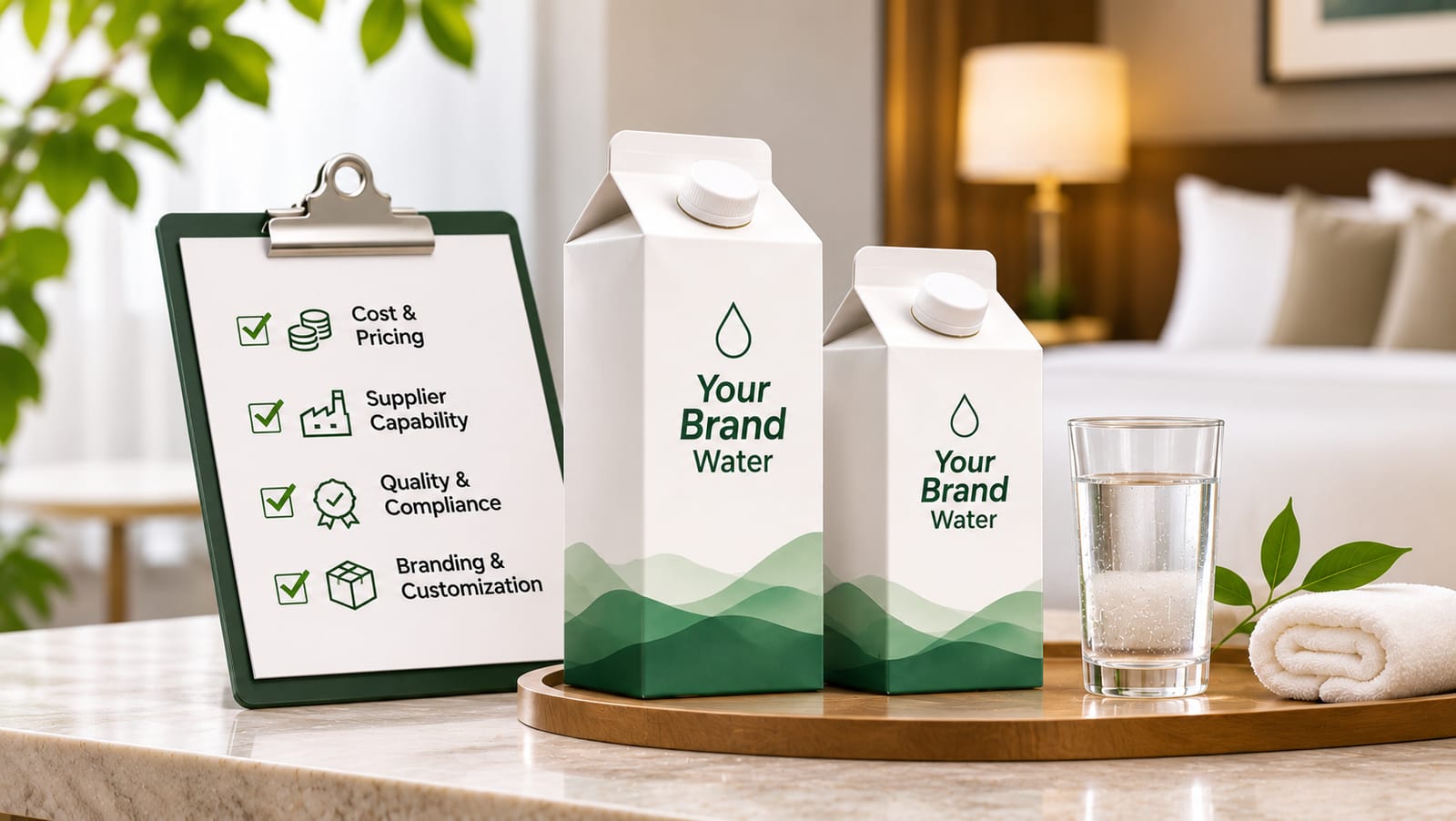
Before placing an order, businesses should evaluate the following factors.
Product Compatibility
Confirm whether the material is suitable for the intended product.
For drinking water, consider the bottle's food-contact suitability, filling conditions, storage requirements and ability to maintain product quality throughout its intended shelf life.
Material Specifications
Ask the supplier for relevant technical information, including polymer type, bottle specifications, temperature limitations and available compliance documentation.
Avoid relying only on broad descriptions such as eco-friendly or plant-based.
Manufacturing and Supply Consistency
Evaluate whether the supplier can provide consistent bottle quality and fulfil the required order volumes.
For businesses operating through distributors, retail networks or hospitality channels, supply reliability is particularly important.
Pricing and Commercial Feasibility
Compare the complete cost of packaging rather than focusing only on the material price.
Consider bottle specifications, filling, labelling, packaging, transportation and minimum order quantities.
Disposal and Environmental Claims
Understand what happens to the packaging after use.
If a supplier describes a product as biodegradable or compostable, ask for the relevant technical evidence and the specific conditions required for that claim.
Businesses can also explore the environmental considerations behind alternative packaging through Not A PET Bottle's impact initiatives.
Why Are Businesses Exploring Plant-Based Bottles?
Plant-based bottles are attracting attention from brands looking to evaluate packaging materials derived from renewable resources.
For businesses, the decision is not simply about replacing one material with another. It involves balancing product protection, material performance, supply availability, pricing and environmental considerations.
PLA is one option within this category. It offers a plant-derived alternative for selected packaging applications, including drinking water bottles.
Businesses interested in this approach can explore plant-based bottles in India to understand the material category and its potential applications.
The key is to select packaging based on actual product requirements and verified material properties rather than broad sustainability assumptions.
Exploring Bioplastic Bottles for Your Business With Not A PET Bottle
Not A PET Bottle offers finished drinking water supplied in NPB-PLA™ bottles for businesses exploring alternatives to conventional PET-packaged water.
The focus is on providing a finished bottled water product rather than supplying empty bottles or raw packaging materials.
Businesses can explore this option for hospitality, corporate requirements, events, retail distribution and other suitable commercial applications.
Before selecting any alternative packaging, consider the product specifications, order requirements, storage conditions and supply arrangements.
To learn more about available options, visit Not A PET Bottle and explore bioplastic bottle solutions for your business.
Frequently Asked Questions
What are bioplastic bottles?
Bioplastic bottles are bottles made using bioplastic materials. These materials may be bio-based, biodegradable or both, depending on the polymer. Not all bioplastics are biodegradable.
Are bioplastic bottles available in India?
Bioplastic packaging options are available in India, although commercial availability depends on the material, application, supplier and required specifications. Businesses should confirm product suitability and supply details directly with manufacturers or suppliers.
What are the different types of bioplastics?
Common examples include PLA, PHA, bio-PE and bio-PET. These materials have different feedstock origins, properties and end-of-life characteristics.
Are bioplastic bottles better than plastic bottles?
There is no universal answer. Bioplastics can offer alternatives to fossil-based feedstocks, but performance and environmental impact depend on the specific material, manufacturing process, product application and disposal system.
Are PLA bottles biodegradable?
PLA can biodegrade under suitable conditions, particularly in appropriately managed industrial composting environments. It should not be assumed to biodegrade quickly in ordinary soil, landfills or natural environments.
Are all plant-based bottles biodegradable?
No. Plant-based describes the origin of the material, not necessarily its ability to biodegrade. Some plant-based plastics, such as bio-PE, are not biodegradable.
Can bioplastic bottles be used for drinking water?
Certain bioplastics, including suitable PLA formulations, can be used for drinking water packaging. The finished bottle must meet the relevant food-contact, product safety and performance requirements.
What is the difference between bioplastic and biodegradable plastic?
Bioplastic generally refers to plastics that are bio-based, biodegradable or both. Biodegradable plastic refers to a material designed to break down through biological processes under specified conditions. The two terms are not interchangeable.
Are bioplastic bottles recyclable?
Recyclability depends on the specific polymer and the available collection and processing infrastructure. Some bioplastics can be recycled through suitable systems, while others require separate treatment.
Where can businesses explore bioplastic water bottles in India?
Businesses can explore finished drinking water supplied in PLA bottles through Not A PET Bottle. Product specifications, order quantities, branding options and supply arrangements should be confirmed directly with the company.