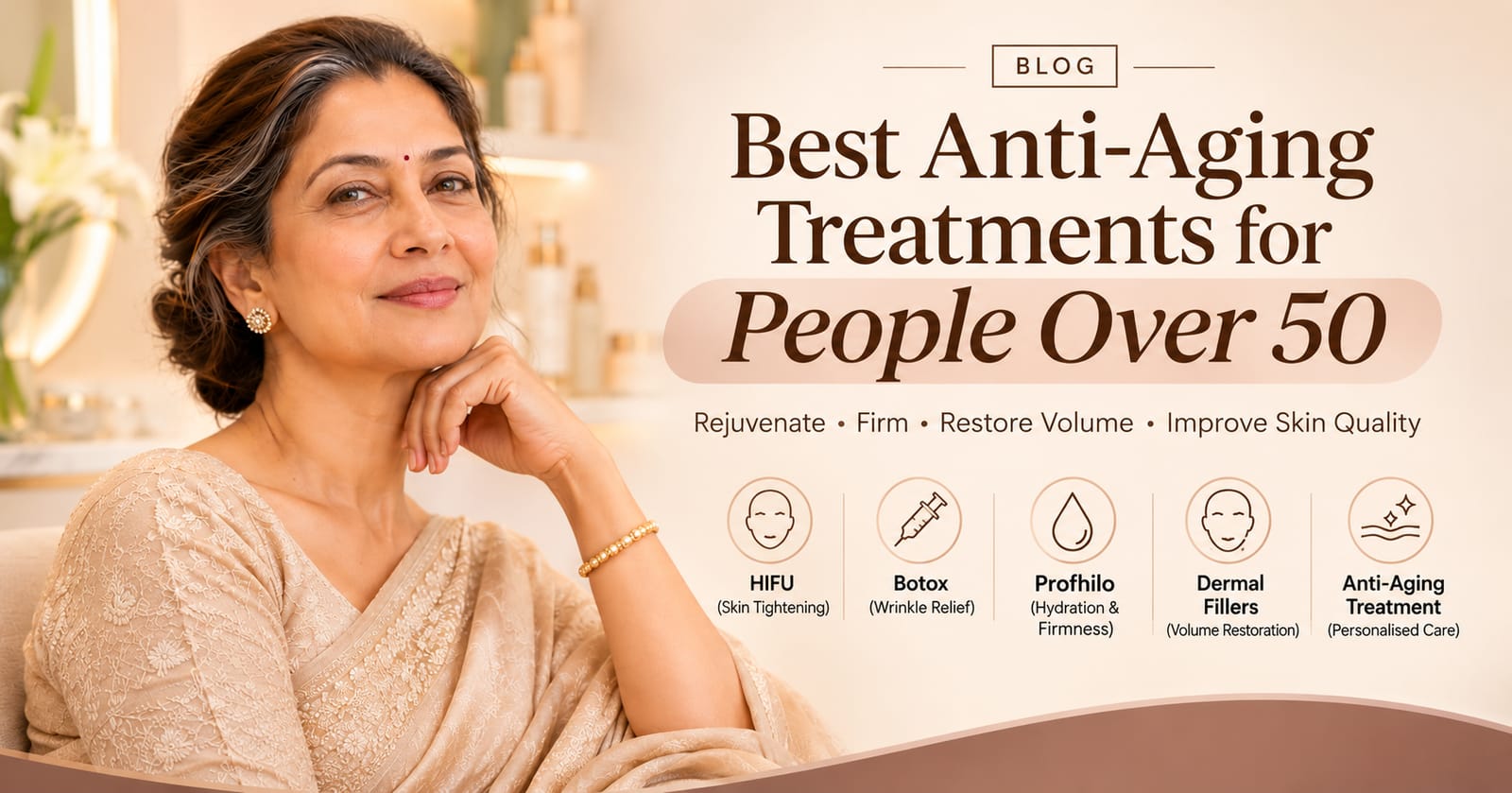
Best Anti-Aging Treatments
Turning 50 often brings noticeable changes in the appearance and behaviour of your skin. Your cheeks may appear less full, your jawline may lose definition, wrinkles may become more prominent, and your skin may feel drier despite following a regular skincare routine. These changes occur not only at the skin's surface but also within the deeper structures that support facial contours.
Dr. Geetika Srivastava, an AIIMS-trained MD Dermatologist with more than 10 years of dermatology experience, offers personalised skin and facial assessments at Influennz Aesthetic Clinic in Hauz Khas, South Delhi. Understanding how mature skin differs from younger skin is important when selecting treatments that address age-related concerns.
The best anti-aging treatments for people over 50 are those that address specific changes in skin quality, collagen, facial volume and tissue support. The objective is not to eliminate every sign of ageing but to achieve meaningful improvements while preserving natural facial features.
Why Does Your Skin Change More Noticeably After 50?
Skin ageing is a gradual biological process. However, several age-related changes may become more noticeable during your 50s and beyond.
Reduced Collagen and Elastin
Collagen provides structural support to the skin, while elastin helps maintain its flexibility. Age-related changes in these proteins contribute to thinner skin, reduced firmness and more visible wrinkles.
Changes Associated With Menopause
For many women, declining oestrogen levels around menopause contribute to accelerated collagen loss, increased dryness and reduced skin elasticity.
According to the American Academy of Dermatology, women may lose approximately 30% of their skin collagen during the first five years of menopause.
These changes may become particularly noticeable around the cheeks, mouth, jawline and neck.
Loss and Redistribution of Facial Volume
Ageing affects facial fat compartments and underlying bone structure. This can result in hollow temples, flatter cheeks, deeper facial folds and changes in facial proportions.
Reduced Skin Hydration
Mature skin may become less effective at retaining moisture. This can contribute to roughness, sensitivity, tightness and a more prominent appearance of fine lines.
Accumulated Sun Damage
Years of ultraviolet exposure can contribute to age spots, uneven pigmentation, rough texture and premature wrinkles. Since multiple factors are involved, an effective anti-aging plan after 50 often requires a different approach from treatments commonly considered in your 30s or 40s.
Which Anti-Aging Treatments Work Best After 50?
The appropriate treatment depends on whether your primary concern is skin laxity, facial volume loss, expression lines, dryness or pigmentation.
Patients exploring anti aging treatment in Delhi should consider an assessment that identifies the underlying causes of their visible ageing concerns rather than selecting procedures based solely on age or popularity.
1. HIFU for Sagging Skin and Reduced Jawline Definition
One of the most common concerns after 50 is the gradual loss of facial definition. Cheeks may appear lower, jowls may become more prominent and the skin beneath the chin may look less firm.
High-Intensity Focused Ultrasound, commonly known as HIFU, is a non-surgical procedure that delivers focused ultrasound energy to selected tissue depths. The controlled thermal effect stimulates a repair response and gradual collagen remodelling.
What Concerns Can HIFU Address After 50?
Depending on individual anatomy and treatment suitability, HIFU may help improve:
Mild to moderate facial skin laxity
Early jowls
Reduced jawline definition
Mild cheek sagging
Loose skin beneath the chin
Selected neck tightening concerns
A systematic review of microfocused ultrasound supports its potential to improve facial skin laxity in appropriately selected patients.
Individuals considering HIFU treatment should understand that improvements generally develop over several weeks to months rather than immediately after the procedure.
Is HIFU Suitable for Everyone Over 50?
Not necessarily. Mature faces may have significant volume loss alongside skin laxity. In individuals with already thin or hollow facial contours, careful assessment is necessary before selecting energy-based procedures.
Possible side effects include discomfort, temporary redness, swelling, altered sensation and, less commonly, burns or unwanted changes in underlying tissue.
HIFU may provide modest tightening in selected patients, but it cannot remove substantial excess skin or replicate the results of a surgical facelift.
2. Botox for Forehead Wrinkles and Expression Lines
After years of repeated facial expressions, wrinkles around the forehead, eyebrows and eyes may become increasingly noticeable. Botox is a brand of botulinum toxin type A that temporarily reduces the activity of selected facial muscles responsible for expression-related lines.
What Can Botox Help Improve After 50?
Depending on individual suitability, botulinum toxin may be considered for:
Horizontal forehead lines
Frown lines between the eyebrows
Crow's feet around the eyes
Chin dimpling
Selected vertical neck bands
Patients exploring Botox treatment may notice initial changes within several days, with the fuller effect generally developing over approximately two weeks.
Results commonly last around three to four months, although individual responses vary.
Why Does Botox Require a Different Approach After 50?
Mature facial anatomy may include lower eyebrow positioning, eyelid hooding and changes in muscle function.
Some individuals unconsciously use their forehead muscles to raise their eyebrows and compensate for heavy upper eyelids. Excessive relaxation of these muscles may worsen the appearance of brow heaviness.
Treatment planning should therefore consider natural facial expressions, eyebrow position and existing eyelid anatomy.
Botox is primarily effective for muscle-related wrinkles. Deep lines that remain visible when the face is relaxed may require additional skin-quality treatments.
Possible side effects include bruising, headache, temporary eyebrow or eyelid drooping and unintended muscle weakness. Rare but serious complications involving swallowing or breathing require immediate medical attention.
3. Profhilo for Dry, Thin and Crepey-Looking Skin
Skin hydration often becomes more difficult to maintain after 50, particularly in women experiencing menopause-related skin changes.
Even with regular moisturisation, some individuals notice that their skin feels less supple, appears thinner or develops a crepey texture around the cheeks and neck.
Profhilo is an injectable hyaluronic acid-based product designed to improve selected aspects of skin quality, including hydration and elasticity.
Unlike conventional volumising fillers, standard Profhilo is primarily used for skin-quality improvement rather than targeted facial contour enhancement.
What Concerns Can Profhilo Address?
Depending on individual skin characteristics, Profhilo may help improve:
Reduced skin hydration
Crepey-looking skin
Fine superficial lines
Loss of skin elasticity
Mild skin laxity
Uneven skin texture
A systematic review of Profhilo and Profhilo Body reported improvements or favourable trends in several measures of hydration, elasticity and skin quality. However, the available evidence includes relatively small studies, and larger comparative trials are needed to establish long-term effectiveness.
Patients considering Profhilo Treatment should understand that results develop gradually and that maintenance requirements vary.
A commonly used initial protocol involves two treatment sessions approximately one month apart, subject to product instructions and clinical assessment.
Temporary swelling, bruising, tenderness and injection-site bumps may occur. As with other injectable hyaluronic acid products, more serious complications are possible and require appropriate medical management.
Profhilo cannot replace significant lost facial volume, reposition substantially sagging tissues or remove excess skin.
4. Dermal Fillers for Age-Related Facial Volume Loss
One of the reasons the face may appear tired or hollow after 50 is the gradual loss and redistribution of facial fat, alongside changes in underlying bone structure.
These changes can affect the cheeks, temples, lips, chin and areas surrounding the mouth.
Dermal fillers are injectable medical products that restore volume or provide structural support in carefully selected facial areas.
How Can Dermal Fillers Help Mature Faces?
Depending on individual anatomy and product suitability, dermal fillers may help address:
Flattened or hollow cheeks
Reduced temple fullness
Deep smile folds associated with volume loss
Thinning lips
Reduced chin projection
Selected changes in facial contours
Hyaluronic acid-based fillers commonly provide an immediate change in volume, although temporary swelling can affect the initial appearance.
Results may last several months to two years, depending on the formulation, treatment area and individual response.
Why Is Conservative Filler Placement Important After 50?
Not every facial fold requires direct filling.
For example, deeper smile lines may partly reflect changes in cheek structure and tissue support. Simply adding large amounts of filler to the fold may not address its underlying cause.
Similarly, significant lower-face sagging cannot always be corrected by adding more volume.
An individualised Dermal fillers assessment should consider facial proportions, existing volume, skin laxity and the patient's aesthetic preferences.
The objective should be proportionate restoration rather than excessive enhancement.
According to the US Food and Drug Administration, dermal fillers carry risks including bruising, swelling, infection, nodules and accidental injection into a blood vessel. Serious vascular complications can result in tissue damage, vision loss or stroke.
Sudden unusual pain, pale or discoloured skin, visual changes or neurological symptoms following filler treatment require immediate medical attention.
5. Microneedling and Collagen-Stimulating Treatments
Reduced collagen and changes in skin structure after 50 can contribute to fine lines, rough texture and reduced firmness.
Microneedling creates controlled micro-injuries that stimulate the skin's repair response and collagen remodelling.
Depending on the procedure and individual suitability, microneedling may help improve:
Fine facial lines
Uneven skin texture
Mild skin laxity
Enlarged pores
Selected superficial scars
Radiofrequency microneedling combines controlled needling with thermal energy delivered into selected tissue layers.
However, mature skin may require more conservative treatment settings because of differences in skin thickness, healing capacity and underlying facial volume.
More intensive treatment does not necessarily produce better results. Potential complications include infection, pigmentation changes and scarring. Energy-based microneedling may also carry risks such as burns and unwanted fat loss.
Collagen remodelling generally develops over several weeks to months, and multiple sessions may be considered.
6. Laser Treatments for Age Spots, Fine Lines and Sun Damage
By the age of 50, years of cumulative sun exposure may contribute to pigmentation, uneven skin tone and visible changes in skin texture.
Laser treatments can target different components of photoageing depending on the technology used.
Selected laser procedures may help address:
Sun-induced pigmentation
Age spots
Superficial wrinkles
Uneven skin texture
Visible signs of photoageing
Fractional laser resurfacing may stimulate skin renewal and collagen remodelling, while pigment-targeting laser technologies address certain types of discoloration.
However, not every dark spot is an age spot. New, changing, irregular or bleeding skin lesions should be assessed medically before undergoing cosmetic pigmentation treatment.
Individuals exploring photoaging treatment should also consider the increased risk of post-inflammatory hyperpigmentation associated with inappropriate treatment settings, particularly in medium to darker Indian skin tones.
Laser selection, recovery requirements and aftercare should be personalised.
What Are the Best Treatments for Neck Ageing After 50?
The neck often shows visible signs of ageing because of changes in collagen, skin elasticity, muscle activity and underlying fat distribution.
Different neck concerns require different approaches.
Neck Concern Treatment That May Be Considered Mild loose neck skin HIFU or selected skin tightening procedures Crep ey-looking neck skin Profhilo or selected skin-quality treatments Vertical neck muscle bands Botulinum toxin in suitable patients Horizontal neck lines Selected injectables, resurfacing or skincare Uneven pigmentation Sun protection and appropriate pigment-specific treatment Significant excess neck skin Surgical neck lift assessment
Treating the face while ignoring the neck can result in differences in skin quality and appearance. However, neck treatments should not simply follow the same settings or injection plan used for the face.
The skin and underlying structures of the neck require specific anatomical assessment.
How Long Do Anti-Aging Treatments Take to Show Results?
Different treatments produce improvements at different rates. Some restore volume directly, while others rely on gradual biological changes.
Treatment When Results May Become Visible Duration or Maintenance HIFU Approximately 2–3 months Maintenance varies according to response Botox Within several days, with fuller effect around 2 weeks Commonly 3–4 months Profhilo Gradually over several weeks Product-specific maintenance Hyaluronic acid fillers Immediate volume change, followed by settling Several months to 2 years, depending on product Microneedling Several weeks to months A treatment series may be needed Fractional laser Weeks to months Depends on technology and skin condition Retinoid-based skincare Several months Continued use generally required
These timelines are approximate and should not be treated as guaranteed outcomes.
Skin condition, medical history, treatment intensity and individual healing responses all influence results.
Is a Combination of Anti-Aging Treatments Better After 50?
Facial ageing after 50 frequently involves more than one concern. For this reason, a single procedure may not address every visible change. For example, a person experiencing hollow cheeks, forehead wrinkles and dehydrated skin may have three different treatment objectives.
Dermal fillers may address selected volume deficiencies, botulinum toxin may soften expression lines, and hydration-focused skincare or injectable treatments may improve aspects of skin quality.
Similarly, an individual concerned mainly about mild jowls and uneven pigmentation may require an entirely different treatment strategy.
Combination treatment does not mean undergoing every available procedure.
A staged approach may allow your dermatologist to assess the outcome of one treatment before determining whether additional intervention is necessary.
This can help avoid unnecessary procedures, expenditure and overlapping recovery periods.
The Best Anti-Aging Skincare Routine for People Over 50
Professional procedures should complement appropriate daily skincare rather than replace it.
The American Academy of Dermatology's skincare guidance for people in their 40s and 50s identifies sun protection as a fundamental component of an anti-aging skincare routine.
Morning Skincare Routine
StepPurposeGentle cleanserRemoves impurities without excessive dryingVitamin C serum, if toleratedProvides antioxidant supportMoisturiser containing ceramides or hyaluronic acidSupports hydration and skin barrier functionBroad-spectrum sunscreen with SPF 30 or higherHelps protect against further UV-related damage
Evening Skincare Routine
StepPurposeGentle cleanserRemoves sunscreen, makeup and impuritiesRetinol or dermatologist-prescribed retinoid, when appropriateSupports improvement in fine lines and skin textureNourishing moisturiserHelps reduce dryness and support the skin barrier
Introduce active ingredients gradually, particularly if your skin has become sensitive after menopause.
Using multiple exfoliating acids, strong retinoids and aggressive scrubs together may cause irritation rather than improve skin quality.
People with persistent redness, itching or significant dryness should seek assessment before introducing stronger anti-aging products.
Can You Improve Skin Ageing After Menopause?
Yes. Although menopause-related changes influence collagen, hydration and skin elasticity, appropriate skincare and selected dermatological procedures can improve specific concerns.
The most useful approach may involve:
Protecting the skin from further sun damage
Supporting skin barrier function
Maintaining hydration
Using evidence-based topical ingredients
Addressing facial volume loss when appropriate
Considering suitable collagen-stimulating treatments
Managing underlying dermatological conditions
Hormone replacement therapy may have effects on skin characteristics in some women, but it should not be initiated solely for cosmetic skin rejuvenation. Its benefits and risks should be discussed with an appropriate healthcare professional.
Menopause-related skin changes are normal, and cosmetic treatments remain a personal choice rather than a medical necessity.
Is It Too Late to Start Anti-Aging Treatments at 50 or 60?
There is no fixed age beyond which anti-aging treatments stop being effective.
Individuals in their 50s, 60s and beyond may experience improvements in selected concerns such as skin hydration, expression lines, pigmentation, facial volume and mild skin laxity.
However, achievable results depend on the degree of ageing, overall health, skin condition and selected procedure.
Someone with significant tissue descent and excess skin may not achieve the same lifting outcome from a non-surgical procedure as someone experiencing mild skin laxity.
Treatment goals should therefore be realistic and appropriate for the individual's anatomy rather than based on achieving the appearance of a much younger face.
Important Safety Considerations Before Starting Anti-Aging Treatments After 50
Medical history becomes particularly important when planning aesthetic procedures for mature skin.
Before undergoing treatment, inform your dermatologist about:
Blood-thinning medications
Diabetes and wound-healing concerns
Autoimmune or inflammatory conditions
Previous facial surgeries
Previous Botox, fillers or other injectable treatments
Implanted medical devices, where relevant
Medication or product allergies
History of abnormal scarring or pigmentation
Existing skin infections or inflammatory skin conditions
Do not discontinue prescribed medications without consulting the healthcare professional responsible for your treatment.
Your dermatologist may recommend postponing, modifying or avoiding certain procedures depending on your medical history and individual risk factors.
When Are Non-Surgical Anti-Aging Treatments Not Enough?
Non-surgical procedures can address several aspects of facial ageing, but they have limitations.
Patients experiencing significant jowls, advanced neck laxity or substantial excess skin may benefit from a surgical consultation.
Although fillers, HIFU and collagen-stimulating treatments may improve selected concerns, they cannot remove large amounts of redundant skin.
Repeated non-surgical procedures may not be an appropriate substitute for surgery when the primary concern is advanced structural tissue descent.
A comprehensive assessment can help determine whether non-surgical face lifting treatments are likely to provide a satisfactory degree of improvement or whether other options should be considered.
Frequently Asked Questions
What is the best anti-aging treatment for a 50-year-old?
The appropriate treatment depends on the individual's concern. HIFU may address mild skin laxity, Botox may soften expression lines, dermal fillers may restore lost facial volume, and Profhilo may improve selected aspects of skin quality.
Can HIFU tighten skin after 50?
HIFU may improve mild to moderate skin laxity in appropriately selected individuals over 50. However, significant excess skin and advanced sagging may require other approaches.
Is Botox effective for deep wrinkles after 50?
Botox may soften wrinkles associated with muscle movement. Deep static wrinkles that remain visible when the face is relaxed may require additional treatments targeting skin quality or structural changes.
Is Profhilo suitable for mature skin?
Profhilo may be considered for individuals experiencing reduced hydration, elasticity and mild skin laxity. Suitability depends on medical history, skin condition and treatment goals rather than age alone.
Are dermal fillers safe for people over 60?
Age alone does not determine filler suitability. Overall health, facial anatomy, medical history, product selection and the expertise of the treating professional are important considerations.
Can anti-aging treatments restore collagen after 50?
Selected procedures, including focused ultrasound, microneedling and laser resurfacing, may stimulate collagen remodelling. However, they cannot completely reverse biological ageing or restore skin to its younger state.
What is the best non-surgical treatment for sagging skin after menopause?
Focused ultrasound and selected radiofrequency procedures may improve mild to moderate skin laxity. The appropriate option depends on skin thickness, facial volume and the severity of sagging.
How can I maintain anti-aging treatment results?
Consistent sun protection, appropriate skincare, avoiding smoking, maintaining overall health and attending recommended follow-up appointments may help support long-term skin quality.
Conclusion
The best anti-aging treatments for people over 50 are those that address the specific changes occurring in their skin and facial anatomy. HIFU may improve selected skin tightening concerns, Botox may soften expression lines, Profhilo may support skin hydration and elasticity, and dermal fillers may restore areas of volume deficiency.
However, effective treatment planning involves more than choosing a popular procedure. It requires understanding your medical history, skin condition, facial structure and expectations.
At Influennz Skin & Hair Clinic in Hauz Khas, South Delhi, a personalised consultation with Dr. Geetika Srivastava can help you understand your age-related skin concerns and evaluate appropriate treatment options.
Appointment enquiries: +91 8368778208
Address : 2nd Floor D65, Hauz Khas Market Road Block D,
Hauz Khas New Delhi 110016
Disclaimer: The information shared here is intended for general educational purposes and does not replace personalised medical advice.