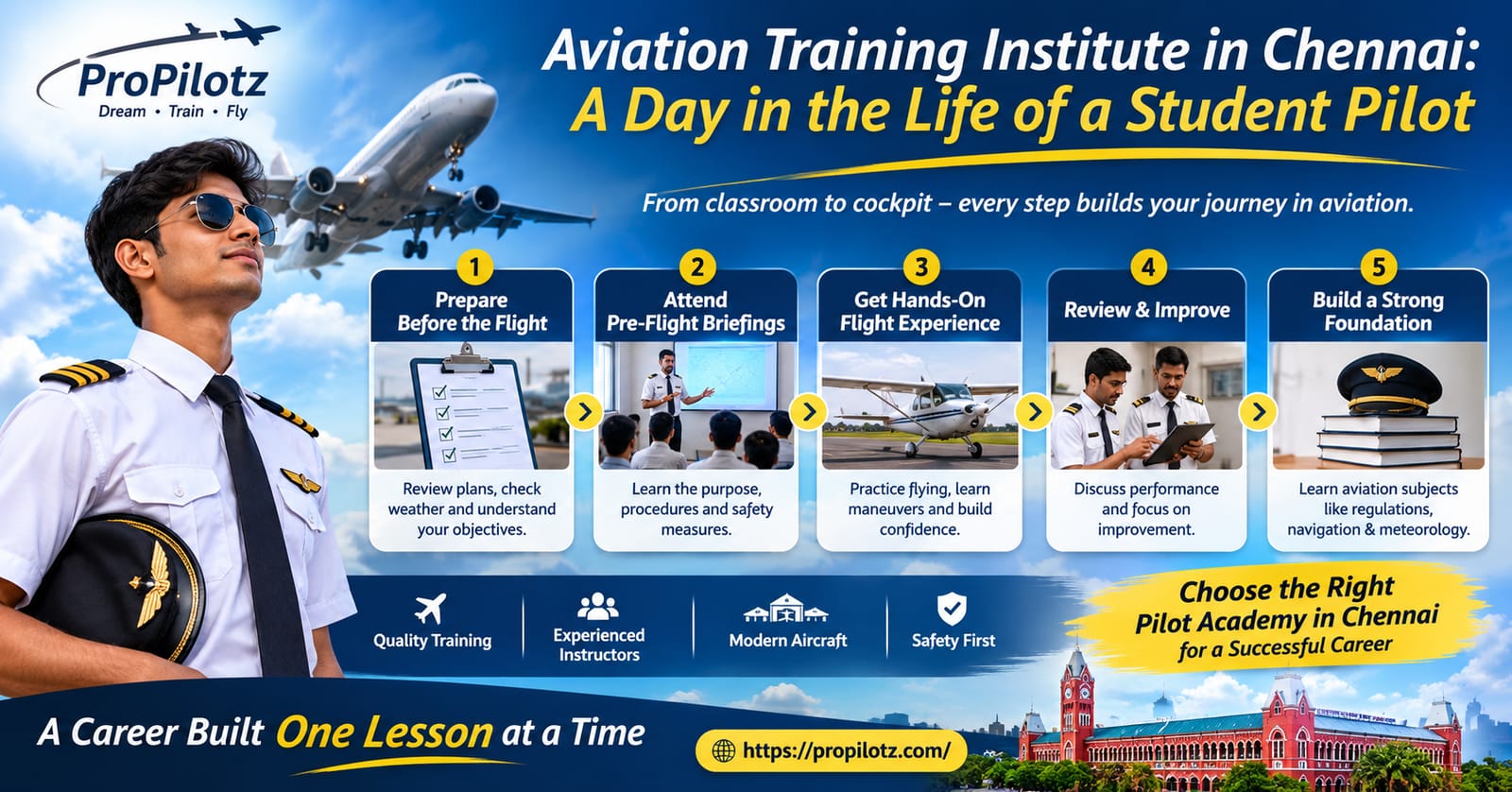
A pilot's journey is built through many small experiences, not just the hours spent flying an aircraft. A typical training day can involve preparation, classroom discussions, practical exercises and reviewing performance. Each activity contributes to developing the knowledge and discipline needed in aviation.
For students exploring an aviation training institute in chennai, understanding what happens during the training process can offer a more realistic picture of life as an aspiring pilot.
The Day Begins Before the Flight
A flying session requires preparation before an aircraft takes off. Students may begin by reviewing the planned exercise, checking relevant weather information and discussing the day's objectives with their instructor.
Pre-flight preparation helps students understand what they are expected to practise and which procedures they need to follow.
This stage also develops an important habit: never approach a flight without understanding the plan.
Learning Through Pre-Flight Briefings
Before practical exercises, instructors explain the purpose of the session and discuss the procedures involved.
A briefing may cover:
The objectives of the planned flight
Weather conditions and operational considerations
Aircraft checks and safety procedures
Communication and navigation requirements
Actions to take if conditions change
These discussions help students connect theoretical knowledge with practical activities.
The Value of Every Flying Session
Practical flying experience gives students an opportunity to apply what they have learned.
Depending on their training stage and instructor's plan, exercises may introduce aircraft handling, basic manoeuvres, navigation and other flight procedures.
Students gradually become familiar with the responsibilities involved in operating an aircraft. They also learn that progress requires patience, concentration and consistent practice.
For those considering commercial pilot training in chennai, it is useful to understand that practical experience is only one part of the overall learning process.
After Landing: The Learning Continues
An important part of training happens after a flight.
Instructors and students may review the session, discuss what went well and identify areas that need improvement. This process helps students understand their performance rather than simply moving on to the next exercise.
Reviewing mistakes is not a sign of failure. It is an opportunity to improve judgement, technique and confidence.
Keeping track of training progress also helps students understand their development over time.
Classroom Knowledge Supports Practical Skills
Not every training day involves flying. Ground-based learning is equally important.
Students study subjects that help them understand aircraft operations and the environment in which flights take place. These include aviation regulations, navigation, meteorology and aircraft-related knowledge.
When researching pilot training in chennai, students should look at how theoretical instruction and practical flying experience are organised within the training programme.
Understanding both areas provides a clearer picture of the commitment involved in becoming a professional pilot.
Choosing Where to Begin
Selecting a suitable pilot academy in chennai requires more than comparing advertisements.
Students should investigate the training arrangements, instructor qualifications, aircraft availability, applicable approvals, expected costs and licensing requirements.
It is also sensible to ask how students are guided throughout the different stages of their training.
Checking these details before enrolling can help students and families make informed decisions.
A Career Built One Lesson at a Time
A student pilot does not become a professional overnight. Every briefing, classroom session, practical exercise and performance review contributes to the learning journey.
The process demands commitment and a willingness to improve. It also teaches students to approach responsibilities carefully and respect the importance of safety.
For those interested in exploring aviation education and pilot career opportunities, ProPilotz is a place to learn more about aviation-related guidance and training options.
Behind every professional pilot is a journey made up of preparation, experience and continuous learning.