
A vehicle archive can show different information in a summary, an individual listing and a photograph. The useful first step is to preserve the disagreement. Replacing one value with the other too quickly can erase the context needed to understand it.
This guide comes from the AllCarHistory project and was prepared with automated assistance. Our Porsche 911 auction archive by model year is an example of a collection you can use to practise organising records. It is our resource, not an independent endorsement. The procedure below is an organisation method; it does not verify a vehicle's identity, condition or complete history.
1. Establish what you are comparing
Before calling two fields contradictory, record the page address, auction name, lot number and the identifier shown by each source. Also record the date you viewed it. Two similar-looking cars are not necessarily the same vehicle, and two listings of the same vehicle are not necessarily the same event.
Keep the event date separate from the date you visited the page. If either date is absent, write “not shown”; do not fill it from a nearby year in the heading.
2. Copy both values with their labels
Use one line for each disagreement. A simple layout is: field; source A wording; source B wording; unit or qualifier; evidence reference; open question. Avoid a single “correct value” column at this stage. It invites a decision before you have enough information.
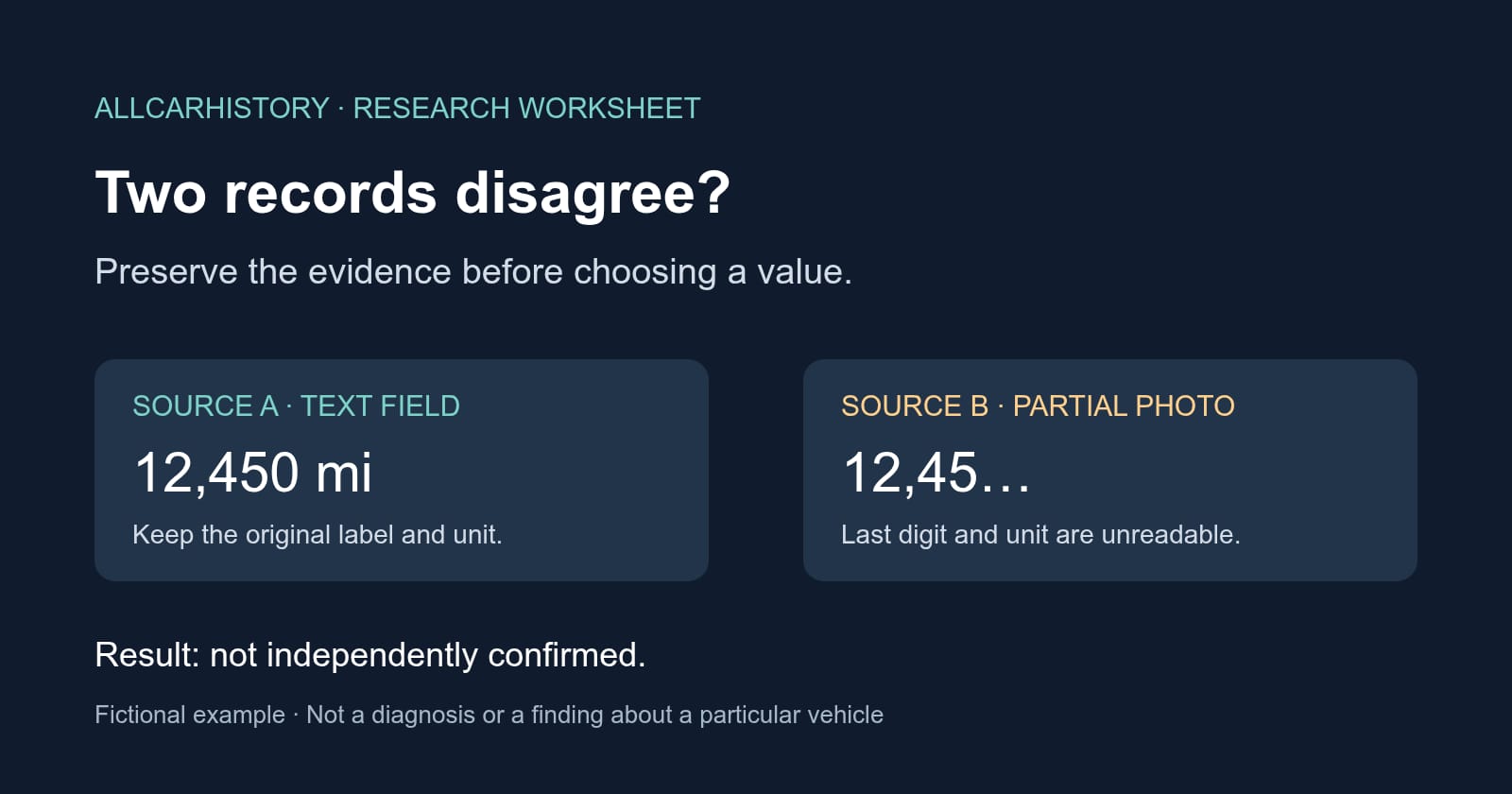
Here is a fictional example, not a claim about a listing in our archive:
Field: odometer display.
Source A: a text field showing “12,450 mi”.
Source B: a photograph in which only “12,45…” can be read.
Limitation: the last character and unit cannot be read in that photograph.
Open question: can the original photograph or listing clarify the obscured part?
The photograph has not disproved the text field. It has also not independently confirmed it. Keeping those two statements separate prevents a partial visual match from becoming an invented verification.
3. Check whether the fields mean the same thing
A model year and an auction date answer different questions. A bid and a market-value estimate do too. Before comparing numbers, compare their labels, units, qualifications and the events they belong to. If the meanings differ, describe that difference rather than calculating an unexplained gap.
Do not convert an unreadable field into zero. Do not remove a qualifier simply to make two spreadsheet columns look consistent. Keep the original wording alongside any normalised comparison value.
4. Leave a resolution trail
When better evidence arrives, append a short note: what changed, which source clarified it and when you checked. Keep the earlier entry. If nothing resolves the disagreement, “unresolved” is a useful result, not a failed worksheet.
Before sharing the log, make sure another reader can find the exact record and photograph you meant. Share the necessary references without adding unrelated personal information. A neat table can make evidence easier to review, but its formatting does not turn uncertain information into a confirmed fact.
Profile-photo credit: The Stig photograph by Ank Kumar, cropped, Wikimedia Commons source, CC BY-SA 4.0.