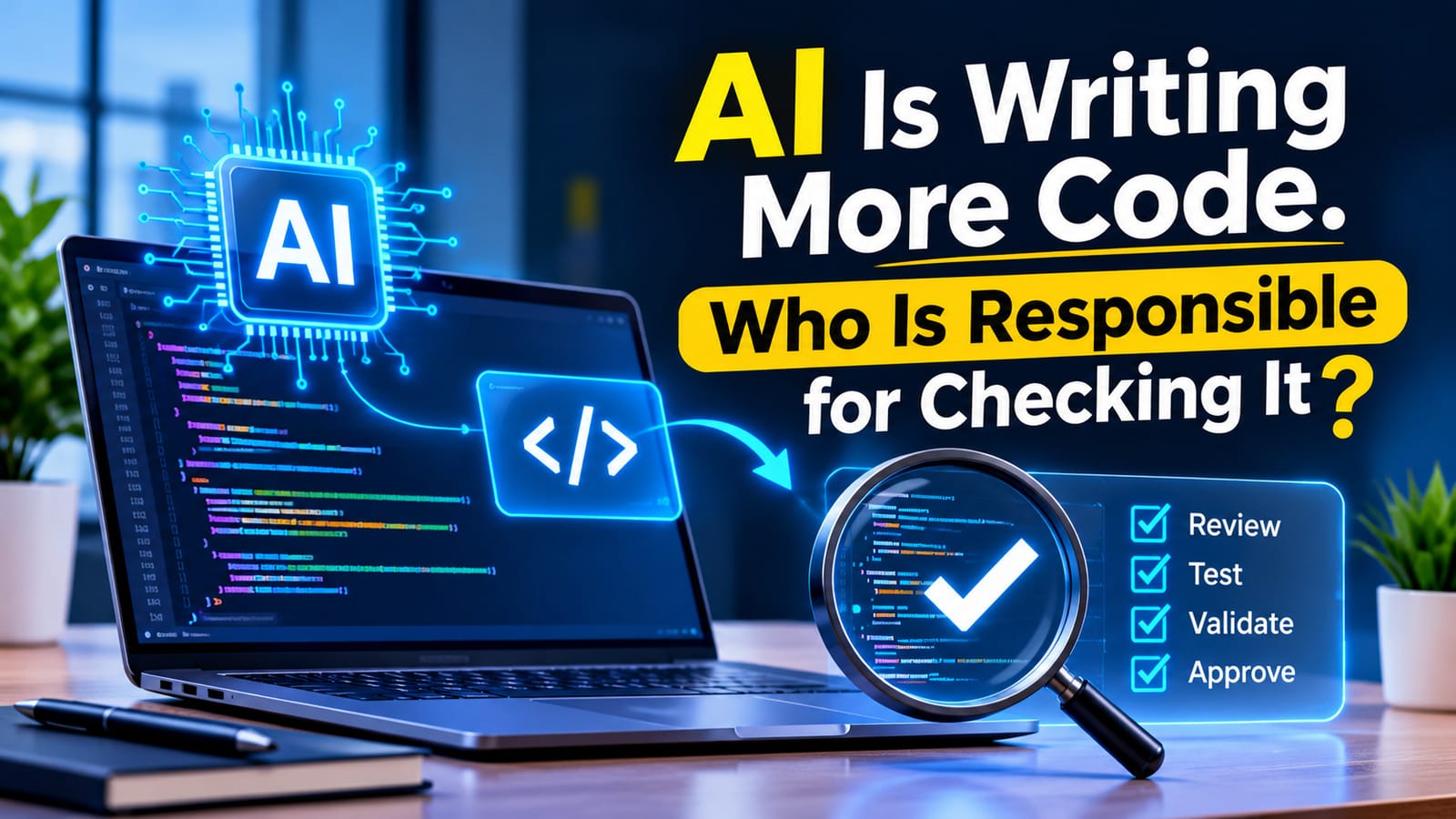
Artificial intelligence is changing the way software is created. Developers can now use AI coding assistants to generate functions, write tests, explain complex code, identify errors, and even build entire application components in less time.
What once required hours of manual coding can sometimes be completed in minutes. This shift is helping development teams move faster, experiment with new ideas, and improve productivity. Businesses exploring this transformation can learn more about AI development solutions and how AI can become part of real-world software products.
But there is an important question that deserves more attention: If AI is writing more code, who is making sure that code is actually correct, secure, and reliable?
Faster development does not automatically mean better software. AI-generated code can contain hidden bugs, security vulnerabilities, outdated practices, and logical mistakes. As AI becomes a bigger part of software engineering, code review and human accountability are becoming more important than ever.
1. AI Can Generate Code, But It Cannot Guarantee Quality
AI coding tools are trained to recognize patterns and generate code based on instructions and existing examples. They can produce useful results quickly, but their output is not always accurate.
A generated function may look perfectly reasonable while failing under unusual conditions. An AI-created authentication system might work in a basic demonstration but contain security weaknesses when used in a real application.
Some common problems include:
· Incorrect business logic.
· Missing error-handling procedures.
· Insecure authentication practices.
· Poor input validation.
· Unnecessary dependencies.
· Performance issues in complex applications.
· Code that does not follow the project's architecture.
This is why developers should treat AI-generated code as a starting point rather than a finished product.
2. The Developer's Role Is Changing
AI is not simply replacing traditional programming tasks. It is changing how developers spend their time.
Instead of writing every line manually, developers increasingly need to focus on reviewing generated code, understanding system architecture, testing application behavior, and making important technical decisions.
Their responsibilities now include:
Reviewing AI output: Checking whether generated code meets project requirements and follows coding standards.
Understanding the logic: Making sure the solution solves the actual problem rather than simply producing an output that looks correct.
Managing security: Identifying vulnerabilities, unsafe dependencies, and potential data exposure.
Testing functionality: Verifying that the code works across different situations and does not break existing features.
Maintaining accountability: Taking responsibility for the final software delivered to users.
The developer's value is shifting from writing code alone to making sure the entire system works reliably.
3. Why AI-Generated Code Needs Stronger Security Checks?
Security is one of the biggest concerns in AI-assisted software development.
A coding assistant may suggest an implementation that appears efficient but does not properly protect sensitive information. It might also recommend outdated libraries, unsafe database queries, or insufficient access controls.
These mistakes can create serious problems when applications handle customer information, financial records, business data, or confidential documents.
Development teams should introduce security checks throughout the software development lifecycle.
Important practices include:
· Reviewing authentication and authorization logic.
· Validating user input and database queries.
· Scanning dependencies for known vulnerabilities.
· Checking how sensitive information is stored and transmitted.
· Running automated security tests.
· Reviewing code before deploying it to production.
AI can help developers identify potential risks, but security decisions should not depend entirely on automated suggestions.
4. Automated Testing Is Becoming More Important
When AI increases the amount of code produced, testing becomes essential for maintaining software quality.
A developer might generate several components in a short period, but each component still needs to be tested individually and as part of the complete application.
Modern testing strategies can include:
Unit testing: Checks whether individual functions and components behave as expected.
Integration testing: Verifies that different parts of an application work correctly together.
Regression testing: Ensures that new changes do not break existing features.
Security testing: Identifies weaknesses that could expose applications to attacks.
Performance testing: Measures how software behaves under different workloads.
AI tools can help generate test cases, explain failures, and suggest improvements. However, teams must still verify that the tests cover real business requirements and important edge cases.
5. Human Review Is the Missing Link in AI Coding
One of the biggest mistakes organizations can make is allowing AI-generated code to move directly into production without proper review.
Human oversight provides context that automated tools may not fully understand. Developers know the project's architecture, business objectives, technical limitations, and user expectations.
A reliable review process should answer several questions:
· Does the code solve the intended problem?
· Is the implementation secure?
· Does it follow the project's coding standards?
· Can it handle unexpected input?
· Will it work with existing systems?
· Is it easy to maintain and update?
For critical systems, code should be reviewed by qualified engineers before deployment. AI can support the review process, but final approval should remain with accountable people.
6. Building a Responsible AI-Assisted Development Workflow
Organizations do not need to avoid AI coding tools to maintain high standards. Instead, they need a structured process that combines AI capabilities with engineering discipline.
A practical workflow can follow these steps:
1. Define clear requirements: Explain what the software component must do before asking AI to generate code.
2. Generate code carefully: Use AI tools to create an initial implementation or suggest improvements.
3. Review the output: Examine the logic, dependencies, security, and compatibility.
4. Run automated tests: Check functionality, performance, and possible regressions.
5. Conduct human code review: Ask an experienced developer to verify the implementation.
6. Deploy gradually: Test changes in a controlled environment before production release.
7. Monitor performance: Track errors, unexpected behavior, and security issues after deployment.
Businesses developing complex applications also need reliable architecture and maintainable systems. Exploring custom software development solutions can help organizations understand how software engineering practices support long-term product quality.
This approach allows businesses to benefit from AI without sacrificing software reliability.
7. The Future Belongs to Developers Who Know How to Work With AI
AI-assisted development is likely to become a standard part of modern software engineering. However, the ability to generate code will not be the only skill that matters.
Developers who understand architecture, security, testing, debugging, and system integration will remain essential.
Businesses will also need teams that can evaluate AI-generated solutions, identify limitations, and decide where human intervention is necessary.
The most successful development environments will not be those that generate the largest amount of code. They will be the ones that consistently deliver secure, maintainable, and useful software.
Conclusion: AI Can Write the Code, But Humans Must Own the Outcome
AI is making software development faster, but speed should never replace responsibility.
Generated code still needs to be understood, tested, reviewed, secured, and maintained. Developers remain responsible for ensuring that software performs as expected and protects the people who use it.
The future of software engineering is not simply about humans versus AI. It is about combining the speed of artificial intelligence with human judgment and engineering expertise.
For businesses planning their next digital project, exploring software development services can be a useful starting point for understanding the technologies and expertise involved.