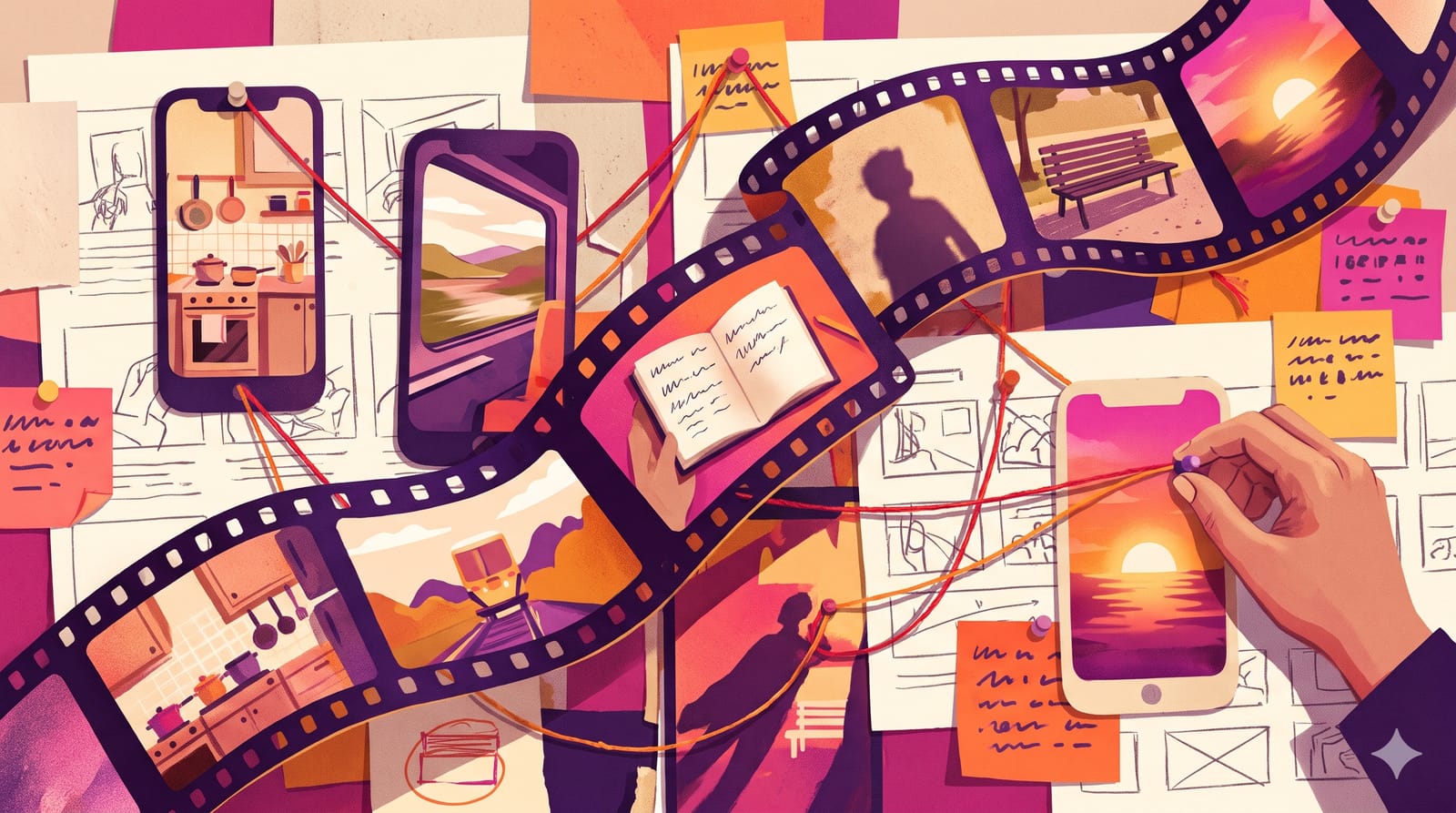
YouTube now lets you group Shorts into seasons and episodes, with custom thumbnails and playback that rolls viewers from one episode to the next. YouTube's own blog framed it around microdramas, the 60-second soap operas that have exploded across Asia. But you don't need to write a cliffhanger to use it. If you post Shorts that build on each other, whether recipes, money explainers, a travel route or a skill you are teaching, series give you a structure viewers can follow. Here is what YouTube announced, what the numbers suggest, and how to plan a series that people actually binge.
What YouTube actually launched
The feature was first announced at Made on YouTube in September. As Analytics Insight summarised it, creators can group related Shorts into seasons and episodes on their channel, watchable in order on mobile, desktop and TV, with custom thumbnails.
On 27 October, YouTube's official blog added more:
Sequential playback, so viewers find the next instalment without hunting.
Members-only episodes, with a revamped mobile experience "in the coming weeks" that lets viewers join a channel membership from inside the episode and keep watching.
No eligibility rules or country list were given, so check your YouTube Studio for whether it has reached your channel.
The numbers worth paying attention to
YouTube's blog shared a few figures on microdramas:
More than 6.5 billion views in the first half of 2026.
Watch time up more than 50% year on year, and microdrama views up more than 70% across Asia-Pacific.
40% of views and 30% of clicks on episodes came more than 30 days after upload.
Ignore the first two for a moment; they are YouTube marketing its own format. The third one is the interesting number. Most Shorts are a one-week sugar rush: the algorithm tests them, they peak, they die. If episodes keep pulling views a month later, a series is building a back catalogue that keeps working. That is a very different asset from a pile of one-off clips.
YouTube also named India's Shorts Break as a leading example, noting it releases episodes frequently and uses comments to shape later plot points.
Series ideas that aren't dramas
The format suits anything with a natural "next". A few that work for Indian creators and small brands:
Cooking: "Season 1: one dal, seven regions", one episode per state.
Money: "First salary, season 1": PF, tax regime, emergency fund, first SIP, one topic per episode.
Travel: one route, one stop per episode, so viewers follow the trip in order.
Skills: "Excel in 10 Shorts" or "Spoken Tamil for beginners", where episode 4 genuinely needs episode 3.
Small business: "Building our shop, season 1", from first sample to first order.
The test: if someone watches episode 5 first, do they want to go back to episode 1? If yes, it is a series. If every episode stands alone, it is a playlist, and that is fine too.
How to plan a season
Decide the arc before you film. A season is a promise. Write all the episode titles on one page first, with what the viewer will know or feel by the end.
Keep seasons short. Six to ten episodes is easier to finish, and easier for a new viewer to commit to, than an open-ended "part 47".
Hook in the first seconds. YouTube's blog highlights Japan's GOKKO CLUB pulling viewers into the conflict within the first 15 seconds. For an explainer, that means opening with the question, not with "Hi guys".
End each episode with a reason to continue, such as an open question or "next: the mistake that costs most people ₹10,000". Don't fake cliffhangers; viewers notice.
Make your own episodes. Series are not a loophole for clipping other people's content. YouTube is cutting reach for re-uploads; our breakdown of what counts as original on Shorts applies here too.
Use the comments. Ask viewers what the next episode should cover, and then actually do it. Shorts Break's approach works for tutorials as well as dramas.
What to measure
Skip vanity metrics. For a series, three numbers tell you most of what you need:
Next-episode rate: episode 2 views divided by episode 1 views, then 3 over 2, and so on. A steep drop after episode 1 means the promise didn't land.
Views after day 30: are older episodes still picking up views? That is the long tail YouTube's figures point to.
Subscribers from episodes: series viewers who subscribe are telling you they want season 2.
The money side, honestly
Series open a route to members-only episodes, but memberships only work once you have viewers who care. Don't paywall season 1.
One smaller change is worth knowing if you are just starting to earn. Social Media Today reports that YouTube is testing a lower payout threshold of $20 instead of $100 for randomly selected creators in the US, India and Indonesia, starting with October 2026 payments. If you are in the test, you'll get a notification, and you can raise the threshold again in AdSense for YouTube. For the bigger picture on earnings, see our guide to YouTube's 2027 monetisation changes for small creators.
Instagram is pushing the opposite direction, towards 90-minute videos; we covered what Instagram's "Features" test means last week. Both platforms want you to tell longer stories. YouTube's version lets you do it 60 seconds at a time.
No format guarantees growth. A series simply gives good, connected content a better chance of being watched in order, and of still being watched next month.