Fashion retail has always been influenced by more than the products themselves. Seasonal launches, fashion weeks, celebrity appearances, influencer collaborations, and limited-edition collections all shape what people notice and eventually decide to buy. In recent years, these activities have increasingly moved into digital spaces.
However, traditional online retail still follows a fairly predictable pattern: a brand uploads its collection, customers browse product pages, and purchases happen individually. Live shopping introduces a different approach. It allows a fashion business to organise shopping around an event, a presenter, a collection, or even a particular trend.
For brands, this represents a change in how products are introduced and sold online. Rather than relying entirely on customers discovering items through search or advertisements, retailers can create scheduled experiences that bring products and audiences together.
From Seasonal Campaigns to Live Shopping Events
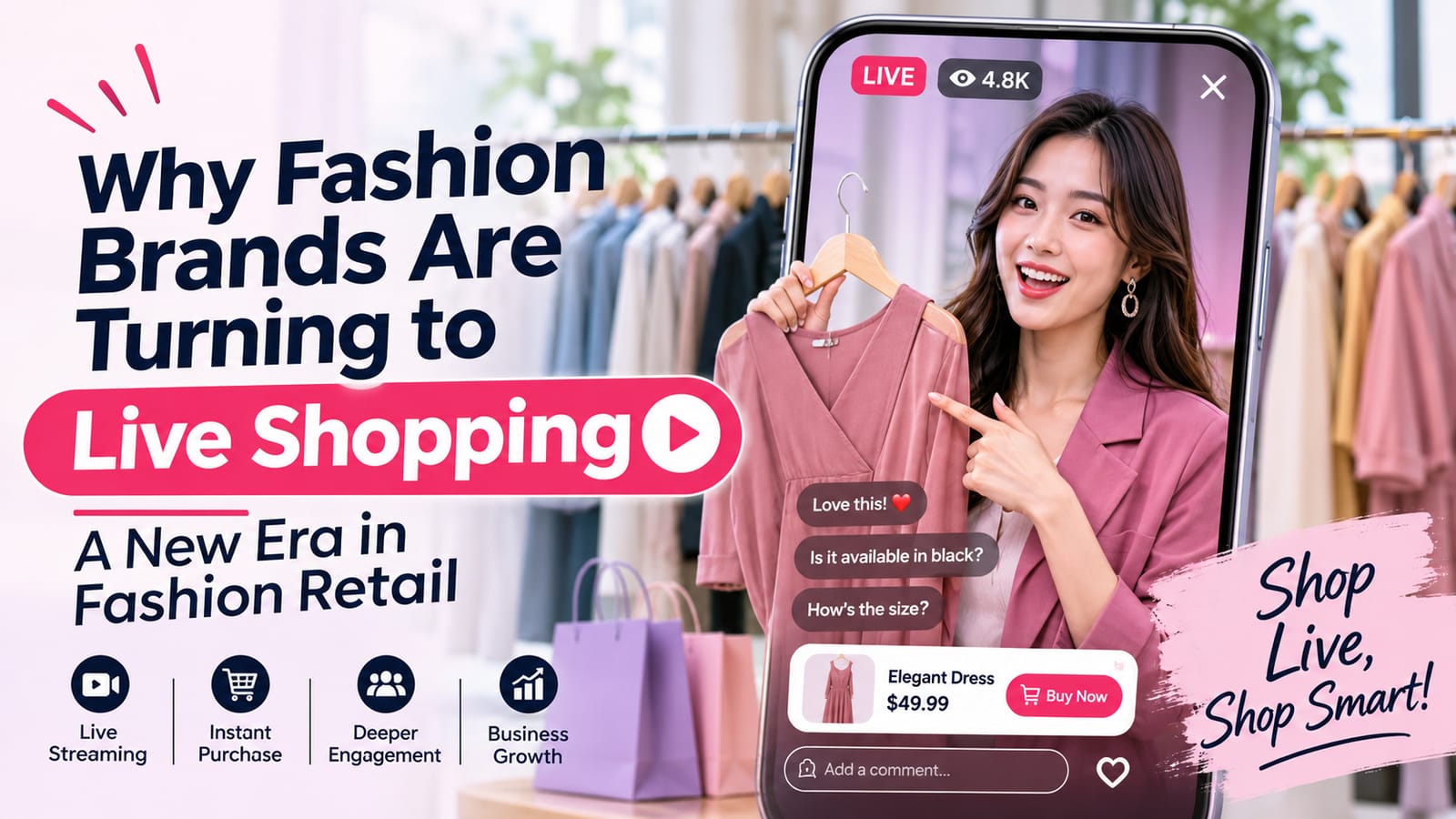
The growing adoption of live streaming shopping app development reflects a broader shift in how fashion businesses approach digital retail. Live shopping gives brands a way to turn product launches and promotional campaigns into interactive events rather than treating them as ordinary online listings.
Consider a fashion label preparing to release its summer collection. Traditionally, it might publish photographs, update its website, send an email campaign, and promote the launch through social media. With live shopping, the same collection can be introduced through a scheduled broadcast.
A host can present selected pieces, explain the inspiration behind the collection, demonstrate styling combinations, and introduce products as the session progresses. Viewers can follow the launch and explore the featured items while the event is taking place.
This creates a different rhythm for online retail. Instead of expecting customers to discover everything independently, the brand gives them a reason to visit at a particular time.
The format can also be adapted to different fashion activities:
New collection launches: Introduce seasonal products through a dedicated presentation.
Limited-edition releases: Give customers a closer look at products before a scheduled release.
Designer conversations: Discuss inspiration, materials, production methods, and styling decisions.
Trend-focused sessions: Present products around a particular trend, colour palette, or occasion.
End-of-season events: Introduce selected inventory through a live shopping event.
The important point is that live shopping does not need to become a daily sales broadcast. It can work as one part of a wider retail calendar.
Why Fashion Retailers Are Experimenting With Event-Led Selling
Fashion has a strong connection with timing. A product can attract attention because it is new, seasonal, associated with a particular event, or part of a trend gaining popularity.
Live shopping gives retailers another way to use these moments.
1. Collection Launches Become More Than a Product Announcement
A new collection usually involves several activities: photography, campaign planning, product descriptions, social media promotion, and website updates.
A live event can bring some of these activities together.
For example, a brand launching a festive collection could organise a presentation around different occasions. The host might introduce outfits for family gatherings, evening celebrations, and formal events. Rather than displaying every product separately, the collection is presented through a theme that helps customers understand how the pieces fit into different wardrobes.
This approach also gives the brand an opportunity to explain design choices that may not be obvious from a product photograph.
2. Limited Drops Can Create a Shared Shopping Moment
Limited-edition collections and exclusive releases are already part of fashion marketing. Live shopping can provide a format for introducing these products to an audience at the same time.
A streetwear label, for instance, could organise a broadcast before releasing a small collection. The presenter could explain the inspiration behind the designs, show available variations, and discuss the release details.
However, scarcity should be genuine. Artificial countdowns or misleading claims about product availability can damage customer trust. A successful event should make the release easier to understand, not pressure viewers into purchasing.
3. Independent Designers Can Tell the Story Behind Their Work
Large retailers often have substantial resources for campaigns and product launches. Independent designers may not have the same budgets, but they can still build meaningful relationships with customers.
A live session gives a designer space to discuss fabric choices, craftsmanship, sourcing, or the inspiration behind a collection.
For products where the making process matters, this context can be as important as the finished item.
It also allows smaller fashion businesses to develop a recognisable identity around their expertise rather than competing only on discounts or advertising budgets.
The Creator Economy Is Changing Who Presents Fashion Products
Fashion brands have traditionally relied on models, professional photographers, and advertising campaigns to introduce products. Social media has expanded that approach by making creators, stylists, and niche communities part of the discovery process.
Live shopping takes this relationship further by allowing creators to present products in real time.
A fashion creator might host a session about building a workwear wardrobe, while a beauty creator could demonstrate how different makeup products complement particular outfits. The products become part of a conversation rather than appearing only in a sponsored post.
For brands, choosing the right presenter is therefore an important decision.
A creator with a large following is not automatically the best choice. Audience relevance, communication style, product knowledge, and credibility may matter more than follower numbers.
Brands should also establish clear arrangements around sponsorship disclosures, product claims, commissions, and ownership of recorded content. These details help maintain transparency between the retailer, presenter, and audience.
The Operational Side of Running a Live Fashion Store
A live shopping event may look straightforward to viewers, but the business needs to coordinate several activities behind the scenes.
A fashion retailer must make sure that the products being presented are available, the product information is accurate, and the purchasing process works while the broadcast is running.
This becomes more complicated when a brand offers multiple sizes, colours, and product variations.
For example, a presenter might feature a jacket in three colours and several sizes. If the inventory system does not update correctly, customers could attempt to purchase an option that is no longer available.
A reliable operating process should consider:
Inventory coordination: Product availability should remain accurate during the event.
Product preparation: The host should have access to correct pricing, sizing, materials, and product details.
Order management: Purchases made during a broadcast should enter the retailer's normal fulfilment process.
Customer support: Questions about orders, delivery, and returns need a clear resolution process.
Technical preparation: Audio, lighting, connectivity, and streaming quality should be checked before going live.
These requirements demonstrate why live shopping is not simply a marketing activity. It also involves e-commerce operations, technology, customer service, and inventory management.
What Technology Does a Live Shopping Business Actually Need?
The technology required depends on the retailer's scale and existing infrastructure. A small boutique experimenting with occasional live sessions may have different requirements from a fashion marketplace hosting multiple broadcasts every day.
A dedicated shopping application may bring the experience together through several connected components.
Video and broadcasting infrastructure: The system needs to deliver stable live video and handle changes in audience size.
Product catalogue integration: Viewers should be able to explore products featured during the session without searching through an unrelated catalogue.
Shopping and checkout: The purchasing journey should connect smoothly with the retailer's payment and order management systems.
Inventory synchronisation: Product availability and variations need to remain consistent across the live session and other sales channels.
Host and session management: Businesses may need tools to schedule broadcasts, manage presenters, organise products, and control live events.
Performance analytics: Retailers should be able to understand attendance, viewing duration, product interactions, conversions, and sales.
These components should be selected according to the business model rather than added simply because they are available.
For a retailer considering a dedicated application, a White Label Live Shopping Platform may offer an alternative to developing the entire infrastructure independently. Such solutions can provide an existing foundation that a business can adapt to its branding and operational needs.
Before selecting one, businesses should examine its integration capabilities, customisation options, scalability, data ownership, and ongoing costs. A platform that works for a small product catalogue may not necessarily support a larger retailer with multiple hosts and simultaneous events.
How Fashion Brands Should Measure the Results
Viewer numbers alone do not establish whether a live shopping event has been successful.
A broadcast may attract a large audience but generate few meaningful product interactions. Another session may have fewer viewers but lead to stronger purchasing activity or more useful customer feedback.
Fashion retailers should evaluate performance using several measures:
Returns deserve particular attention in fashion retail. A successful broadcast should not simply generate orders; it should help customers make informed choices. If a product receives many purchases but also an unusually high number of returns, the brand may need to improve its sizing information, demonstrations, or product descriptions.
These measurements can help retailers decide which formats deserve further investment.
Where Triple Minds Fits Into the Live Shopping Technology Landscape
Developing a live shopping experience involves decisions about streaming infrastructure, application design, product integration, payment systems, and the overall customer journey.
For businesses exploring these requirements, Triple Minds is one development company whose work includes live shopping and white-label application solutions. Its live shopping platform offering provides a relevant example of how businesses can approach the technical side of bringing video-based commerce and online purchasing together.
The broader lesson is that the application should support the retailer's actual operating model. A fashion business planning occasional collection launches may not need the same infrastructure as a marketplace built around daily creator-led broadcasts.
Understanding that difference before development can help prevent unnecessary complexity and investment.
Is Live Shopping a Long-Term Direction for Fashion Retail?
Live shopping is unlikely to replace conventional e-commerce. Customers will continue to browse product pages, compare prices, read reviews, and purchase items whenever it suits them.
Its value lies in adding another way to discover products and participate in retail experiences.
For fashion businesses, the most interesting opportunity may be the connection between content, community, and commerce. A collection launch can become an event. A designer can explain the thinking behind a product. A creator can introduce a new style to an interested audience. A retailer can learn directly from the questions customers ask.
The format will not work equally well for every brand or product category. Its success depends on relevant content, reliable operations, suitable technology, and a clear understanding of the audience.
As online fashion retail continues to evolve, brands that treat live shopping as a considered part of their retail strategy—not simply another promotional channel—will be better placed to understand where it genuinely adds value.