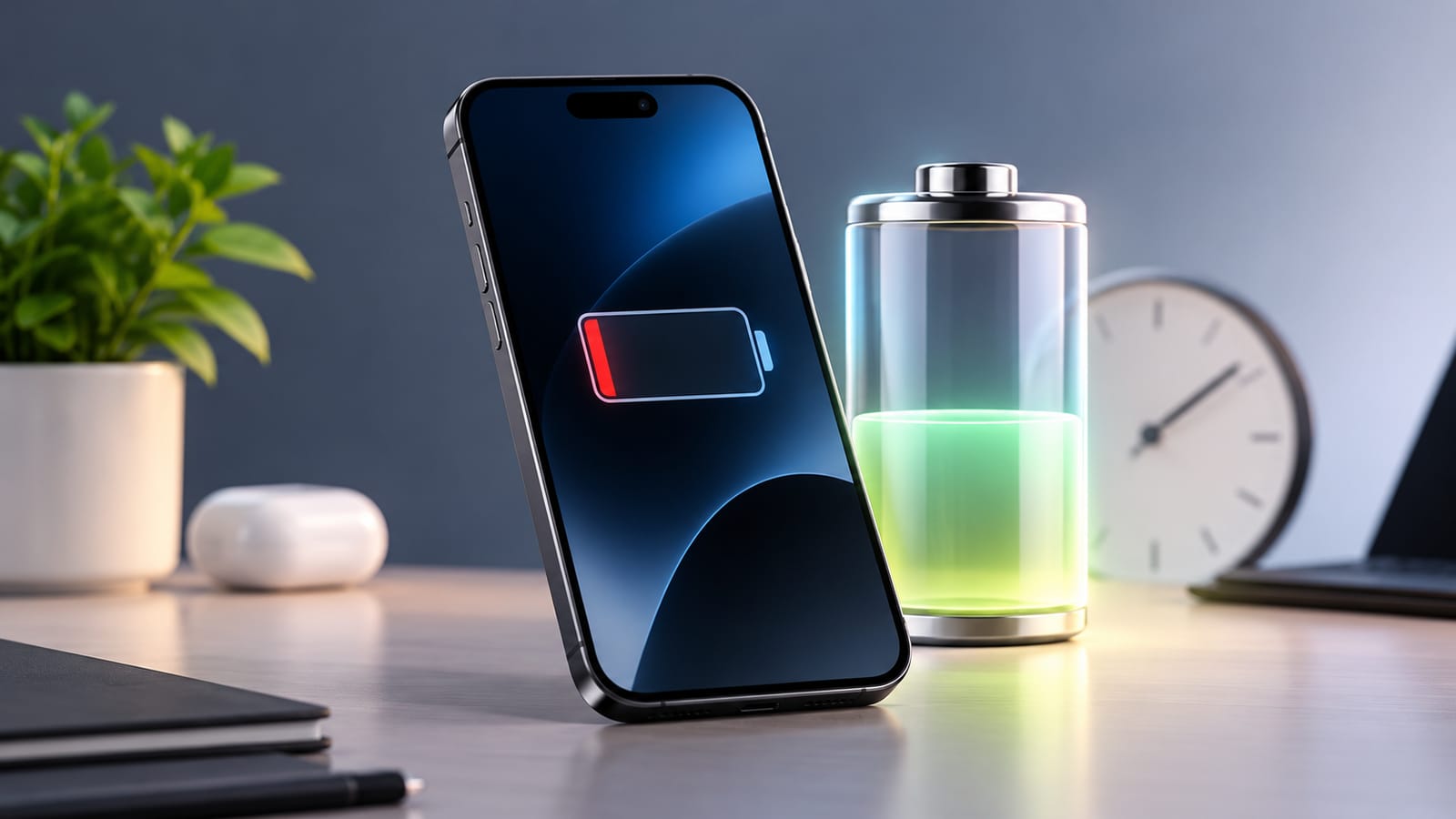
Three weeks ago I was stuck on a railway platform with a delayed train, a phone at 9% and a very expensive lesson. My 20,000mAh power bank was sitting at home, because it weighs about as much as a small dumbbell and I had decided it was "too much" for a short trip.
That's the thing nobody tells you when you search for the best power bank: the one with the biggest number on the box is rarely the one in your bag when you need it. So I went through the entire GrunX power banks collection to find out which one I would actually carry every day in 2026. The answer isn't the one with the most mAh, and it might save you some money.
What Is the Best Power Bank for Everyday Use in 2026?
The best power bank for everyday use in 2026 is a 10,000mAh model with 20W to 22.5W fast charging, because it gives you roughly two to three phone charges without the weight. Pick 20,000mAh only if you travel often, share charge with friends or top up a tablet too.
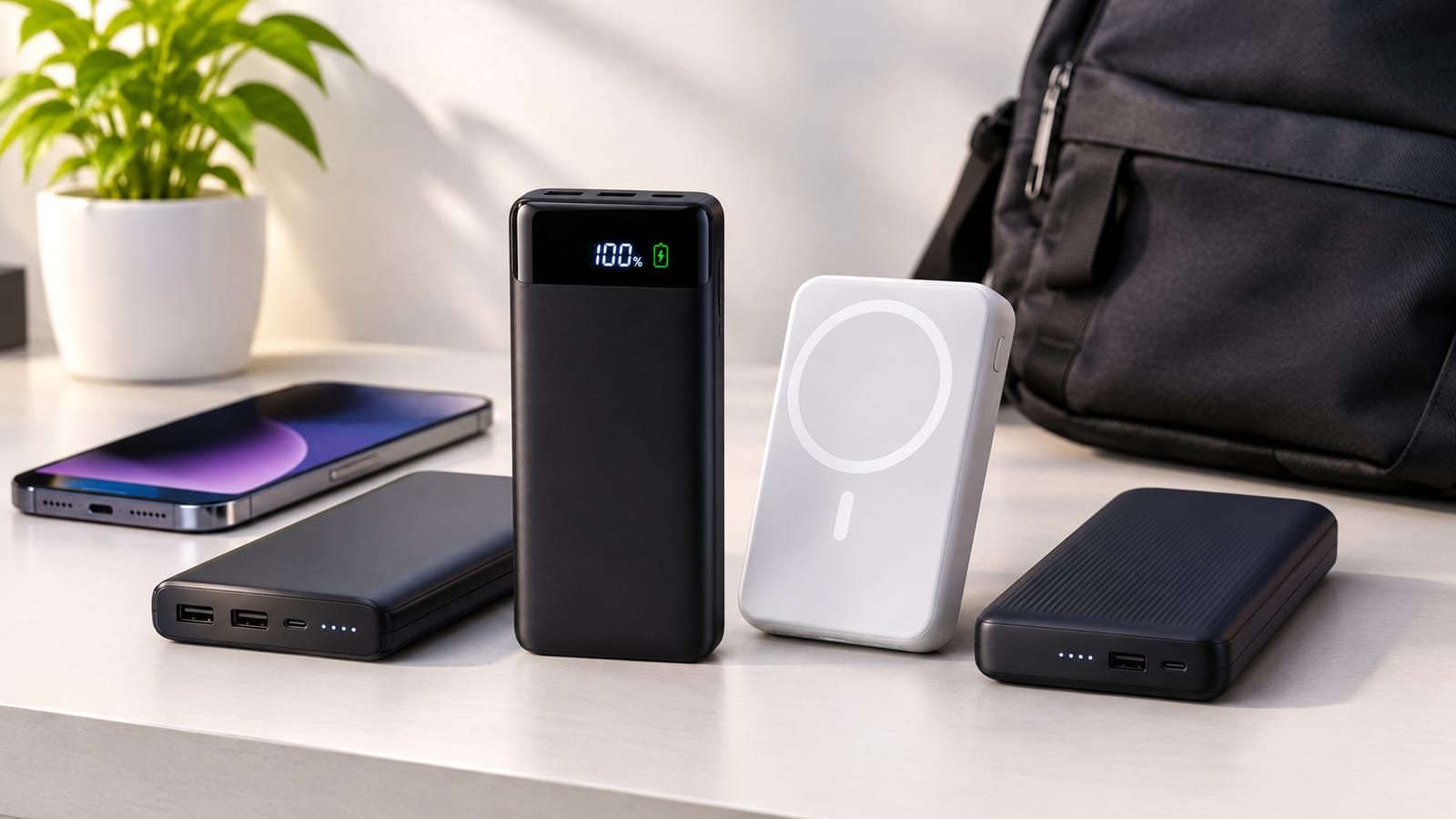
Here's how I got there. A good power bank has to pass one test before any spec sheet matters: will you actually carry it? A 10,000mAh power bank that lives in your jacket pocket beats a 20,000mAh one that lives in a drawer. The Zebronics 10000mAh 22.5W power bank is a good example. Its listing shows 170g, three ports (a PPS Type-C output plus dual USB-A) and an LED percentage display, so you know exactly how much is left before you leave the house.
That sounds boring until it saves you. The best power banks don't just store charge, they tell you honestly how much they have.
Why Is Everyone Searching for an Anker Power Bank, and Where Does GrunX Fit In?
Anker is one of the most searched power bank brands, and its own range covers built-in-cable, magnetic and high-wattage models. GrunX does not currently stock Anker power banks, so this guide covers the Ambrane, Portronics and Zebronics options we do sell, and how to judge any brand fairly.
When a friend says "just get me an Anker," I've learned what they usually mean: get me something safe, fast and not rubbish. Searches like anker power bank, anker portable charger and anker battery pack are really trust searches. People want a brand that won't let them down at 2% battery.
The good news is that you can judge any brand on the same five checks: printed capacity, usable output, ports, safety protections and weight. Every power bank below is measured against those five.
How Many mAh Do You Actually Need in a Portable Power Bank?
A 10,000mAh portable power bank gives roughly 2 to 3 full smartphone charges, and a 20,000mAh one gives about 4 or more. Real numbers run lower than the maths suggests, because some energy is lost when the battery's voltage is converted for charging.
My rule is to count your day, not your battery. For a normal workday, one top-up is usually plenty, and 10,000mAh covers it with room for earbuds. For a long train ride, a trip, or if you're the friend who always lends charge, move up to 20,000mAh. The Portronics Luxcell Mini 20K lists 4+ full phone charges, while the Zebronics lists 2 to 3. Treat both as friendly estimates, because your phone's battery size and the heat of the day will change the result.
Here is the quick maths I now use before buying. Take the printed capacity, multiply by roughly 0.6 to 0.7 for real-world output, and divide by your phone's battery size. A 10,000mAh bank on a 5,000mAh phone gives you roughly 1.2 to 1.4 charges, not two. It is not a precise formula, but it stops you from buying a power bank that disappoints you halfway through the day, and it explains why two people with the same power bank report such different results.
Which Is the Best Travel Power Bank?
For travel, the best power bank is a compact 20,000mAh model with two output ports. At a listed 312g, the Portronics Luxcell Mini 20K keeps 20,000mAh in a pocket-friendly body, and the Ambrane Stylo N20 adds a built-in Type-C cable.
Travel is where small annoyances multiply: a forgotten cable, a full bag, one socket shared by four people. The Luxcell pairs a 22.5W USB-A output with a 20W PD Type-C port, so two devices charge together, and its listing mentions BIS certification and multi-layer chip protection. The Ambrane Stylo N20 20000mAh lists 22.5W output, simultaneous Type-C and USB-A charging, a built-in Type-C cable with a loop holder, and a full recharge in about five hours with a 20W PD charger.
One travel rule: airlines generally require power banks in cabin baggage, not checked luggage, so check your airline's policy before you fly. A cable organiser pouch keeps the power bank and cables from vanishing into the bag.