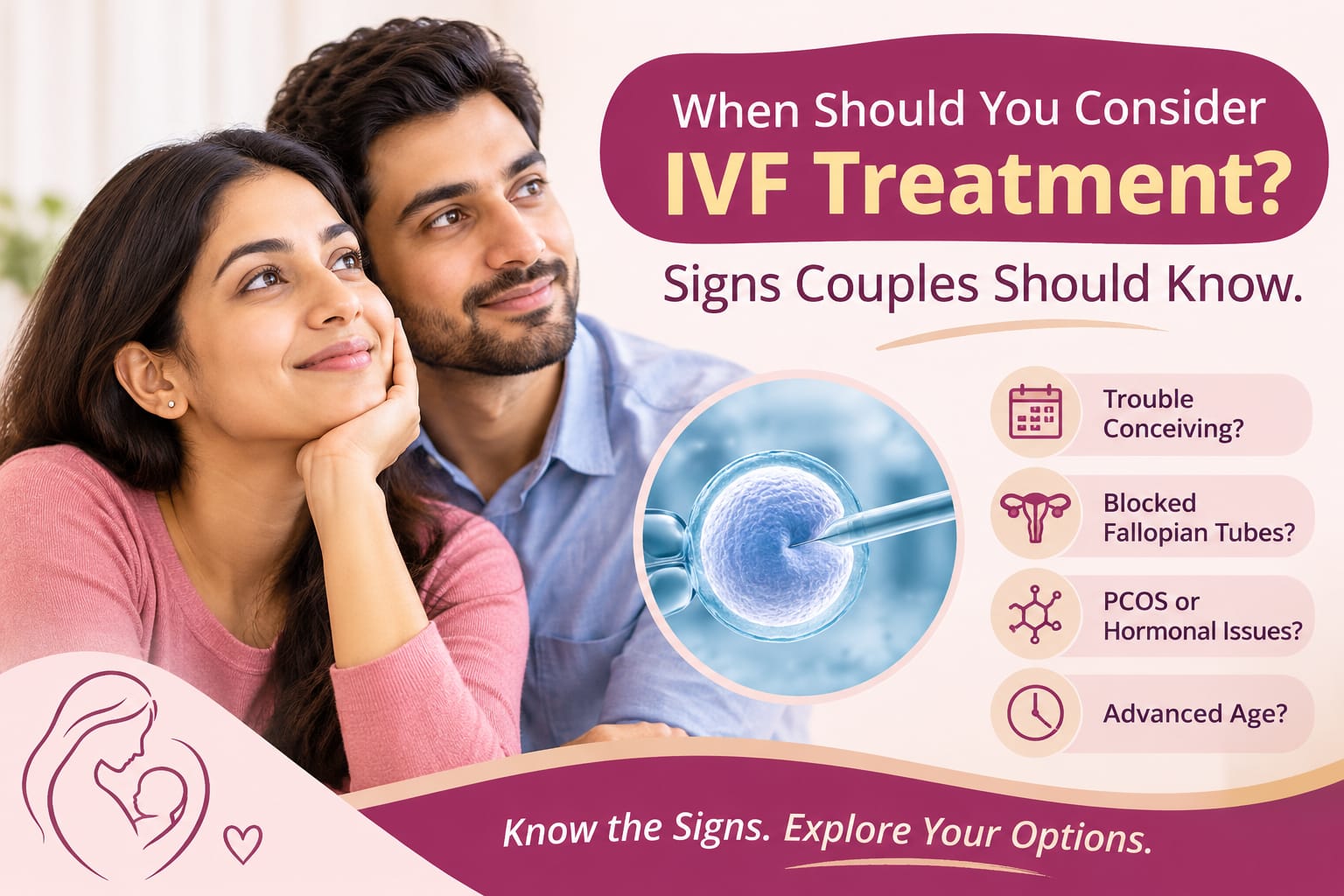
For many couples, starting a family is an important life goal. However, getting pregnant does not always happen as quickly as expected. While some couples conceive naturally within a few months, others may experience difficulties due to hormonal conditions, reproductive health issues, age-related fertility changes or unexplained infertility.
One common question couples ask is: When should we consider IVF treatment?
In Vitro Fertilisation (IVF) is an assisted reproductive technology that helps couples experiencing fertility difficulties. However, IVF is not necessary for everyone. The right treatment depends on the underlying cause of infertility, the woman's age, medical history and previous fertility treatments.
Understanding the signs that indicate a need for fertility evaluation can help couples make informed decisions about their reproductive health.
1. You Have Been Trying to Conceive Without Success
One of the most important reasons to seek fertility advice is difficulty conceiving despite regular unprotected intercourse.
Generally, couples should consider a fertility evaluation if:
The woman is younger than 35 and has been trying for 12 months.
The woman is between 35 and 39 and has been trying for 6 months.
The woman is 40 or older and should seek an evaluation without unnecessary delay.
A fertility assessment can help identify possible reasons for difficulty conceiving and determine whether natural conception, medication, IUI or IVF may be appropriate.
2. Blocked or Damaged Fallopian Tubes
Fallopian tubes play an essential role in natural conception because fertilisation usually occurs inside the tube.
If both fallopian tubes are blocked or severely damaged, the egg and sperm may not meet naturally. Conditions such as previous pelvic infections, endometriosis or previous pelvic surgery can sometimes affect the fallopian tubes.
In such cases, IVF may be recommended because fertilisation takes place outside the body, and the resulting embryo is transferred into the uterus.
3. You Have Been Diagnosed With Severe Male Factor Infertility
Male fertility is equally important when evaluating a couple's chances of conception.
Certain semen abnormalities, including very low sperm count, poor sperm motility or abnormal sperm morphology, may make natural conception difficult.
Depending on the severity and underlying cause, fertility specialists may recommend IVF with Intracytoplasmic Sperm Injection (ICSI). In this procedure, a single selected sperm is injected directly into an egg to assist fertilisation.
4. You Have PCOS or Ovulation Problems
Polycystic Ovary Syndrome (PCOS) is a common hormonal condition that can affect ovulation and menstrual regularity.
Women with PCOS may experience:
Irregular or missed periods
Infrequent ovulation
Difficulty predicting fertile days
Difficulty conceiving
However, having PCOS does not automatically mean that IVF is required. Many women with PCOS conceive naturally or with ovulation-induction treatment. IVF may be considered if simpler treatments are unsuccessful or other fertility factors are present.
5. You Have Endometriosis or Reduced Ovarian Reserve
Endometriosis can affect reproductive organs and may interfere with natural conception. Its impact on fertility varies depending on the severity and individual circumstances.
Similarly, reduced ovarian reserve may indicate a lower number of eggs remaining in the ovaries. Tests such as Anti-Müllerian Hormone (AMH) and antral follicle count can help assess ovarian reserve.
It is important to understand that AMH alone cannot predict whether a woman will conceive naturally or determine whether IVF is necessary. Age, overall reproductive health and other fertility findings must also be considered.
6. Previous Fertility Treatments Have Not Worked
Some couples initially try less invasive fertility treatments, such as ovulation-induction medication or Intrauterine Insemination (IUI).
If these treatments do not result in pregnancy after an appropriate number of attempts, a fertility specialist may discuss IVF as the next step.
The decision depends on factors such as age, diagnosis, duration of infertility and previous treatment response.
7. You Have Experienced Repeated Pregnancy Loss
Experiencing recurrent pregnancy loss can be emotionally difficult for couples.
Repeated miscarriages may sometimes be associated with chromosomal abnormalities, uterine conditions, hormonal factors or other medical causes.
A detailed evaluation is important before deciding on treatment. In selected cases, IVF with additional procedures such as preimplantation genetic testing for aneuploidy (PGT-A) may be discussed, although it is not routinely recommended for every couple and does not guarantee a successful pregnancy.
What Happens During IVF Treatment?
IVF involves several stages, and the treatment plan is personalised according to the couple's fertility assessment.
The main stages generally include:
Ovarian stimulation: Medications are used to stimulate the ovaries to develop multiple eggs.
Egg retrieval: Mature eggs are collected through a minor procedure under ultrasound guidance.
Fertilisation: Eggs and sperm are combined in the laboratory, or ICSI may be performed when indicated.
Embryo development: Fertilised eggs are monitored as they develop into embryos.
Embryo transfer: A suitable embryo is transferred into the uterus.
Pregnancy testing: A blood test is performed at the recommended time to check for pregnancy.
The number of treatment cycles required and the chances of success vary between individuals.
How Do You Know If IVF Is the Right Choice?
IVF is not always the first treatment option. A fertility specialist considers several factors before recommending it, including:
The woman's age and ovarian reserve
Duration of infertility
Fallopian tube health
Sperm quality and quantity
Previous pregnancy history
Results of earlier fertility treatments
Any underlying reproductive health conditions
A comprehensive fertility assessment helps determine whether IVF, IUI, medication or another treatment approach is suitable.
Final Thoughts
Knowing when to consider IVF treatment can help couples avoid unnecessary delays in seeking fertility care. Difficulty conceiving, blocked fallopian tubes, severe male factor infertility, advanced reproductive age and unsuccessful previous treatments are some situations where IVF may be discussed.
However, every couple's fertility journey is different. An early consultation with an experienced fertility specialist can help identify the underlying problem and explore appropriate treatment options.
For couples exploring fertility treatment options, consulting a qualified fertility specialist in South Delhi can be a helpful first step towards understanding their reproductive health and planning the next stage of their journey.