Introduction
Generating quality leads is one of the most important objectives of digital marketing. Businesses need more than social media followers or website visitors; they need to connect with people who are genuinely interested in their products or services.
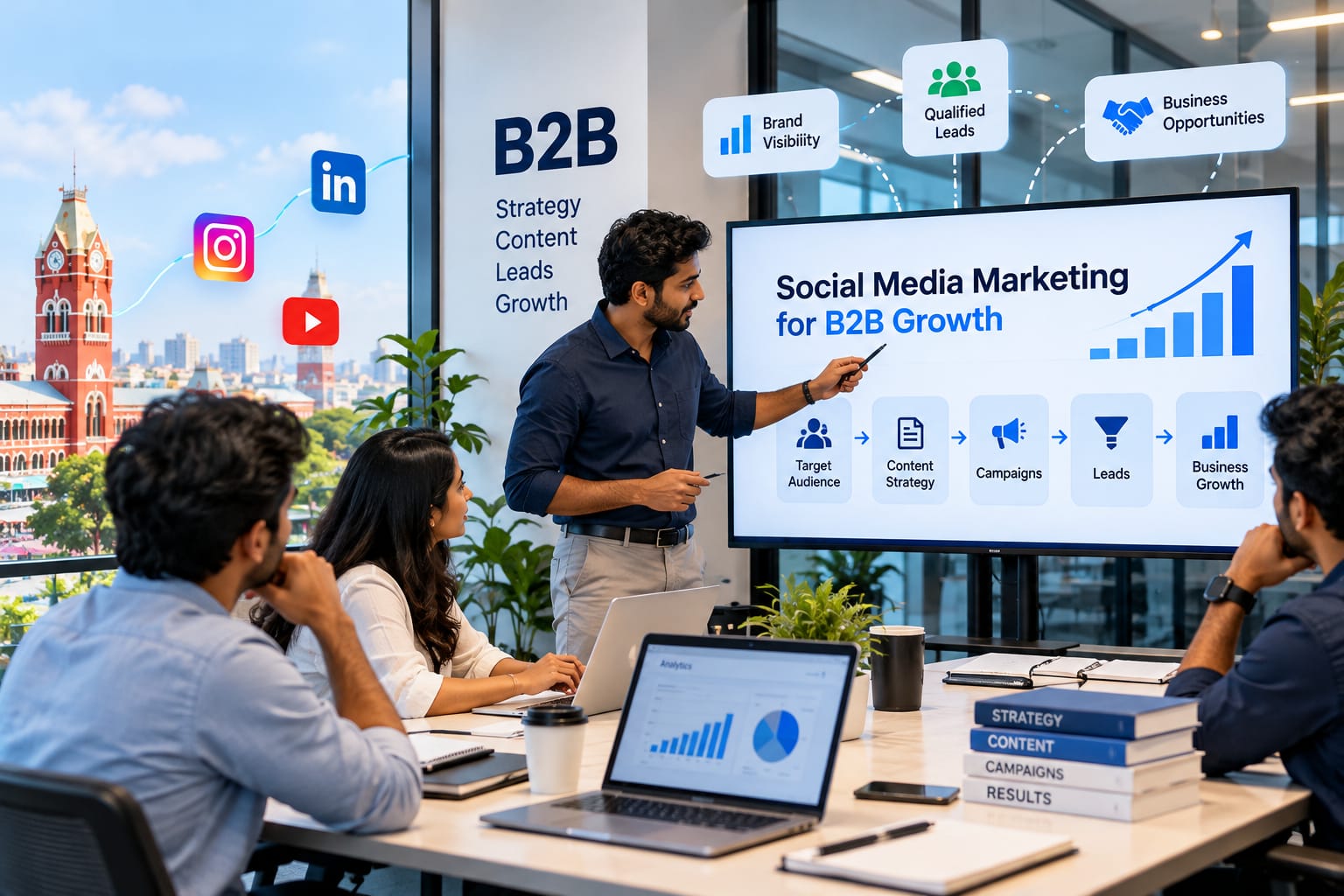
For businesses in Chennai, social media platforms such as Instagram, Facebook, LinkedIn, and YouTube can provide opportunities to reach potential customers, communicate business value, and encourage enquiries.
However, successful lead generation requires a clear strategy. Businesses must understand their target audience, create relevant content, develop compelling offers, and make it easy for interested customers to take the next step.
Working with a professional Social Media Marketing Agency in Chennai can help businesses develop a structured approach to social media lead generation and measure the results of their campaigns.
What Is Social Media Lead Generation?
Social media lead generation is the process of attracting potential customers through social platforms and encouraging them to express interest in a product or service.
A lead may be someone who fills out an enquiry form, requests a consultation, books a demonstration, sends a business message, or downloads a useful resource.
For example, a Chennai interior design company might receive enquiries from homeowners interested in renovation services. A B2B software company could generate demonstration requests from businesses looking for technology solutions.
The objective is not simply to collect contact details. It is to attract relevant prospects who have a genuine need for the business's offering.
1. Identify Your Ideal Customer
Before launching a lead generation campaign, define the type of customer your business wants to attract.
Consider the customer's needs, location, budget, challenges, preferences, and buying behaviour.
For B2B businesses, it may also be useful to consider the industry, company size, decision-maker's role, and purchasing requirements.
For example, a Chennai-based HR software company may target small and medium-sized businesses that need better employee management systems.
A residential interior design company may focus on homeowners planning new construction or renovation projects within its service area.
A clear customer profile helps businesses create relevant content and avoid spending resources attracting audiences that are unlikely to convert.
2. Choose the Right Social Media Platform
Different platforms support different types of lead generation.
Instagram can help visually oriented businesses showcase products, demonstrate services, share customer-approved project examples, and encourage enquiries through profile links or direct messages.
Facebook can support local promotions, community engagement, and advertising campaigns designed to reach relevant audiences.
LinkedIn can be useful for B2B companies seeking professional visibility, business connections, consultation requests, and qualified prospects.
YouTube
YouTube can help businesses explain complex services through tutorials, demonstrations, webinars, and educational videos.
Rather than spreading resources across every platform, prioritise the channels that best match your target audience and business objectives.
3. Create Content That Attracts Potential Customers
People are more likely to engage with content that addresses their questions or helps them solve a problem.
Instead of publishing only promotional messages, create content that demonstrates your expertise and explains the value of your services.
Useful content ideas include:
Educational posts that answer common customer questions.
Short videos demonstrating products or services.
Carousels explaining a process step by step.
Case studies based on verified results.
Frequently asked questions about pricing or service delivery.
Comparison guides that help customers evaluate options.
Genuine testimonials shared with permission.
For example, a digital marketing company could publish a checklist explaining how businesses can identify website conversion problems.
The post could direct interested readers to a relevant service page where they can request a consultation.
This approach connects helpful content with a clear next step.
4. Develop a Compelling Lead Generation Offer
Potential customers need a reason to take action.
A well-designed offer gives them something relevant in exchange for contacting your business or sharing their details.
Depending on your industry, suitable offers might include:
A product demonstration.
An introductory consultation.
A service assessment.
A downloadable checklist.
A quotation request.
A webinar or educational session.
For example, a B2B technology company could offer a product demonstration to businesses evaluating software solutions.
A professional service provider might invite potential customers to schedule an initial consultation.
Make the offer specific, explain what the customer will receive, and avoid promising outcomes that cannot be guaranteed.
5. Use Clear Calls to Action
A call to action tells your audience what to do next.
Without one, users may consume your content without understanding how to enquire about your services.
Examples include:
Request a consultation.
Explore our services.
Book a product demonstration.
Request a quotation.
Visit our website to learn more.
Send us a message to discuss your requirements.
Match the call to action to the customer's stage in the buying journey.
Someone discovering your business for the first time may prefer an educational resource, while a prospect comparing providers may be ready to request a quotation.
6. Build a Landing Page That Converts Visitors
Generating clicks is only part of the lead generation process. Your website must make it easy for interested visitors to understand the offer and submit an enquiry.
A good landing page should include a clear headline, a concise explanation of the service, relevant benefits, supporting evidence where available, and a straightforward enquiry form.
Avoid requesting unnecessary information. A short form asking for essential details may reduce friction, although the best format depends on the service and qualification requirements.
Ensure the page works well on mobile devices, loads reliably, and provides clear confirmation after submission.
Businesses should also implement appropriate analytics and conversion tracking to understand which campaigns generate enquiries.
7. Use Paid Social Media Campaigns Strategically
Paid advertising can help businesses distribute their offers to relevant audiences.
A campaign might promote a consultation, product demonstration, webinar, or service enquiry.
Before launching an advertisement, define the target audience, campaign objective, budget, creative message, and conversion action.
Test different messages and creative formats systematically. Monitor the quality of incoming leads instead of evaluating performance exclusively through clicks or impressions.
For example, a campaign that generates fewer enquiries at a reasonable cost may be more valuable than one that produces many enquiries from people who are not suitable customers.
Campaign performance depends on the offer, audience, competition, budget, and conversion process. Review these factors before making major budget changes.
8. Measure Lead Quality and Campaign Performance
A reliable reporting process helps businesses understand whether social media is contributing to commercial objectives.
Track relevant metrics such as:
Metric
What it tells you
Reach and impressions
How widely content is distributed
Link clicks
How many users visit the destination
Enquiries generated
How many prospects express interest
Qualified leads
How many prospects meet your requirements
Cost per lead
The advertising cost associated with each lead
Conversion rate
The proportion of visitors who complete the desired action
Sales generated
The commercial outcomes attributed to campaigns
Use a CRM or lead-management spreadsheet to record enquiry sources, follow-up activity, lead quality, and eventual sales outcomes.
This helps identify which campaigns produce useful business opportunities rather than simply generating activity.
How Webdoux Can Help Generate Social Media Leads
Webdoux provides social media marketing services covering strategy, content creation, campaign management, audience engagement, and performance tracking.
These activities can support businesses in developing relevant content, promoting suitable offers, and evaluating the effectiveness of their social media campaigns.
A structured strategy should align platform selection, content, advertising, landing pages, and lead follow-up with the business's objectives.
To explore the available options, visit Webdoux's social media marketing services.
Conclusion
Social media lead generation works best when businesses combine audience research, helpful content, compelling offers, clear calls to action, and a well-designed conversion process.
For businesses in Chennai, the goal should be to attract relevant prospects and guide them towards meaningful conversations, consultations, or purchases.
Choosing the right Social Media Marketing Agency in Chennai can help bring these activities together into a measurable marketing strategy.
Explore Webdoux's social media marketing services to discuss how your business can improve its online visibility and lead generation efforts.
Frequently Asked Questions
1. How can social media generate leads for a business?
Businesses can publish relevant content, promote offers, run targeted advertising campaigns, and direct interested users to enquiry forms, booking pages, or messaging channels.
2. Which social media platform is best for lead generation?
The best platform depends on your audience and offering. LinkedIn can suit B2B services, while Instagram and Facebook may support consumer-facing and local businesses.
3. How can I improve the quality of social media leads?
Define your ideal customer, communicate your offer clearly, use appropriate targeting, ask relevant qualification questions, and follow up promptly.
4. Is paid advertising necessary for social media lead generation?
No. Organic content can generate enquiries, while paid campaigns may provide additional reach and opportunities to target specific audiences.
5. How do I measure social media lead generation success?
Track qualified leads, cost per lead, conversion rates, sales opportunities, and revenue where reliable attribution is available.