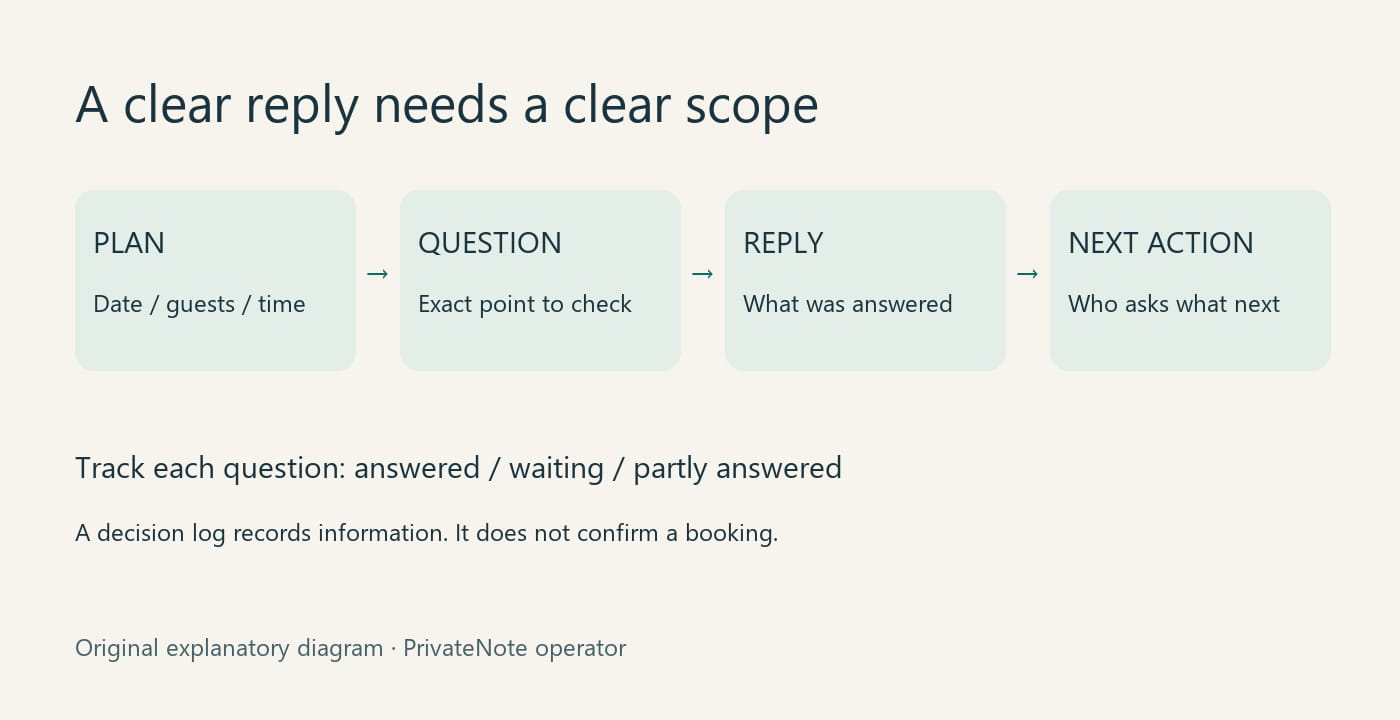
When a group is choosing a venue, the chat usually grows faster than the plan. One person asks about the time, another asks about the number of guests, and a third forwards an old reply. Soon, a sentence that answered one question starts to look like approval for the whole evening.
A small decision log can prevent that confusion. Its purpose is to preserve the scope of each answer: what was asked, which conditions applied, and what still needs checking.
Start with the version of the plan
Before comparing replies, write down the date, expected group size and proposed start time. Give this set of conditions a short label, such as Plan A. If the group changes the time or number of guests, create Plan B rather than quietly editing the earlier conditions.
This is useful because an answer can be accurate and still be irrelevant to the new plan. A reply about six guests at an earlier time does not establish availability for a larger group later that evening.
Keep the question beside the answer
Copy the relevant question into the log, then summarize the reply without expanding it. Preserve the original message privately so the next organizer can check the wording if necessary.
For example, a reply saying that a time is available answers a timing question. It does not, by itself, confirm the total price, the items included, the location or the reservation status. Those are separate questions unless the sender explicitly addresses them.
Use three states instead of one check mark
Mark each item as answered, waiting or partly answered. A single check mark is too easy to read as approval of every detail.
Answered means that a specific question has a clear reply under the recorded conditions. Waiting means that no reply has arrived. Partly answered means that one part is clear while another remains open. None of these labels should substitute for an explicit booking confirmation.
Compare like with like
When reviewing two venue replies, first check whether they describe the same plan. If they do not, identify the differences before drawing a conclusion. Avoid comparing a partial estimate with a complete one as though they cover identical items.
A practical log has five columns: plan version, question, reply scope, current state and next action. Keep it brief enough that someone can read it before sending the next message.
Make the next action specific
Assign the outstanding question to one organizer. Instead of writing “follow up,” write what needs to be checked and who will ask it. This reduces duplicate messages and makes a handover easier if that organizer becomes unavailable.
Share the summary, protect the conversation
The group usually needs the current plan, confirmed information and remaining questions. It does not need an unfiltered export of private messages, phone numbers or personal circumstances. Share only what is necessary and check that forwarded material does not expose unrelated details.
Before sending a final announcement, return to the venue's explicit confirmation and compare it with the current plan. If a key condition changed, ask again. The log is a record of decisions, not proof that a booking exists.
Disclosure and context
This guide was prepared by the operator of PrivateNote, a Gangnam karaoke information and reservation-enquiry website. The examples above illustrate a record-keeping method; they do not describe a particular venue's availability, facilities, prices or booking terms. For context about the operator, see the PrivateNote Gangnam karaoke information guide .