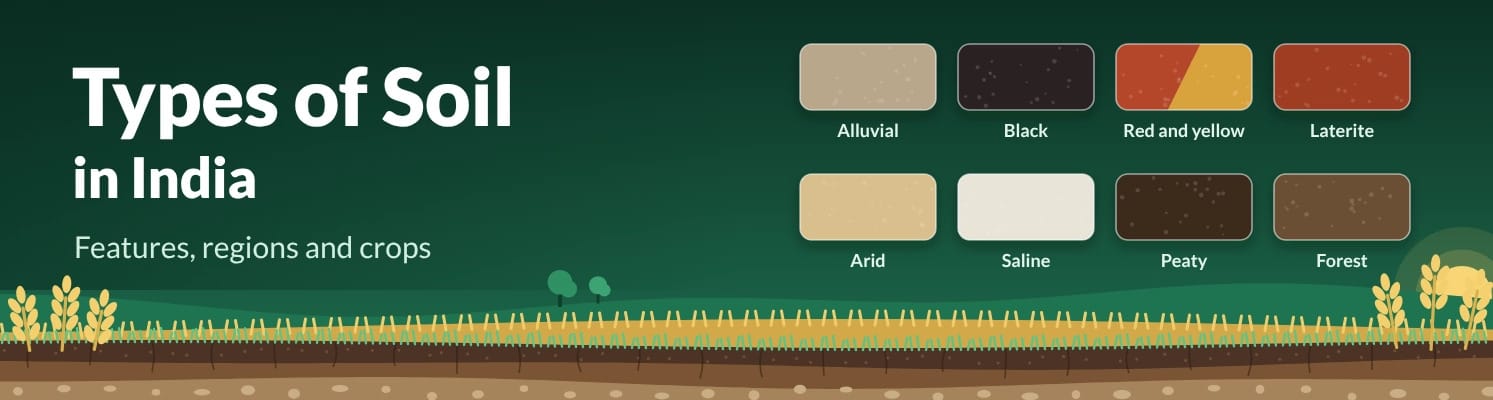
India has a diverse range of soil types, each with distinct characteristics that influence agricultural productivity. Soil composition, moisture retention, nutrient availability and climate determine which crops can grow successfully in a particular region. Understanding the different types of soil in India is therefore important for farmers, agriculture students and anyone interested in sustainable farming.
The Indian Council of Agricultural Research (ICAR) classification commonly groups Indian soils into eight major types: alluvial, black, red and yellow, laterite, arid, saline, peaty and marshy, and forest and mountain soils.
1. Alluvial Soil
Alluvial soil is among the most widespread and agriculturally productive soils in India. It develops through the deposition of sediments carried by rivers and is commonly found across the northern plains, river valleys and coastal deltas.
Key characteristics:
- Generally fertile and suitable for intensive cultivation.
- Supports crops such as wheat, rice, sugarcane and pulses.
- Common in Punjab, Haryana, Uttar Pradesh, Bihar and parts of West Bengal.
The availability of water and nutrients makes alluvial soil particularly important for India's food production.
2. Black Soil
Black soil, also known as regur or black cotton soil, is primarily associated with the Deccan Plateau. Its clay-rich composition allows it to retain moisture for extended periods.
Key characteristics:
- Swells when wet and develops cracks during dry weather.
- Contains minerals such as lime, iron and magnesia.
- Particularly suitable for cotton, as well as sugarcane, groundnut and certain millets.
Its moisture-retention capacity makes black soil valuable in areas that experience seasonal rainfall.
3. Red and Yellow Soil
Red and yellow soils develop mainly from crystalline rocks. Their colour is associated with iron compounds, with differences in oxidation and hydration contributing to the red or yellow appearance.
Key characteristics:
- Found across parts of southern and eastern India.
- Often relatively low in nitrogen, phosphorus and organic matter.
- Used for cultivating millets, pulses, groundnut and ragi.
Appropriate irrigation, fertilisation and organic matter management can help improve crop productivity in these soils.
4. Laterite Soil
Laterite soil forms in regions experiencing high temperatures and heavy seasonal rainfall. Intensive leaching removes several soluble nutrients, leaving the soil relatively rich in iron and aluminium oxides.
Key characteristics:
- Found in parts of Karnataka, Kerala, Tamil Nadu, Odisha and other regions.
- Often requires manure and fertilisers to improve agricultural productivity.
- Can support tea, coffee and cashew cultivation under suitable conditions.
Laterite is also known for its traditional use as a building material in some regions.
5. Arid or Desert Soil
Arid soil is characteristic of dry regions, particularly western Rajasthan. Limited rainfall and high evaporation influence its composition and fertility.
Key characteristics:
- Usually sandy, with low moisture and organic matter.
- May contain soluble salts and calcium-rich deposits.
- Supports drought-tolerant crops such as pearl millet and barley where conditions and irrigation permit.
Efficient water management is essential for farming in arid areas.
6. Saline Soil
Saline soil contains excessive soluble salts that can interfere with plant growth and reduce agricultural productivity. Salinity can develop naturally or increase because of poor drainage and inappropriate irrigation practices.
Key characteristics:
- Occurs in parts of Gujarat, coastal regions, and some areas of Haryana and Punjab.
- High salt concentrations can restrict water uptake by plants.
- Soil reclamation may involve suitable drainage, water management and amendments such as gypsum when recommended by soil testing.
Selecting salt-tolerant crops and managing irrigation carefully can help improve the use of affected land.
7. Peaty and Marshy Soil
Peaty and marshy soils develop in waterlogged environments where decomposing plant material accumulates. They may contain substantial organic matter and are often dark in colour.
Key characteristics:
- Found in selected wetland and coastal regions.
- Can have high organic matter content.
- May support rice cultivation in suitable locations, depending on drainage and other soil conditions.
Managing excess water is an important consideration when cultivating crops in these areas.
8. Forest and Mountain Soil
Forest and mountain soils occur across the Himalayan region and other hilly areas. Their properties vary according to altitude, vegetation, slope and local climate.
Key characteristics:
- Soil texture and fertility can vary significantly between valleys and higher slopes.
- Some mountain soils are acidic and low in organic matter.
- Suitable crops may include tea, fruits and spices, depending on local conditions.
Terrace farming and erosion-control measures help protect these soils on sloping land.
Why Is Soil Conservation Important?
Healthy soil is essential for long-term agricultural productivity. Erosion, nutrient depletion, salinity and excessive water use can gradually reduce soil quality.
Some useful soil conservation practices include:
- Crop rotation: Alternating crops can support better nutrient management.
- Organic matter management: Compost and suitable organic amendments can improve soil structure.
- Contour farming:Ploughing along the natural contours of slopes helps reduce runoff.
- Terrace farming:Terraces reduce erosion on hilly land.
- Soil testing:Laboratory analysis helps identify nutrient deficiencies, pH issues and salinity.
How Can Farmers Identify Their Soil Type?
The appearance of soil can provide initial clues, but laboratory testing offers more reliable information about its properties and nutrient status. Soil testing can help farmers make informed decisions about fertiliser application, crop selection and soil improvement.
In India, the Soil Health Card scheme provides information about soil health and nutrient management. Farmers can also approach appropriate agricultural extension services or soil-testing laboratories for guidance.
Conclusion
The eight major soil groups in India differ in fertility, texture, water retention and geographical distribution. Alluvial soil supports extensive cultivation in the northern plains, black soil is well known for cotton, and laterite soil supports selected plantation crops. Other soil types are suited to different crops and farming conditions.
Understanding these differences helps farmers select suitable crops, manage nutrients and conserve land for future agricultural needs. Scientific soil testing and responsible farming practices remain important for maintaining healthy soil and sustainable crop production.
Read More: Explore the detailed guide on Types of Soil in India: Features, Regions and Crops published by SGT University to learn more about Indian soils, their characteristics and their agricultural significance.