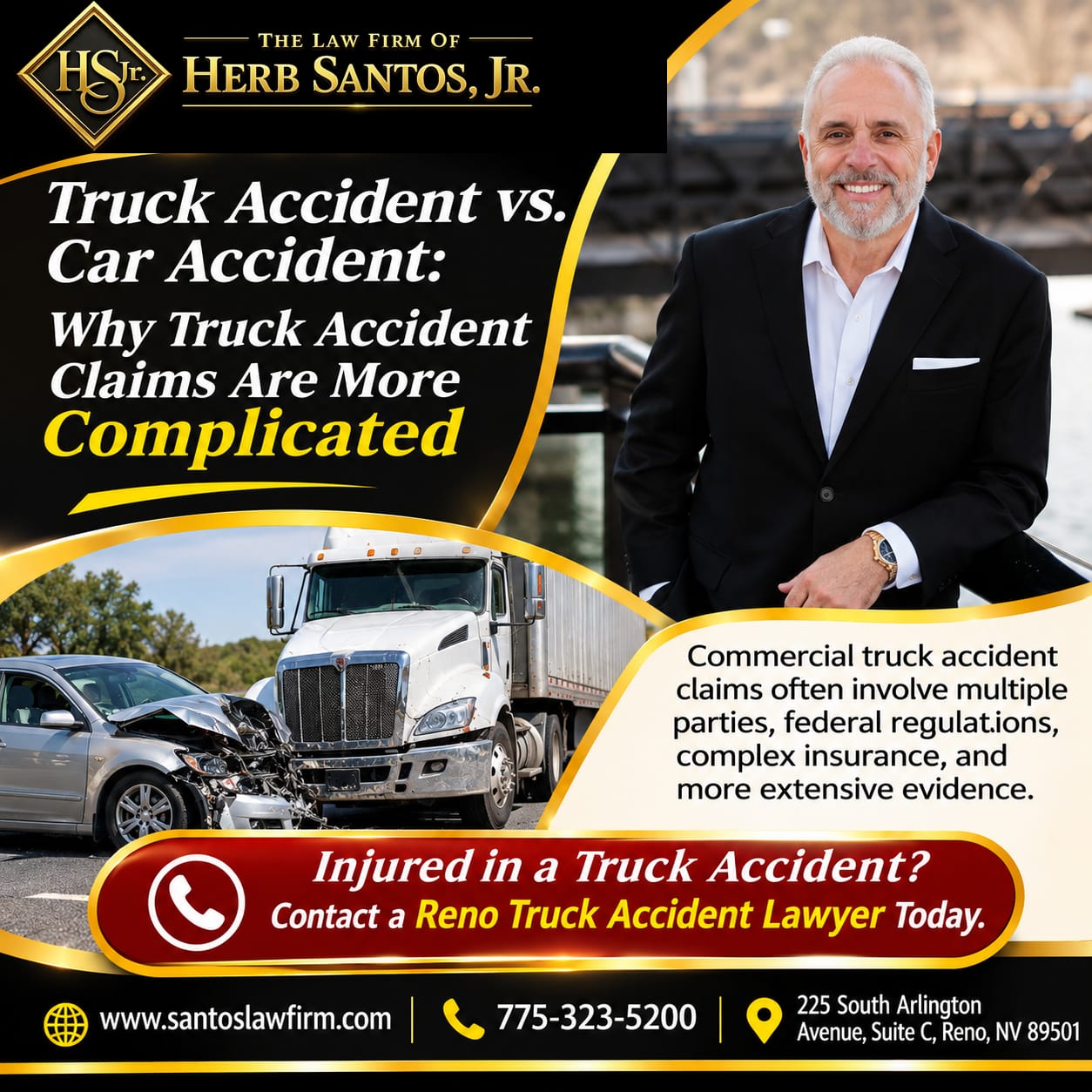
A traffic accident can cause serious injuries, unexpected medical expenses, lost income, and significant emotional stress. However, not all motor vehicle accident claims involve the same legal challenges.
While car accidents commonly involve two drivers and their insurance companies, commercial truck accidents may involve several responsible parties, federal safety regulations, complex insurance policies, and extensive evidence.
Understanding the differences between truck accident and car accident claims can help injured individuals recognize why commercial vehicle collisions often require more detailed investigations.
What Is the Difference Between a Truck Accident and a Car Accident Claim?
Both car accident and truck accident claims generally involve determining negligence, establishing liability, and evaluating damages.
However, commercial truck accidents often present additional complications because of the vehicle's size, commercial operation, insurance arrangements, and applicable safety requirements.
For example, a typical car accident may involve a dispute over which driver failed to yield.
A commercial truck accident may require investigators to examine the truck driver's conduct, trucking company procedures, maintenance records, cargo loading, and compliance with safety regulations.
These additional factors can significantly affect how an injury claim is investigated and resolved.
Truck Accident vs. Car Accident: Key Differences
Factor Car Accident Truck Accident Vehicle size Generally smaller passenger vehicles Large commercial vehicles Potentially liable parties Often one or more drivers Driver, carrier, maintenance provider, or other parties Regulations Primarily state traffic laws State laws and potentially federal commercial vehicle regulations Evidence Police reports, photographs, witness statements Driver logs, maintenance records, electronic data, and other records Insurance Personal auto insurance policies Commercial insurance arrangements Investigation Often relatively straightforward May require specialized investigation Injury severity Varies by collision Greater potential for severe injuries due to vehicle mass
These are general differences. The circumstances of an individual collision determine how complicated a particular claim may become.
1. Commercial Trucks Can Cause More Severe Injuries
One of the most significant differences between passenger vehicle collisions and commercial truck accidents is the potential severity of injuries.
Large commercial trucks have substantially greater mass than most passenger vehicles.
During a collision, this difference can contribute to serious injuries, particularly for occupants of smaller vehicles.
Possible injuries include:
Traumatic brain injuries
Spinal cord injuries
Broken bones and fractures
Internal injuries
Neck and back injuries
Permanent physical disabilities
Severe injuries may require extensive medical treatment, rehabilitation, and long-term care.
The financial consequences may include lost income, reduced earning capacity, and ongoing medical expenses.
Because these losses can be substantial, accurately documenting the extent of the injuries is especially important.
2. Truck Accident Claims May Involve Multiple Liable Parties
In a typical car accident, liability often centers on the actions of one or more drivers.
Truck accidents may involve additional parties whose conduct contributed to the collision.
The Truck Driver
A commercial driver may be responsible for a crash involving speeding, distracted driving, unsafe lane changes, or other negligent conduct.
The Trucking Company
Depending on the circumstances and applicable law, a trucking company may face liability related to its driver's actions or its own negligent practices.
Issues may involve hiring, training, supervision, or safety procedures.
Maintenance Providers
A collision caused by defective brakes or improperly maintained equipment may raise questions about vehicle maintenance.
Cargo Loading Companies
Improperly loaded or unsecured cargo can affect vehicle stability and contribute to accidents.
Determining responsibility requires examining the specific facts and applicable legal standards.
3. Federal Trucking Regulations Can Complicate Claims
Commercial trucking operations may be subject to federal regulations administered by the Federal Motor Carrier Safety Administration (FMCSA).
These requirements address important safety issues, including driver qualifications, hours of service, vehicle inspection, and maintenance.
For example, hours-of-service regulations generally limit how long certain commercial drivers may operate without required rest periods.
A violation may be relevant to an accident investigation, although a regulatory violation does not automatically establish civil liability.
For more information, visit the Federal Motor Carrier Safety Administration.
Investigators may need to review whether applicable regulations were followed and whether any violation contributed to the collision.
4. Truck Accident Investigations Often Require More Evidence
Evidence is essential in both car accident and commercial truck accident claims.
However, trucking cases may involve additional records that are not typically available in ordinary passenger vehicle accidents.
Electronic Logging Device Records
Certain commercial drivers use electronic logging devices to record driving hours.
These records may help investigators examine whether the driver complied with applicable hours-of-service requirements.
Vehicle Maintenance Records
Maintenance documents may reveal whether a truck received required inspections and repairs.
Electronic Vehicle Data
Some commercial vehicles contain electronic systems that record operational information.
Available data may help investigators reconstruct the events surrounding a collision.
Driver Qualification Records
Depending on the circumstances, driver training, licensing, and qualification records may be relevant.
Accident Scene Evidence
Photographs, witness statements, road conditions, and police reports remain important.
The Law Firm of Herb Santos, Jr. explains the importance of documentation in its article on what evidence is needed to win an accident lawsuit.
Because some records may be overwritten or lost, preserving relevant evidence promptly can be especially important.
5. Commercial Truck Insurance Claims May Be More Complicated
Insurance is another major difference between truck accident and car accident claims.
Commercial trucking operations may have multiple applicable policies or coverage arrangements.
The available insurance coverage depends on factors such as the trucking operation, vehicle ownership, and contractual relationships.
Insurance disputes may involve:
Determining which policies apply
Investigating responsibility for the accident
Evaluating the severity of injuries
Reviewing medical expenses and future treatment needs
Negotiating compensation for qualifying losses
An insurance company may dispute liability or question the extent of an injured person's damages.
Understanding why insurance companies want to settle claims can help injured individuals approach negotiations more carefully.
6. Determining Fault Can Be More Difficult in Truck Accidents
Nevada follows a modified comparative negligence system for qualifying negligence claims.
Under Nevada Revised Statutes 41.141, an injured person's recovery may be reduced according to their percentage of negligence.
In claims governed by this provision, recovery is generally barred when the claimant's negligence is greater than the negligence of the defendant or combined defendants against whom recovery is sought.
For example, if an injured person is found 20% responsible for a qualifying accident, their damages may be reduced by that percentage.
Truck accident cases can involve additional disputes because several parties may have contributed to the collision.
Investigators must evaluate the available evidence to determine how the accident occurred and whether any party failed to exercise reasonable care.
7. Truck Accident Claims May Involve Greater Financial Losses
Commercial truck accidents can cause serious injuries that require extensive treatment and rehabilitation.
Depending on the circumstances, an injured person may seek compensation for qualifying losses, including:
Past and future medical expenses
Lost wages
Reduced earning capacity
Rehabilitation expenses
Pain and suffering
Other legally recoverable damages
Calculating future losses can be especially complicated when an injury affects the person's ability to work or requires ongoing medical care.
However, compensation is not automatically greater simply because a commercial truck was involved.
The amount recoverable depends on liability, evidence, damages, and applicable law.
8. Why Do Truck Accident Claims Sometimes Take Longer to Resolve?
Truck accident claims may require more time because investigators must review additional records and evaluate multiple legal and factual issues.
Potential causes of delay include complex liability investigations, medical evaluations, disputes over insurance coverage, and the need for specialized evidence.
In some cases, settlement negotiations may continue while medical treatment is ongoing.
The timeline depends on the circumstances of the accident and the progress of the claim.
An injured person should avoid assuming that a quick settlement necessarily reflects the full value of their losses.
What Should You Do After a Commercial Truck Accident?
Taking appropriate steps after a truck accident can help protect your safety and preserve important evidence.
Seek medical attention. Obtain emergency care when necessary and follow medical recommendations.
Report the accident. Contact law enforcement and provide accurate information.
Document the scene. Take photographs of vehicle damage, road conditions, and visible injuries when safe.
Collect information. Record available driver, vehicle, trucking company, and insurance details.
Preserve records. Keep medical bills, accident reports, photographs, and communications.
Be careful during insurance negotiations. Review settlement offers and understand their potential consequences.
Consider legal guidance. An attorney can evaluate liability issues and explain available legal options.
Prompt action may be particularly important when commercial vehicle records are relevant to the investigation.
How Can a Truck Accident Lawyer Help?
Truck accident claims can require detailed investigations, insurance policy reviews, and analysis of potentially responsible parties.
An attorney may help injured individuals by examining accident evidence, identifying relevant parties, reviewing medical documentation, and evaluating potential claims.
Legal representation may also involve communicating with insurance companies and pursuing litigation when appropriate.
The Law Firm of Herb Santos, Jr. represents individuals involved in motor vehicle accidents throughout Northern Nevada.
The firm also provides car accident legal representation for individuals seeking assistance after serious collisions.
Frequently Asked Questions
Are Truck Accident Claims Harder Than Car Accident Claims?
They can be. Commercial truck accidents may involve multiple responsible parties, federal safety requirements, extensive evidence, and complicated insurance arrangements.
Can I Sue a Trucking Company After an Accident?
Potentially. A trucking company may be legally responsible depending on its relationship to the driver, its own conduct, and the circumstances of the collision.
What Evidence Is Important in a Truck Accident Claim?
Important evidence may include police reports, medical records, witness statements, electronic vehicle data, maintenance records, and driver documentation.
How Long Do I Have to File a Truck Accident Lawsuit in Nevada?
Most negligence-based personal injury lawsuits in Nevada are subject to a general two-year statute of limitations under NRS 11.190, although exceptions and special rules may apply.
Should I Accept the First Insurance Settlement Offer?
Before accepting an offer, consider whether it adequately accounts for your documented injuries, financial losses, and potential future expenses.
Related Articles You May Find Helpful
1. Nevada Highway Accidents: Who Is Liable?
Learn how responsibility may be determined after a Nevada highway collision and why identifying potentially liable parties matters.
READ MORE: Nevada Highway Accidents: Who Is Liable?
2. What Evidence Is Needed to Win an Accident Lawsuit?
Discover how medical documentation, witness statements, photographs, and accident reports may help support an injury claim.
READ MORE: What Evidence Is Needed to Win an Accident Lawsuit?
3. Why Insurance Companies Want to Settle
Understand important factors to consider when dealing with insurance settlement negotiations after an accident.
READ MORE: Why Insurance Companies Want to Settle
Injured in a Truck Accident? Contact a Reno Truck Accident Lawyer
Commercial truck accident claims can involve complex liability questions, extensive evidence, and significant financial losses.
The Law Firm of Herb Santos, Jr. helps accident victims understand their legal rights and available options after serious vehicle collisions.
If you need a Reno truck accident lawyer, contact the firm to discuss your accident and explore the next steps.
The firm serves clients throughout Reno, Sparks, Carson City, and surrounding Northern Nevada communities.
Call 775-323-5200 for a free consultation.
Visit The Law Firm of Herb Santos, Jr. for additional information.
#TruckAccident #CarAccident #RenoTruckAccidentLawyer #NevadaPersonalInjury #TruckAccidentClaims #HerbSantosJr
Disclaimer: This article provides general information and does not constitute legal advice. Liability, insurance coverage, and filing requirements depend on the circumstances and applicable law.