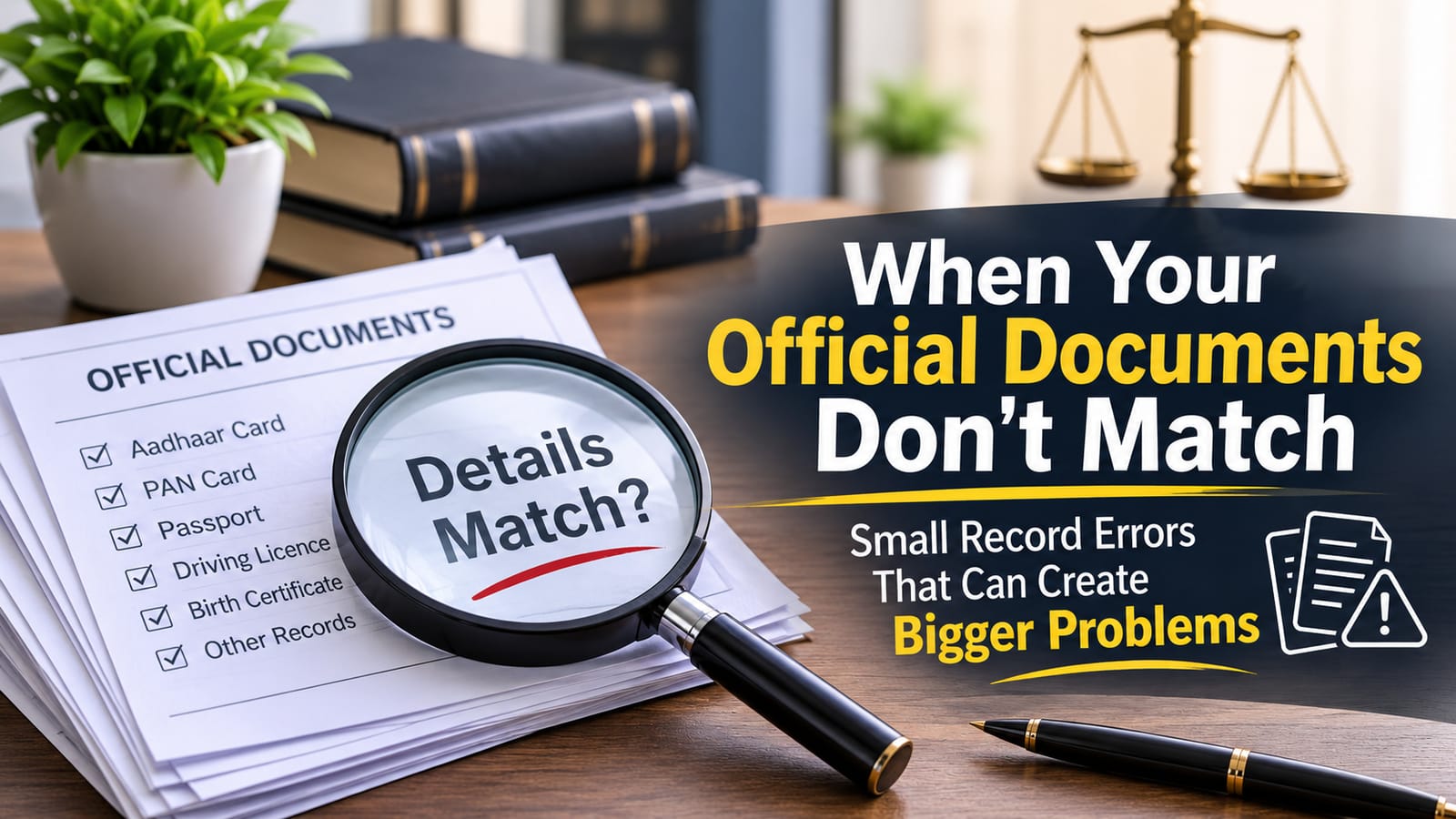
Most people have several documents issued by different organisations throughout their lives. Identity records, educational certificates, bank documents, employment papers and property-related records are often created years apart. Over time, small differences in names, dates or personal details can appeaWhen Your Official Documents Don't Match: Small Record Errors That Can Create Bigger Problems
r without anyone noticing.
These differences may seem harmless until a person needs to verify their identity or complete an important transaction.
1. Pay Attention to Name Differences
A missing surname, an extra initial or a different spelling can create confusion when two documents are compared. Even a minor variation may require clarification during official verification.
Check whether your name is consistently written across important records. If you find a genuine error, understand the correction procedure followed by the organisation that issued the document.
2. Check Dates and Personal Details
Dates of birth, addresses and other personal details should be reviewed carefully. Errors sometimes occur during data entry or when information is transferred from older records.
Do not assume that correcting one document will automatically update every other record. Different authorities may have separate procedures and supporting-document requirements.
3. Keep Supporting Documents Safe
If you apply for a correction, retain copies of the original document, correction application, acknowledgement and any response received. These records can help establish what was requested and whether the correction was completed.
For online applications, save confirmation messages and reference numbers instead of relying only on screenshots.
4. Avoid Making Unofficial Changes
It may seem convenient to edit a scanned document or alter a digital copy to make details appear consistent. However, modifying an official document without proper authorisation can create serious problems.
Always follow the issuing authority's recognised correction process and use officially updated records.
5. Understand That Different Records Serve Different Purposes
A bank record, educational certificate and government identity document may have different verification requirements. A correction accepted by one institution does not necessarily guarantee acceptance by another.
Before submitting documents for an important transaction, ask the concerned organisation which records it requires and whether additional proof is necessary.
6. Know When Legal Guidance May Help
Some discrepancies are straightforward administrative mistakes, while others may involve disputed identity, inheritance, ownership or questions about the validity of a document. In complicated situations, understanding the legal position before taking action can be important.
Readers exploring these issues can find broader explanations and legal perspectives through India's legal knowledge and information resource, particularly when trying to understand how documentation-related questions connect with wider legal matters.
Make Document Checks a Regular Habit
You do not need to wait for a major transaction to review your records. Check important documents periodically, keep secure digital copies and address genuine errors through the appropriate channels.
A small correction made at the right time can prevent unnecessary delays and confusion later. More importantly, accurate records make it easier to establish your identity and manage important personal and professional matters.