Introduction
ISO certification is an important step for businesses that want to improve their operations, strengthen customer confidence, and demonstrate their commitment to quality and compliance. Whether a company needs ISO 9001, ISO 14001, ISO 45001, or ISO 27001, selecting the right certification company is an important part of the process.
Not every certification provider offers the same level of experience, industry knowledge, or accreditation. Choosing the wrong provider can lead to unnecessary costs, delays, and certification problems.
Before starting your certification journey, it is important to understand what makes a certification company reliable and suitable for your business. This guide explains the key factors to consider before making your decision.
Understanding the Role of an ISO Certification Company
An ISO certification company, commonly known as a certification body, independently assesses an organization's management system against the requirements of a particular ISO standard.
Its role generally includes:
Reviewing the organization's management system.
Conducting certification audits.
Identifying nonconformities.
Evaluating corrective actions.
Making certification decisions.
Conducting surveillance audits after certification.
A certification body should provide an impartial assessment rather than simply promise a certificate without checking whether the organization meets the applicable requirements.
Why Choosing the Right Certification Company Matters
Selecting a suitable certification body can make the certification process more organized and reliable.
Here are some important reasons to make the right choice:
1. Reliable Certification: A competent certification body provides an independent assessment of your management system.
2. Business Credibility: Certification from a suitably accredited and recognized body can strengthen confidence among customers and business partners.
3. Smooth Audit Process: Experienced auditors can explain audit findings clearly and help organizations understand their compliance gaps.
4. Industry Knowledge: A provider familiar with your industry may better understand the risks and processes involved in your operations.
5. Long-Term Support: Certification requires ongoing monitoring, so choosing a reliable provider can make future audits easier to manage.
Important Factors to Consider Before Selecting an ISO Certification Company
Before signing an agreement, businesses should evaluate several important points.
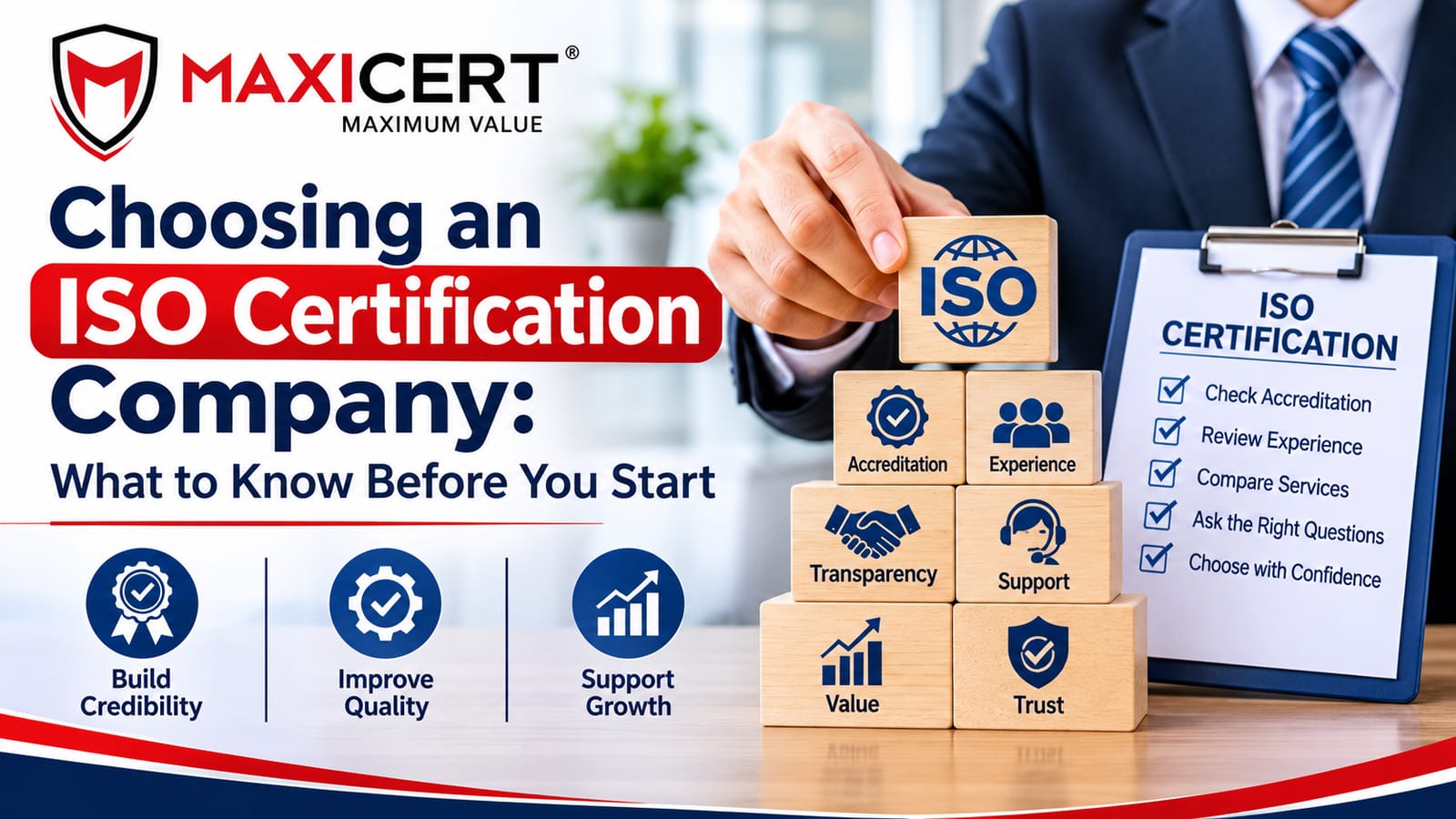
1. Check Accreditation
Accreditation is one of the most important factors to consider. It provides independent confirmation that a certification body has been assessed for competence and impartiality within a defined scope.
Check whether the certification body is accredited by a recognized accreditation body and whether its accreditation covers the specific ISO standard and industry sector you require.
You can also verify the accreditation body's recognition through the International Accreditation Forum (IAF) and its applicable recognition arrangements.
2. Review Industry Experience
Different industries have different operational risks and requirements. A manufacturing company may have different audit needs from a healthcare provider, construction business, or IT organization.
Look for a certification body with experience in your industry. This can help ensure that the audit is relevant to your business activities.
3. Understand the Certification Process
A reliable certification company should clearly explain the complete certification process.
The process generally includes:
Application and initial information review.
Audit planning.
Stage 1 audit, where applicable.
Stage 2 certification audit.
Correction of identified nonconformities.
Independent certification decision.
Surveillance audits.
Ask for a clear explanation of each stage before proceeding.
4. Compare Certification Costs
Certification costs can vary depending on company size, employee numbers, locations, business activities, audit duration, and the selected ISO standard.
Request a detailed quotation and check what is included.
Cost Factor
What to Check
Application fees
Initial registration and processing charges
Audit fees
Cost of certification audits
Travel expenses
Additional auditor travel costs
Certification fees
Charges for issuing the certificate
Surveillance audits
Ongoing assessment expenses
Recertification
Costs when the certification cycle is renewed
Do not select a provider based only on the lowest price. Check its accreditation, experience, service scope, and audit arrangements as well.
5. Evaluate Auditor Competence
Auditors play an important role in evaluating your management system. They should have suitable training, technical knowledge, and auditing experience.
Ask about the qualifications and industry experience of the audit team. A competent auditor should communicate professionally and explain findings in a clear manner.
6. Check Reputation and Customer Feedback
Research the certification company's reputation before making a decision.
You can review:
Customer testimonials.
Business references.
Industry experience.
Public accreditation records.
Complaints or concerns.
Previous certification activities.
Independent feedback can help you understand the provider's reliability and professionalism.
7. Confirm Certification Scope
Before applying, make sure the certification company can assess the ISO standard and business activities relevant to your organization.
For example, a company seeking ISO 27001 certification should confirm that the certification body has the appropriate accreditation scope for information security management systems.
The certificate should accurately identify the organization, applicable standard, and certified activities.
Common ISO Certification Standards Businesses May Need
Different ISO standards address different areas of business management.
ISO Standard
Main Focus
Suitable Businesses
ISO 9001
Quality Management System
Businesses across different industries
ISO 14001
Environmental Management System
Manufacturing and industrial organizations
ISO 45001
Occupational Health and Safety
Construction and high-risk industries
ISO 27001
Information Security Management
IT companies and service providers
ISO 22000
Food Safety Management
Food manufacturers and suppliers
ISO 50001
Energy Management System
Energy-intensive organizations
ISO 13485
Medical Device Quality Management
Medical device manufacturers
Choosing the right standard is just as important as choosing the certification company. Businesses should identify their operational needs and customer or regulatory expectations first.
Questions to Ask Before Hiring an ISO Certification Company
Asking the right questions can help you avoid confusion and unexpected expenses.
Consider asking:
Is your certification body accredited for the ISO standard we need?
Which accreditation body recognizes your certification activities?
Do you have experience in our industry?
What is included in your certification quotation?
How long does the audit process generally take?
What happens if nonconformities are identified?
How are surveillance audits arranged?
Can we independently verify your accreditation and certificate details?
A professional certification body should be able to provide clear and transparent answers.
Common Mistakes to Avoid When Choosing a Certification Provider
Businesses sometimes make decisions without checking important details. Avoid these common mistakes:
Selecting a provider only because it offers the lowest price.
Ignoring accreditation and certification scope.
Choosing a company without relevant industry experience.
Accepting unclear quotations.
Believing promises of guaranteed certification without an audit.
Failing to verify the certification body independently.
Overlooking future surveillance and recertification costs.
Taking time to compare providers can help businesses make a more informed decision.
Certification Body vs. ISO Consultant: Know the Difference
Businesses should understand the difference between a certification body and an ISO consultant.
Certification Body
ISO Consultant
Independently audits the management system
Helps prepare and improve the management system
Evaluates compliance with ISO requirements
Provides guidance and implementation support
Makes the certification decision
Does not issue an independent accredited certificate
Must maintain impartiality
May work directly with the business
For an independent certification decision, the organization should use a certification body that maintains the required impartiality.
How Maxicert Can Support Your ISO Certification Journey
Choosing the right certification route requires a clear understanding of ISO standards, accreditation, and business requirements.
Maxicert can help businesses understand different ISO certification options, identify relevant standards, and prepare for their certification journey.
Whether your organization needs ISO 9001, ISO 14001, ISO 45001, ISO 27001, or another management system standard, proper preparation can make the process more organized.
Connect with Maxicert to understand your ISO certification requirements and take the next step toward stronger business performance.
Conclusion
Choosing the right ISO certification company is an important decision for any organization planning to achieve certification. Accreditation, industry experience, auditor competence, transparent pricing, and a clear audit process should all be considered before selecting a provider.
Businesses should compare their options carefully and verify the certification body's accreditation scope before making a commitment.
With the right certification partner and proper preparation, organizations can build stronger management systems, improve customer confidence, and support long-term business growth.
Frequently Asked Questions
1. What is an ISO certification company?
It is an organization that independently audits and certifies management systems against ISO standards.
2. Why is accreditation important?
It provides independent confirmation of a certification body's competence within its accredited scope.
3. How do I select a reliable certification body?
Check accreditation, industry experience, auditor competence, reputation, and pricing.
4. Can an ISO consultant issue an accredited certificate?
No, certification decisions are made by an independent certification body.
5. Should I choose the cheapest certification company?
No, compare accreditation, service quality, experience, and total costs before deciding.