Industrial machinery rarely operates under ideal conditions. Heavy loads, changing temperatures, continuous movement and difficult working environments can all affect the performance of moving components. When two metal surfaces come into contact, friction can gradually cause wear, overheating and expensive maintenance problems.
This makes lubricant selection an important part of industrial equipment maintenance and material engineering.
While oils and greases remain essential in many applications, they are not always sufficient on their own. Under high contact pressure or in applications where liquid lubricants are unsuitable, solid lubricating materials can provide an additional layer of protection.
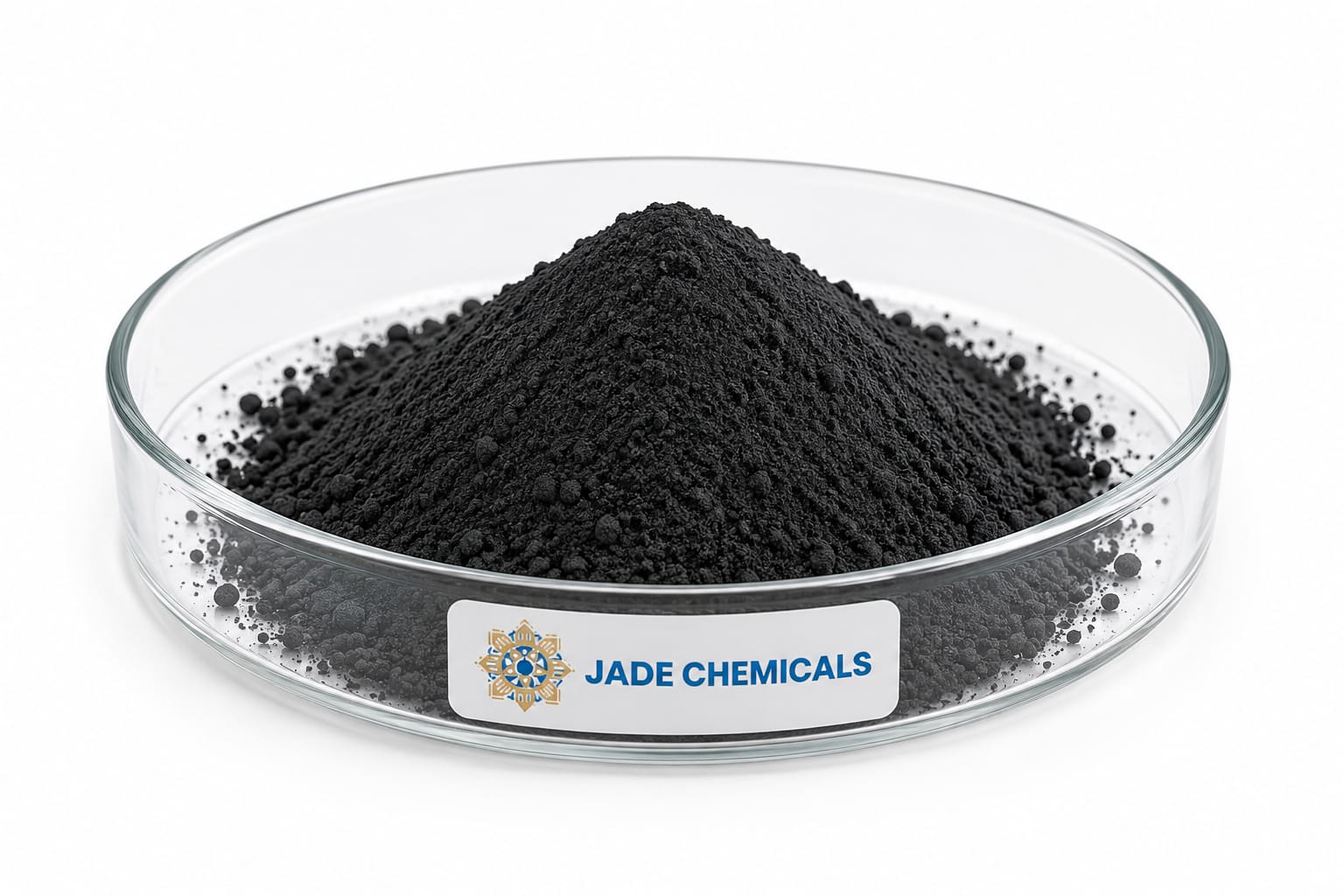
One material that has earned an important place in this field is Molybdenum Disulfide (MoS₂) Powder.
Widely used in industrial greases, protective coatings and dry-film lubrication systems, MoS₂ helps manage friction and wear in demanding mechanical applications. Its usefulness comes from its distinctive layered structure and its ability to provide lubrication under conditions where maintaining a conventional oil film can be difficult.
For manufacturers, maintenance engineers and lubricant formulators, understanding how MoS₂ works is the first step towards choosing the right material for a specific application.
What Is Molybdenum Disulfide (MoS₂) Powder?
Molybdenum disulfide is an inorganic compound consisting of molybdenum and sulphur, with the chemical formula MoS₂. It occurs naturally as the mineral molybdenite and is also processed into powder grades for various industrial applications.
What makes the material particularly interesting is its crystal structure.
MoS₂ consists of extremely thin layers in which molybdenum atoms are positioned between layers of sulphur atoms. These sheets are strongly bonded internally but interact relatively weakly with neighbouring sheets.
As a result, the layers can slide across one another with comparatively little resistance.
This characteristic makes MoS₂ useful as a solid lubricant, particularly in mechanical systems involving sliding contact and significant surface pressure.
Unlike a conventional liquid lubricant, MoS₂ can provide lubrication through solid particles incorporated into a grease, oil, coating or specially prepared dry film.
However, its performance depends on the formulation, surface condition, operating temperature and surrounding environment. It should not be treated as a universal replacement for conventional lubrication.
Businesses looking for specific powder grades can explore the Molybdenum Disulfide (MoS₂) Powder supplied by Jade Chemicals, including different particle-size options for industrial applications.
Why Is MoS₂ Considered an Effective Industrial Lubricant?
The value of MoS₂ becomes clearer when we examine the problems industrial lubrication systems are expected to solve.
A lubricant must do more than simply make a component move smoothly. It may also need to limit wear, protect contact surfaces, maintain performance under pressure and operate consistently over extended maintenance intervals.
MoS₂ offers several characteristics that make it useful in these situations.
1. Low Friction Between Moving Surfaces
Friction is a major contributor to component wear in industrial machinery.
Every time two surfaces move against each other, microscopic irregularities on those surfaces can interact. Depending on the load and lubrication conditions, this interaction can increase resistance and accelerate material damage.
The layered structure of MoS₂ helps reduce resistance during sliding movement.
When properly incorporated into a lubrication system, it can help reduce friction and support smoother operation in gears, bearings, sliding mechanisms and other components.
The actual coefficient of friction varies considerably with environmental conditions, surface preparation, contact pressure and application method. Therefore, performance figures should always be considered in the context of the intended use.
2. Performance Under Heavy Mechanical Loads
High contact pressure presents a different challenge from ordinary friction.
In a heavily loaded component, the lubricating film separating two metal surfaces may become extremely thin. If the film can no longer provide adequate separation, the risk of surface damage increases.
MoS₂ is frequently used in extreme-pressure lubrication systems because its solid particles can contribute to surface protection under demanding contact conditions.
This makes it relevant to applications such as industrial presses, heavily loaded bearings, sliding guides and mechanical assemblies.
It is especially useful as part of a properly engineered formulation rather than simply being added to an existing lubricant without considering compatibility.
3. Useful in Certain Dry and Vacuum Environments
Some industrial systems cannot rely entirely on conventional oils or greases.
Liquid lubricants may migrate away from the contact area, create contamination concerns or become unsuitable for a specialised operating environment.
MoS₂ is often considered for these applications because it can be incorporated into dry-film coatings.
It is also an established material in vacuum lubrication research and applications. Nevertheless, the surrounding environment matters: oxygen, humidity and temperature can influence the behaviour and durability of MoS₂ films.
4. Improved Wear Protection
Wear is not always immediately visible.
In industrial equipment, small amounts of surface damage can accumulate over thousands of operating cycles. Eventually, this may affect component clearances, operating efficiency and reliability.
MoS₂-containing lubrication systems can help reduce direct surface interaction and limit wear when formulated and applied correctly.
This is particularly useful where component replacement requires significant downtime or where maintenance access is difficult.
5. Flexibility Across Different Formulations
MoS₂ is not limited to one form of application.
Depending on the intended function, manufacturers may use it in:
Industrial greases and lubricating oils
Bonded dry-film lubricant coatings
Anti-friction compounds
Metalworking lubricants
Engineering polymers and composite materials
Specialised maintenance sprays
Each method has its own requirements for particle size, concentration, dispersion and surface preparation.
For a broader understanding of available materials, explore the industrial solid lubricant powder range from Jade Chemicals.
Major Industrial Applications of Molybdenum Disulfide (MoS₂)
MoS₂ is used across several engineering sectors, although the way it is applied can vary considerably from one industry to another.
A powder used in an automotive grease formulation, for example, may not have the same specification as a material intended for a precision coating.
Understanding these distinctions helps identify where MoS₂ can provide practical value.
Aerospace and Defence Applications
Aerospace components may operate under unusual combinations of mechanical load, temperature variation, limited maintenance access and, in certain systems, vacuum conditions.
These requirements have encouraged the development of specialised solid-film lubricant technologies.
MoS₂-based coatings are used or evaluated for selected fasteners, actuators, sliding assemblies and mechanical components where controlled friction and wear resistance are important.
Such applications generally require careful material qualification, coating preparation and environmental testing.
For aerospace-related use, the selected grade and complete lubrication system must meet the equipment manufacturer's relevant specifications.
Automotive and Heavy Vehicle Industry
Automotive systems contain numerous components that experience repeated sliding or rolling movement.
MoS₂ is commonly used as an additive in certain heavy-duty greases and lubrication products designed for demanding contact conditions.
Examples include chassis components, constant velocity joints, gears and selected mechanical assemblies.
Its role is to support friction management and surface protection as part of the overall lubricant formulation.
However, MoS₂ should not be introduced into an automotive oil or grease unless the product formulation and equipment specifications allow it.
Industrial Machinery and Manufacturing
Manufacturing equipment is often exposed to continuous workloads.
Production presses, gear assemblies, sliding guides and heavy machinery may operate for long periods while carrying substantial mechanical loads.
Under these circumstances, lubricant performance can influence component wear and maintenance requirements.
MoS₂-containing greases and coatings can be considered for suitable machinery components where additional wear protection is required.
In metal-forming processes, lubrication also plays an important role in limiting unwanted friction between working surfaces.
For example, dies and punches may experience substantial contact pressure during repeated manufacturing cycles. Appropriate solid lubricant formulations can help manage wear and surface interaction.
The most suitable product depends on the type of metal, operating temperature, surface finish and forming process.
Oil and Gas Equipment
Oil and gas operations frequently involve equipment exposed to high contact loads, corrosive surroundings and challenging maintenance conditions.
Threaded connections, mechanical assemblies and selected drilling-related components may require specialised lubrication or anti-seize systems.
MoS₂ is one of the solid lubricant materials used in certain formulations designed to manage friction and reduce galling.
However, chemical compatibility and environmental conditions must be considered before selection.
A material suitable for a dry mechanical assembly may not be suitable for continuous exposure to every drilling fluid or process chemical.
Power Generation and Heavy Engineering
Power plants and heavy engineering facilities rely on mechanical systems that must operate reliably over extended periods.
Pumps, compressors, mechanical linkages and other equipment may be subjected to continuous movement and significant loads.
In suitable applications, MoS₂-containing lubricants can help reduce friction and support wear protection.
The appropriate lubrication solution must account for operating speed, temperature, component materials and manufacturer requirements.
For equipment with long maintenance intervals, product compatibility and application quality are especially important.
Electronics and Advanced Materials Research
MoS₂ has attracted interest beyond conventional lubrication.
In the field of advanced materials, extremely thin layers of molybdenum disulfide are studied for their semiconductor characteristics.
Research areas include transistors, sensors, optoelectronic devices and other nanoscale technologies.
These applications are different from conventional industrial lubrication and may require specialised material grades, fabrication methods and purity controls.
This distinction is important because a standard industrial lubricant powder should not automatically be assumed suitable for electronic device manufacturing.
Molybdenum Disulfide vs Other Solid Lubricants
MoS₂ is only one member of a wider group of solid lubricating materials.
Other commonly considered options include Tungsten Disulfide (WS₂), Hexagonal Boron Nitride (hBN), graphite and PTFE.
Although these materials may serve similar broad purposes, they are not interchangeable in every application.
MoS₂ vs Tungsten Disulfide (WS₂)
Both materials have layered crystal structures that support low-friction sliding.
MoS₂ is widely established in industrial greases, oils and dry-film coatings, while WS₂ is also used in specialised low-friction coatings and high-performance lubrication applications.
Choosing between them requires consideration of the operating environment, formulation and required surface performance.
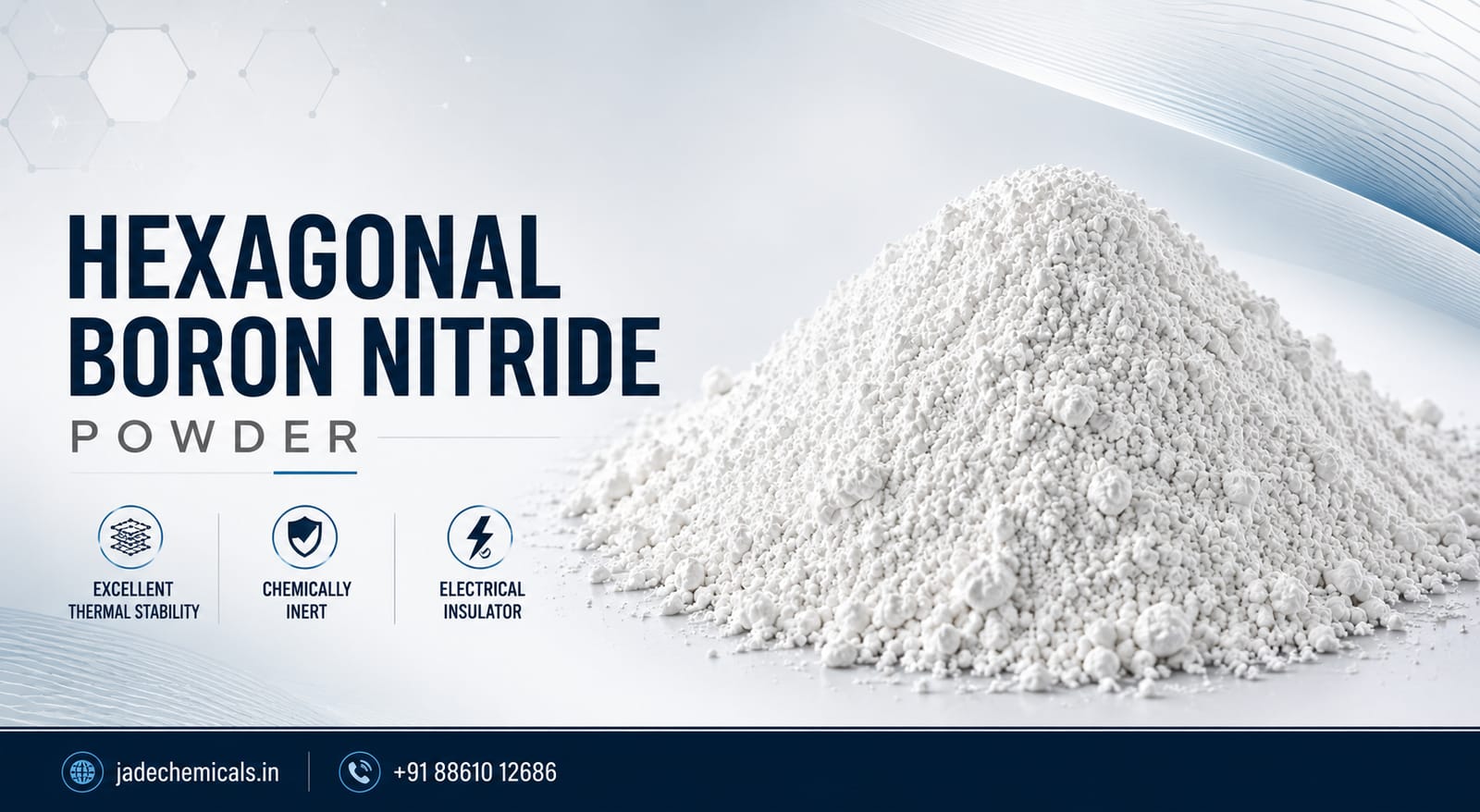
MoS₂ vs Hexagonal Boron Nitride (hBN)
Hexagonal Boron Nitride is often considered where high-temperature stability, chemical resistance and release properties are important.
MoS₂ is commonly selected for heavy-load friction and wear applications, particularly under suitable dry or controlled environmental conditions.
For sustained exposure to high temperatures in air, hBN may offer advantages because MoS₂ can undergo oxidation at elevated temperatures.
The final choice depends on the actual temperature, atmosphere and mechanical requirements.
MoS₂ vs Graphite
Graphite is another widely used layered solid lubricant.
Its friction behaviour is strongly influenced by environmental conditions, including the presence of moisture or other adsorbed species.
MoS₂ may be more appropriate in certain dry or vacuum applications where graphite does not provide the desired performance.
However, graphite remains useful in many industrial lubrication systems, including applications involving elevated temperatures.
MoS₂ vs PTFE
PTFE is valued for its low friction, chemical resistance and use in engineered polymers and coatings.
It can be particularly useful where non-stick characteristics or chemical compatibility are priorities.
MoS₂, by comparison, is frequently incorporated into systems where heavy contact loads and sliding wear are major concerns.
Neither material should be selected based on friction values alone.
Engineers should evaluate the complete operating environment, including load, speed, temperature, contamination and compatibility with adjacent materials.
Choosing the Right MoS₂ Powder Grade for Industrial Applications
Selecting MoS₂ powder is not simply a matter of choosing the finest or highest-purity material available.
A suitable powder must work with the intended formulation and operating conditions.
Three factors deserve particular attention.
Particle Size and Distribution
Particle size can influence how MoS₂ disperses in oil or grease, how it behaves during coating application and how it interacts with contacting surfaces.
Fine particles may be useful for applications requiring controlled dispersion or thin coatings.
Larger particles may be appropriate for other specialised formulations, depending on the film thickness, surface roughness and processing method.
However, smaller particles are not automatically better, and larger particles do not necessarily provide greater load capacity.
The selected size should be established through formulation testing and application requirements.
Jade Chemicals lists MoS₂ powder options including 90 nm, 1.5 µm, 4.5 µm and 12.5 µm. Buyers can review the MoS₂ powder product specifications when discussing their material requirements.
Material Purity
Impurities can affect the performance of a lubricant formulation, particularly where consistency and precise material characteristics are important.
For this reason, buyers should review the declared material purity and impurity profile rather than relying on a general product description.
The necessary purity level depends on the application.
Industrial grease production, precision coatings and electronics research may each have different material requirements.
There is no single purity percentage that automatically guarantees suitability across all these uses.
Compatibility With the Final Formulation
A suitable MoS₂ powder must also be compatible with the system in which it will be used.
For greases and oils, formulators should consider dispersion stability, additive interactions and the intended operating conditions.
For dry-film coatings, surface preparation, binder selection, film thickness and curing conditions can strongly influence performance.
These practical factors may be just as important as the powder specification itself.
When Should You Consider MoS₂ Aerosol Spray Instead of Powder?
Industrial MoS₂ is available in different delivery formats.
Powder is frequently supplied to lubricant manufacturers, coating formulators and industrial users developing their own mixtures.
An aerosol spray, on the other hand, offers a convenient method of applying a formulated lubricant to accessible surfaces during maintenance or assembly.
MoS₂-based sprays may be considered for certain threaded fasteners, sliding surfaces and mechanical assemblies where a dry-film lubricant is specified.
However, their suitability depends on the formulation, surface preparation, drying conditions and expected service environment.
For applications requiring a ready-to-apply product, Jade Chemicals also offers a Molybdenum Disulfide (MoS₂) Aerosol Spray.
Powder and spray should therefore be regarded as different product formats intended for different application methods, rather than direct substitutes in every situation.
Why Choosing a Reliable MoS₂ Powder Supplier in India Matters
Industrial material procurement involves more than comparing quotations.
When a powder becomes part of a critical lubricant formulation or manufacturing process, variations in material characteristics can affect production consistency and end-use performance.
Businesses sourcing MoS₂ powder should therefore consider specification clarity, available particle sizes, material documentation and technical support.
A reliable supplier should be able to discuss the intended use and identify suitable material options.
It is also advisable to request relevant technical information, such as a technical data sheet, safety data sheet and applicable quality documentation.
For businesses seeking a Molybdenum Disulfide (MoS₂) Powder supplier in India, Jade Chemicals provides solid lubricant powders for industrial users, manufacturers and specialised formulation applications.
The company's range includes MoS₂ alongside other materials such as WS₂, hBN and PTFE micronized powder.
Having access to different solid lubricant materials can be useful when evaluating solutions for various operating conditions.
How Jade Chemicals Supports Industrial Lubrication Requirements
Based in Bengaluru, Jade Chemicals supplies specialty industrial lubrication products to customers across India.
Its range includes solid lubricant powders, aerosol sprays, industrial greases and coatings developed for different mechanical and manufacturing requirements.
For companies evaluating MoS₂, identifying the intended application is an important starting point.
A maintenance team selecting a lubricant for a heavily loaded sliding component may have different requirements from a manufacturer preparing a coating formulation.
Likewise, an industrial buyer sourcing powder for grease production needs to consider material specifications and formulation compatibility.
Jade Chemicals offers industrial lubricant powders and can be contacted to discuss product availability, particle-size options and application requirements.
Final Thoughts
Molybdenum Disulfide remains an important material in modern industrial lubrication because it addresses a practical engineering problem: controlling friction and wear when mechanical conditions become demanding.
Its layered structure allows it to contribute to low-friction performance, while its flexibility makes it useful in greases, oils, dry-film coatings and specialised formulations.
However, successful use depends on more than choosing MoS₂ by name.
Particle size, material quality, operating environment and application method all influence the final result.
For industrial buyers, understanding these factors makes it easier to identify a suitable material and avoid unnecessary formulation or maintenance problems.
Looking for Molybdenum Disulfide (MoS₂) Powder in India?
Explore the Jade Chemicals MoS₂ Powder product range or contact Jade Chemicals to discuss your industrial lubrication requirements.
Phone: +91 88610 12686
Email: jade3chemical@gmail.com
Website: https://jadechemicals.in/
Frequently Asked Questions
1. What is Molybdenum Disulfide (MoS₂) Powder used for?
MoS₂ powder is used in industrial greases, lubricating oils, dry-film coatings and other materials designed to reduce friction and wear. Common applications include mechanical assemblies, gears, sliding components, metalworking processes and specialised industrial coatings.
2. Is MoS₂ suitable for high-temperature lubrication?
MoS₂ can be useful at elevated temperatures, but its suitability depends on the atmosphere and formulation. Oxidation can limit its performance in air at higher temperatures. The acceptable operating range should be confirmed using the relevant product specifications and application testing.
3. Can Molybdenum Disulfide Powder be mixed with grease?
Yes. MoS₂ is used as a solid lubricant additive in certain industrial greases. However, particle concentration, dispersion and compatibility must be considered. Adding powder to an existing grease without proper formulation guidance is not recommended.
4. What is the difference between MoS₂ powder and MoS₂ aerosol spray?
MoS₂ powder is a raw material commonly used in lubricant and coating formulations. MoS₂ aerosol spray is a prepared product designed for application onto suitable component surfaces. The choice depends on the intended application and maintenance process.
5. Is MoS₂ better than graphite?
Neither material is superior in every situation. MoS₂ can be advantageous in certain high-load and dry environments, while graphite performs well in many other lubrication applications. Environmental conditions and equipment requirements determine the more suitable option.
6. What should I check before buying MoS₂ powder?
Review the particle size, purity, available technical documentation, intended use and compatibility with the final formulation. It is also important to discuss operating conditions with the supplier before choosing a grade.
7. Where can I buy Molybdenum Disulfide (MoS₂) Powder in India?
Jade Chemicals supplies Molybdenum Disulfide Powder for industrial applications in India. Buyers can review the MoS₂ Powder product page to learn about available particle sizes and contact the supplier for further product information.