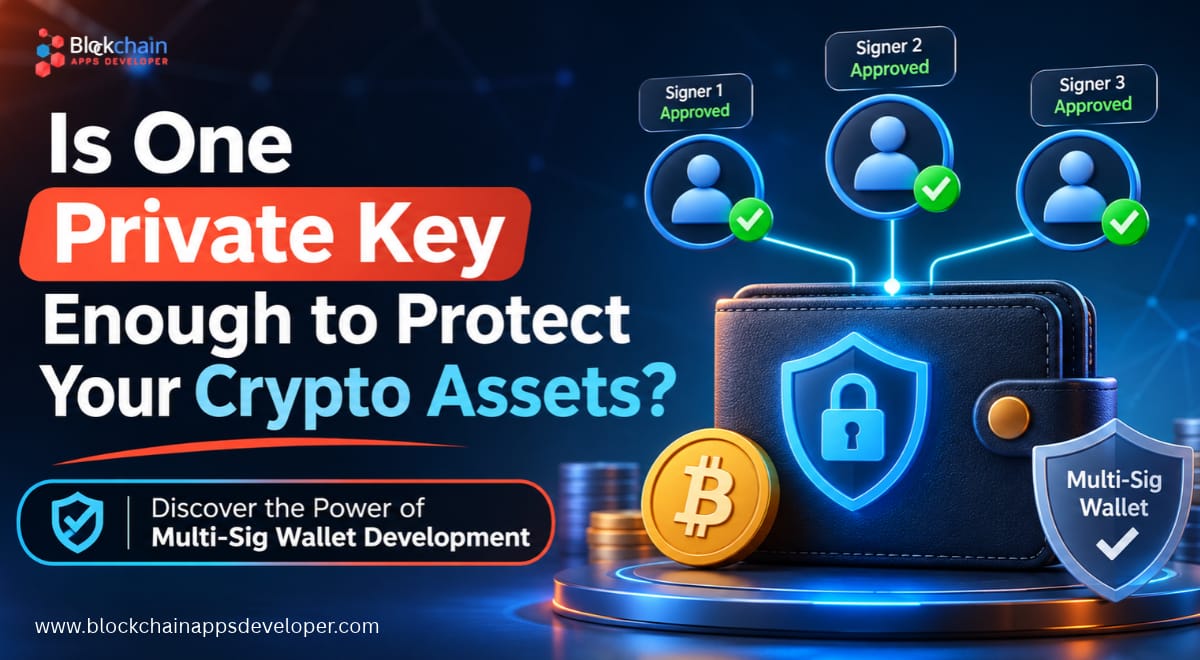
Cryptocurrency ownership comes with a fundamental responsibility: securing private keys. A single compromised key can expose an entire wallet to unauthorized transactions, potentially resulting in irreversible financial losses. For businesses managing crypto treasuries, investors holding substantial digital assets, and Web3 startups handling operational funds, relying on one person's access may create unnecessary security risks. This is where multi-signature wallets offer a more controlled approach.
The Risks of Relying on a Single Private Key
A traditional crypto wallet typically authorizes transactions through one private key. If that key is lost, stolen, exposed through phishing, or accessed by an unauthorized individual, the wallet owner may lose control over their assets.
For businesses, this creates additional concerns, including employee access risks, compromised devices, operational disruptions, and the absence of shared transaction accountability. A stronger authorization mechanism can help reduce these vulnerabilities.
What Is a Multi-Signature Wallet?
A multi-signature (multi-sig) wallet is a cryptocurrency wallet that requires multiple authorized signatures to approve a transaction. Instead of depending on one private key, it distributes transaction approval responsibilities among multiple signers. Businesses looking for enhanced asset protection can leverage multi sig wallet development to implement shared control, configurable approval thresholds, and secure transaction authorization.
For example, a company treasury wallet may be controlled by its founders, finance executives, and designated administrators. Transactions can proceed only when the predefined number of authorized participants approves them.
How Multi-Sig Wallets Strengthen Crypto Asset Security
Multi-sig wallets introduce an additional layer of protection by distributing authorization across multiple participants. Even if one signer's private key is compromised, an attacker may not be able to execute transactions without obtaining the remaining required approvals.
Businesses can also establish approval workflows for treasury transfers, operational payments, investment allocations, and other sensitive financial activities.
By implementing multiple authorization checkpoints, organizations can improve accountability, minimize unauthorized access risks, and establish a more structured approach to managing digital assets.
Understanding 2-of-3, 3-of-5, and Other Approval Models
Multi-signature wallets operate using configurable threshold-based approval mechanisms.
2-of-3: Three authorized signers are assigned, and any two must approve a transaction.
3-of-5: Five authorized signers are assigned, and at least three approvals are required.
4-of-7: Seven signers are assigned, with four approvals needed to authorize transactions.
The appropriate configuration depends on the organization's security requirements, team structure, operational flexibility, and recovery policies. A higher approval threshold can improve authorization controls, but it should also account for signer availability and recovery procedures.
Who Needs Multi-Sig Wallets?
Multi-sig wallets are valuable for crypto startups, decentralized autonomous organizations (DAOs), institutional investors, blockchain businesses, treasury management teams, and projects handling community funds.
They are particularly useful when financial decisions require collective authorization, transparency, and accountability instead of unrestricted access controlled by one person.
Key Features to Consider in Multi-Sig Wallet Development
Businesses planning a multi-sig wallet should prioritize configurable approval thresholds, secure signer management, transaction monitoring, access control, wallet recovery mechanisms, blockchain compatibility, and a user-friendly approval interface.
Smart contract security audits, clear authorization policies, and reliable transaction notifications are also essential for reducing operational risks.
Building a Secure Multi-Sig Wallet for Your Business
A multi-signature wallet can transform how businesses manage digital assets by introducing shared responsibility, structured approvals, and stronger security practices.
BlockchainAppsDeveloper helps businesses build customized multi-sig wallet solutions designed around their security requirements, blockchain ecosystem, transaction workflows, and operational needs.
Conclusion: Take Control of Your Crypto Security
One private key may be convenient, but business-level asset protection requires thoughtful authorization and risk management. Multi-sig wallets provide a practical way to distribute transaction control, strengthen security, and support transparent financial operations.
Planning a secure wallet solution for your crypto business? Connect with BlockchainAppsDeveloper, a crypto wallet development company, to explore customized multi-sig wallet solutions tailored to your business requirements, security needs, and blockchain ecosystem.