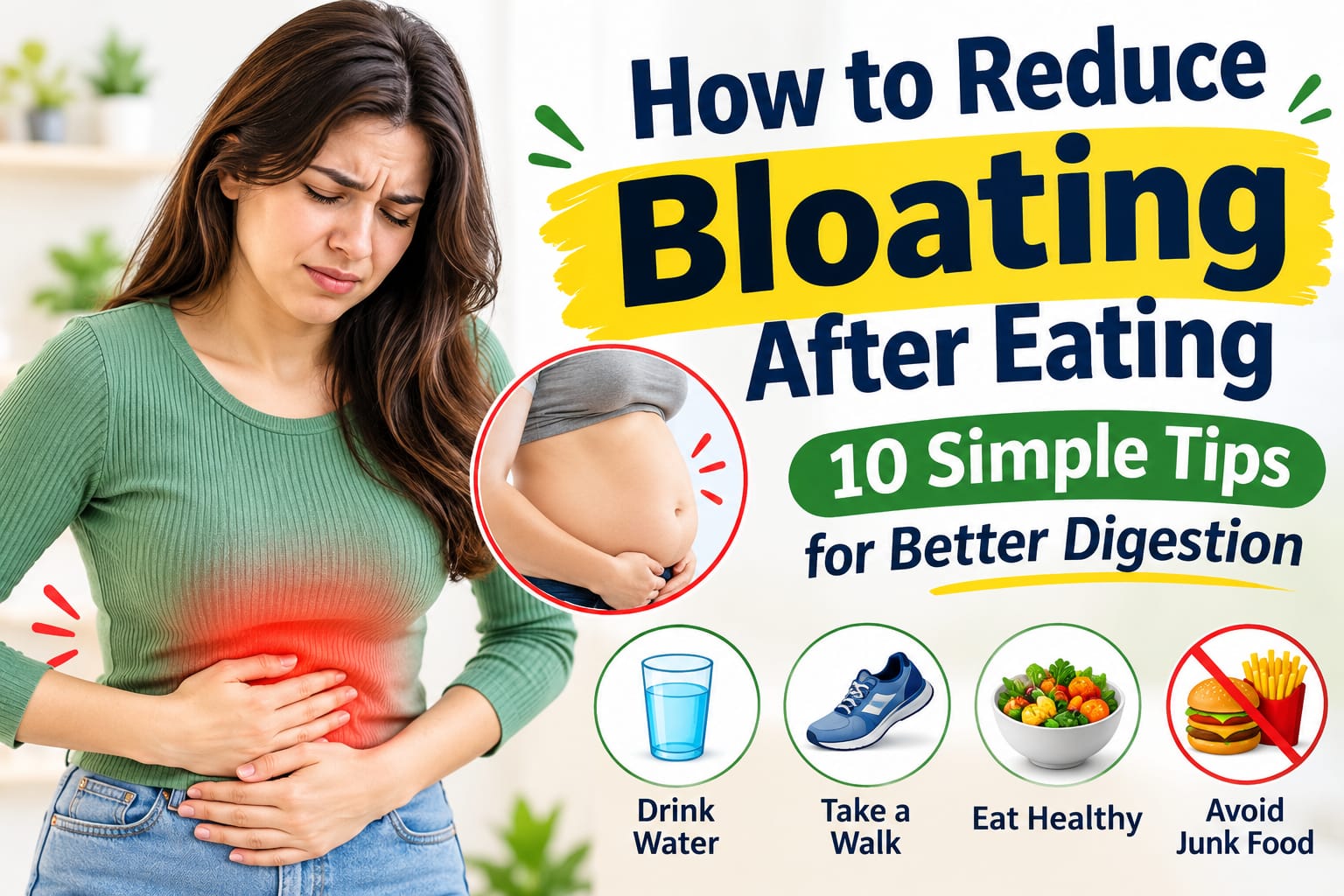
How to Reduce Bloating After Eating: 10 Simple Tips for Better Digestion
Feeling bloated after eating can make your stomach feel tight, swollen, and uncomfortable. It may also cause gas, burping, and abdominal discomfort. Occasional bloating is common, but frequent symptoms may be related to eating habits, food intolerances, or digestive conditions.
The good news is that a few simple lifestyle and dietary changes may help reduce bloating and support better digestion.
What Causes Bloating After Eating?
Bloating often occurs when excess gas builds up in the digestive tract. Common causes include:
Eating too quickly and swallowing excess air
Eating large meals
Drinking carbonated beverages
Consuming gas-producing foods such as beans, cabbage, and lentils
Food intolerances, including lactose intolerance
Constipation
Digestive conditions such as irritable bowel syndrome (IBS)
Identifying your triggers can help you manage symptoms more effectively.
10 Ways to Reduce Bloating After Eating
1. Eat Slowly and Chew Your Food Properly
Eating too quickly can cause you to swallow extra air, which may contribute to gas and bloating. Take your time, chew thoroughly, and avoid rushing through meals.
2. Take a Short Walk
A gentle 10–15-minute walk after eating may support digestion and help move gas through your digestive system. Avoid intense exercise immediately after a large meal.
3. Avoid Carbonated Drinks
Soda and sparkling beverages contain gas that can increase burping and bloating. Choose plain water or other non-carbonated drinks instead.
4. Eat Smaller Meals
Large meals can make you feel overly full and uncomfortable. Try eating smaller portions throughout the day rather than consuming very large meals.
5. Identify Foods That Trigger Bloating
Certain foods may cause more gas in some people. Common triggers include beans, lentils, onions, broccoli, cauliflower, dairy products, and some artificial sweeteners. Keep a food diary to identify which foods affect you.
6. Drink Enough Water
Staying hydrated supports normal digestion and helps prevent constipation, which can contribute to bloating. Drink water regularly throughout the day.
7. Limit Fatty and Processed Foods
High-fat meals may slow digestion and increase feelings of fullness. Try choosing balanced meals with vegetables, lean proteins, and suitable portions of whole grains.
8. Avoid Chewing Gum
Chewing gum frequently may cause you to swallow more air. Limiting gum and hard candies may help reduce excess gas.
9. Manage Constipation
Constipation can increase bloating and abdominal discomfort. Drink enough water, stay physically active, and gradually include fiber-rich foods in your diet.
10. Maintain a Regular Eating Routine
Eating meals at consistent times and avoiding very large late-night meals may help you develop healthier digestive habits.
When Should You See a Doctor?
Occasional bloating usually improves with simple lifestyle changes. However, consult a healthcare professional if bloating happens frequently, does not go away, or occurs with unexplained weight loss, blood in your stool, or persistent abdominal pain.
Seek urgent medical attention if you experience sudden, severe abdominal pain, vomiting blood, or an inability to pass stool or gas.
Final Thoughts
Bloating after eating can be uncomfortable, but simple habits may help reduce it. Eating slowly, taking short walks, drinking enough water, and identifying food triggers can support better digestion.
If bloating keeps returning or affects your daily life, do not ignore it. Speak with a healthcare professional to identify the underlying cause and find the right treatment.
Frequently Asked Questions
1. Why do I feel bloated immediately after eating?
Eating quickly, swallowing air, consuming large meals, or having food intolerances may contribute to bloating after eating.
2. Does walking after eating help reduce bloating?
A gentle walk may support digestion and help relieve gas-related discomfort.
3. Which foods commonly cause bloating?
Beans, lentils, onions, cabbage, broccoli, dairy products, and carbonated drinks may trigger bloating in some people.
4. When is bloating a concern?
Frequent or persistent bloating, especially with unexplained weight loss, blood in the stool, or ongoing pain, should be evaluated by a healthcare professional.
How to Reduce Bloating After Eating