A pleasant car fragrance can make everyday travel more enjoyable, but have you noticed that a scent can smell different a few minutes after entering your vehicle? This happens because fragrances develop in stages. Their individual ingredients evaporate at different rates, creating an evolving scent experience that changes over time.
Understanding fragrance notes helps drivers select scents that suit their preferences, vehicle interiors, and journey durations. Factors such as cabin size, ventilation, temperature, and fragrance concentration also influence how a scent performs. For drivers in the UAE, where high outdoor temperatures and frequent air-conditioning use are common, choosing the right fragrance profile requires particular attention.
1. Understanding the Three Layers of Fragrance Notes
Most traditional fragrance compositions are described through three main layers: top notes, middle notes, and base notes. Each layer contributes differently to the overall fragrance experience.
Top notes are usually the first scents noticed after a fragrance is released. They create the initial impression and often include citrus, light fruits, and fresh herbal ingredients. These notes are generally more volatile and may become less noticeable relatively quickly.
Middle notes, also known as heart notes, emerge as the initial freshness settles. Floral, aromatic, and selected spicy ingredients are commonly used in this layer. They help establish the main character of a fragrance.
Base notes provide depth and a lasting impression. Woody, musky, amber, and warm resinous ingredients are common examples. Their heavier aromatic characteristics may remain noticeable longer than lighter top notes.
Understanding these layers makes it easier to choose a fragrance that develops pleasantly rather than relying only on its first impression.
2. How Fragrance Notes Develop Inside a Vehicle
A car interior is a relatively small and enclosed environment. Unlike a large room, fragrance released inside a vehicle may become noticeable quickly, particularly when the windows are closed and the air-conditioning is operating.
When selecting a car diffuser, consider how its fragrance develops throughout a journey. A scent that initially feels fresh may become warmer or more noticeable as its middle and base notes emerge.
Air circulation also affects fragrance distribution. Air-conditioning vents can move fragrance through the cabin, while open windows may allow it to disperse more quickly. The position of the fragrance device can therefore influence how evenly the scent is experienced.
The best approach is to test a fragrance at a moderate intensity during normal driving conditions and observe how it develops over time.
3. Choosing Fresh and Citrus Fragrances for Everyday Driving
Fresh and citrus fragrance profiles are popular choices for daily commuting because they often create a clean and lively impression. Notes such as lemon, bergamot, orange, and green herbs can provide an uplifting opening.
These profiles may suit compact cars and sedans that are frequently used for office commutes, shopping, and short-distance journeys. Their lighter character can be particularly appealing when drivers prefer a subtle fragrance rather than a strong perfume atmosphere.
For everyday travel in cities such as Dubai, Abu Dhabi, and Sharjah, fresh profiles can complement busy driving routines. However, fragrance intensity should remain comfortable, especially in smaller cabins.
4. Exploring Woody, Musky, and Warm Fragrance Profiles
Woody and musky fragrances offer a different experience from bright citrus scents. Notes associated with cedarwood, sandalwood, musk, and amber can create a warm and sophisticated atmosphere.
These profiles may appeal to drivers who prefer deeper fragrances for evening travel, premium vehicle interiors, or longer journeys. Their character can also develop gradually as the lighter opening notes become less prominent.
When choosing a car diffuser perfume, consider the balance between its fresh opening and deeper dry-down. A fragrance that smells attractive initially should also remain pleasant after spending several minutes inside the vehicle.
Because warm and concentrated fragrance profiles can feel intense in enclosed spaces, begin with a lower setting where adjustable diffusion is available.
5. Understanding Fragrance Longevity and Performance
Fragrance longevity refers to how long a scent remains noticeable after it is released. However, the perceived duration of a fragrance inside a vehicle depends on several factors.
Fragrance composition: Different aromatic ingredients evaporate at different rates.
Concentration: The amount of fragrance material in a formulation can influence its intensity and perceived duration.
Temperature: Higher temperatures may increase evaporation and change how strongly certain notes are perceived.
Ventilation: Air-conditioning, open windows, and cabin circulation affect fragrance movement.
Diffusion method: Electronic devices, vent-mounted fresheners, and passive products release fragrance differently.
Cabin size: A compact vehicle may make fragrance more noticeable than a larger SUV.
A longer-lasting fragrance does not necessarily need to be stronger. A balanced composition and suitable release rate can provide a more comfortable experience.
6. How UAE Climate Influences In-Car Fragrance
Weather conditions can significantly affect fragrance performance. In the UAE, vehicles parked under direct sunlight may develop very high interior temperatures. This can influence fragrance evaporation, intensity, and refill consumption.
Fresh citrus, aquatic, and light herbal profiles are often preferred during warmer periods because of their refreshing character. Woody, amber, and soft musky notes may appeal to drivers who enjoy warmer fragrance styles, particularly during cooler evenings.
Air-conditioning is another important consideration. Continuous circulation can distribute fragrance throughout the cabin, but its effect depends on vent direction, fan speed, and the position of the fragrance device.
Store unused fragrance refills according to the manufacturer's instructions, away from unsuitable heat and direct sunlight. Do not assume that every product is designed to remain inside a hot parked vehicle.
7. Matching Fragrance Profiles to Different Journeys
Different journeys create different fragrance requirements. Short daily commutes may benefit from light, refreshing scents that make a positive initial impression. Long-distance travel may call for balanced compositions that remain comfortable over several hours.
Family vehicles generally benefit from subtle fragrance profiles that accommodate different passenger preferences. Luxury sedans and SUVs may suit more refined woody, floral, or musky compositions, provided the intensity remains moderate.
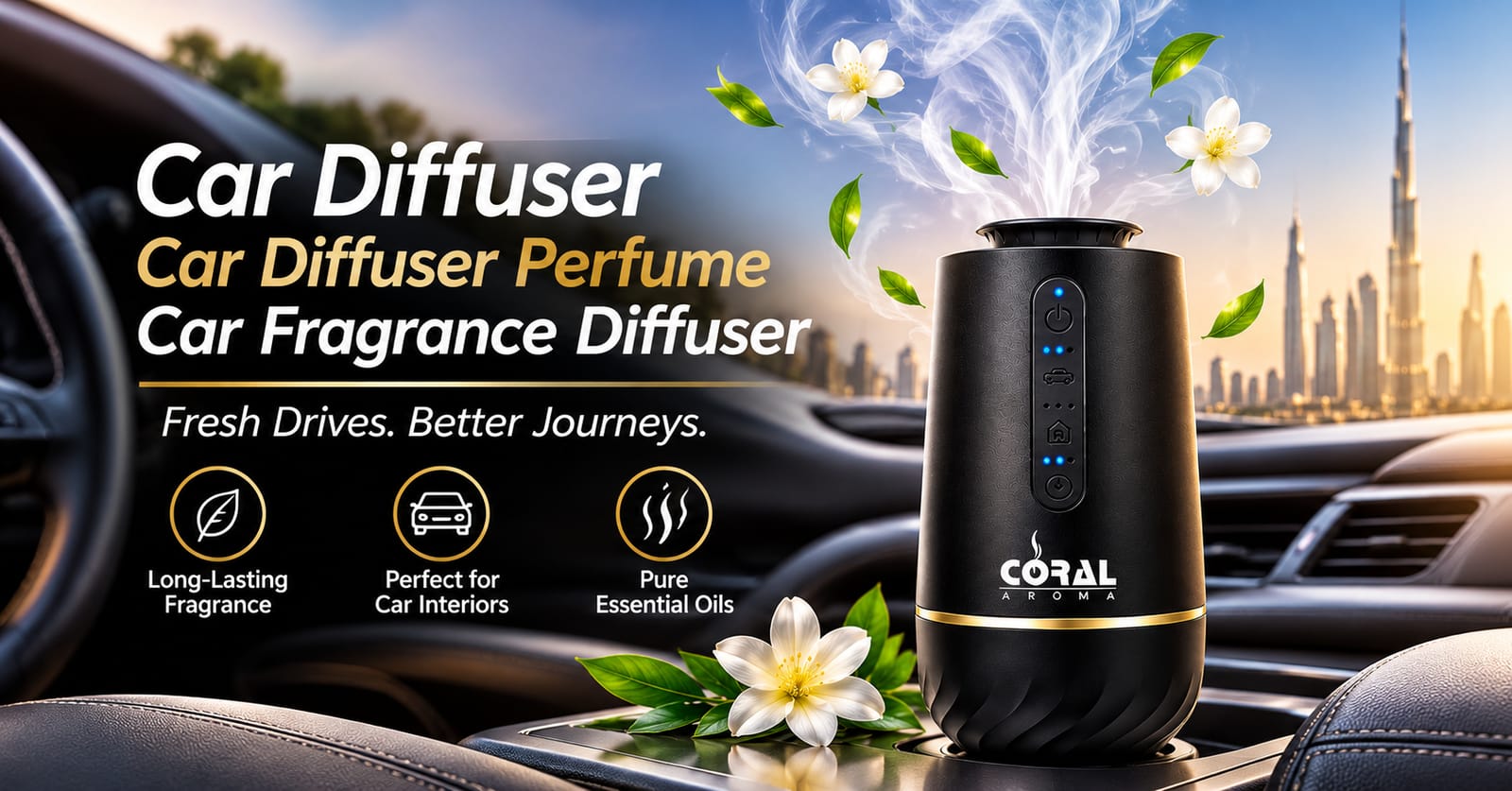
A suitable car fragrance diffuser should allow fragrance to be distributed in a controlled way. When choosing a system, consider cabin size, refill compatibility, installation, and whether the fragrance intensity can be adjusted.
For commercial vehicles, taxis, and shared transport, neutral and understated fragrances are often more considerate because passengers may have different sensitivities and preferences.
8. Practical Tips for Enjoying a Balanced Fragrance Experience
Selecting the right fragrance is only one part of maintaining a pleasant vehicle interior. Good habits help ensure that the scent remains comfortable.
Test fragrances before choosing a full-size refill.
Allow enough time to experience the top, middle, and base notes.
Start with low fragrance intensity and adjust gradually.
Clean the vehicle regularly to remove unwanted odours.
Check the diffuser and refill according to manufacturer instructions.
Avoid combining several strong fragrance products.
Keep fragrance equipment away from areas that could interfere with driving controls or visibility.
Drivers should also remember that fragrance does not replace proper vehicle cleaning or ventilation. If a persistent unpleasant smell develops, identify and address its source rather than attempting to cover it with a stronger scent.
Frequently Asked Questions
1. What are the three main layers of fragrance?
The three main layers are top notes, middle notes, and base notes. Top notes create the initial impression, middle notes establish the fragrance's main character, and base notes provide depth.
2. Which fragrance notes last longest in a car?
Woody, musky, and amber ingredients are often associated with longer-lasting fragrance characteristics. Actual performance depends on the formulation, concentration, temperature, and diffusion method.
3. Why does my car perfume smell different after a few minutes?
Fragrances develop as their ingredients evaporate at different rates. Lighter top notes may fade first, allowing the middle and base notes to become more noticeable.
4. Which fragrance is suitable for hot weather?
Fresh citrus, aquatic, and light herbal profiles are popular options for warm-weather driving. Choose a comfortable intensity and follow the product's storage recommendations.
5. How can I make my in-car fragrance experience more consistent?
Use compatible refills, maintain the device, clean the vehicle regularly, and adjust fragrance intensity according to cabin size and ventilation.
Conclusion
Understanding how fragrance notes evolve inside a car helps drivers make more informed choices about scent profiles, longevity, and diffusion methods. Fresh citrus notes can create a lively opening, floral and aromatic middle notes add character, while woody and musky base notes provide depth.
By considering vehicle size, journey duration, ventilation, and UAE weather conditions, drivers can select a fragrance that remains pleasant throughout everyday travel. The ideal in-car fragrance is not necessarily the strongest or longest-lasting option; it is the one that develops naturally, suits the vehicle, and keeps drivers and passengers comfortable.
for more visit : coral aroma