To prevent fragrance from becoming too strong in a small office, choose a light scent, use an aroma diffuser at a low setting, and adjust the fragrance output to suit the room’s size and ventilation. Start with less fragrance than you think you need, then make small adjustments based on how the space feels and how your coworkers respond.
A pleasant office fragrance should create a fresh, comfortable atmosphere without distracting employees or overwhelming visitors. With the right fragrance and a few simple adjustments, you can maintain a balanced scent throughout the workday.
1. Choose a Subtle Fragrance for Your Workspace
The fragrance you choose plays a major role in how strong the office smells. Rich, sweet, spicy, or heavy woody fragrances can feel overwhelming in a small, enclosed room, particularly when the diffuser runs continuously.
For a more balanced atmosphere, consider lighter fragrance profiles such as:
Fresh citrus: Lemon, bergamot, and other light citrus notes can create a clean, refreshing impression.
Soft florals: Gentle floral fragrances can add freshness without dominating the room.
Light herbal notes: Subtle herbal scents can suit workspaces where a fresh, understated atmosphere is preferred.
Clean linen-inspired fragrances: These can create a soft, airy impression when used at a restrained intensity.
Remember that fragrance strength depends on the formulation as well as the scent category. Test a fragrance in your actual workspace before using it throughout the day.
2. Use an Aroma Diffuser for Office Spaces Carefully
Choosing the right aroma diffuser for office spaces is not just about the machine’s appearance or features. It is also about how much fragrance it releases and whether that output suits the room.
A diffuser designed for a large commercial area may release more fragrance than a compact office needs. In a small cabin, reception area, or shared workspace, excessive output can cause the scent to build up quickly.
To prevent this:
Begin with the lowest practical output setting.
Use intermittent operation if your diffuser supports it.
Avoid running the diffuser continuously unless the room and device settings require it.
Check the fragrance level after the diffuser has been operating for a while.
Reduce the output if the scent remains noticeable from every corner of the room.
The goal is a gentle background fragrance, not a scent that immediately attracts attention when someone enters.
3. Adjust Your Aroma Diffuser Machine Settings
An aroma diffuser machine may offer adjustable fragrance intensity, operating schedules, or interval settings. These features can help you control how much fragrance enters the room.
Start with a low intensity and a short operating period. Allow the fragrance to disperse before deciding whether you need to increase the output. Making several adjustments at once can make it difficult to identify what works best.
If your device has a timer, consider scheduling it around office hours rather than leaving it on throughout the day and night. If it supports intermittent diffusion, use suitable pauses between operating periods to limit continuous fragrance release.
Always follow the manufacturer's instructions for the device and the fragrance used. Avoid modifying the machine or using oils that are not compatible with it.
4. Match Fragrance Output to the Room Size
A small office requires a different approach from a large reception hall. Even a moderate amount of fragrance can feel intense in a compact room with limited airflow.
Before choosing your settings, consider:
Room dimensions: Smaller rooms generally need less fragrance output.
Ceiling height: A low ceiling may affect how quickly the fragrance becomes noticeable.
Furniture and partitions: Enclosed cabins and partitions can change how fragrance moves through a workspace.
Number of diffusers: Multiple machines in one small area can create an unnecessarily strong scent.
Avoid placing several diffusers close together. If one machine cannot distribute fragrance evenly, assess the layout and placement before adding another device.
5. Improve Ventilation and Choose the Right Placement
Ventilation affects how fragrance moves and accumulates. A room with limited air circulation may retain a scent for longer, while strong airflow can carry fragrance away from one area and concentrate it in another.
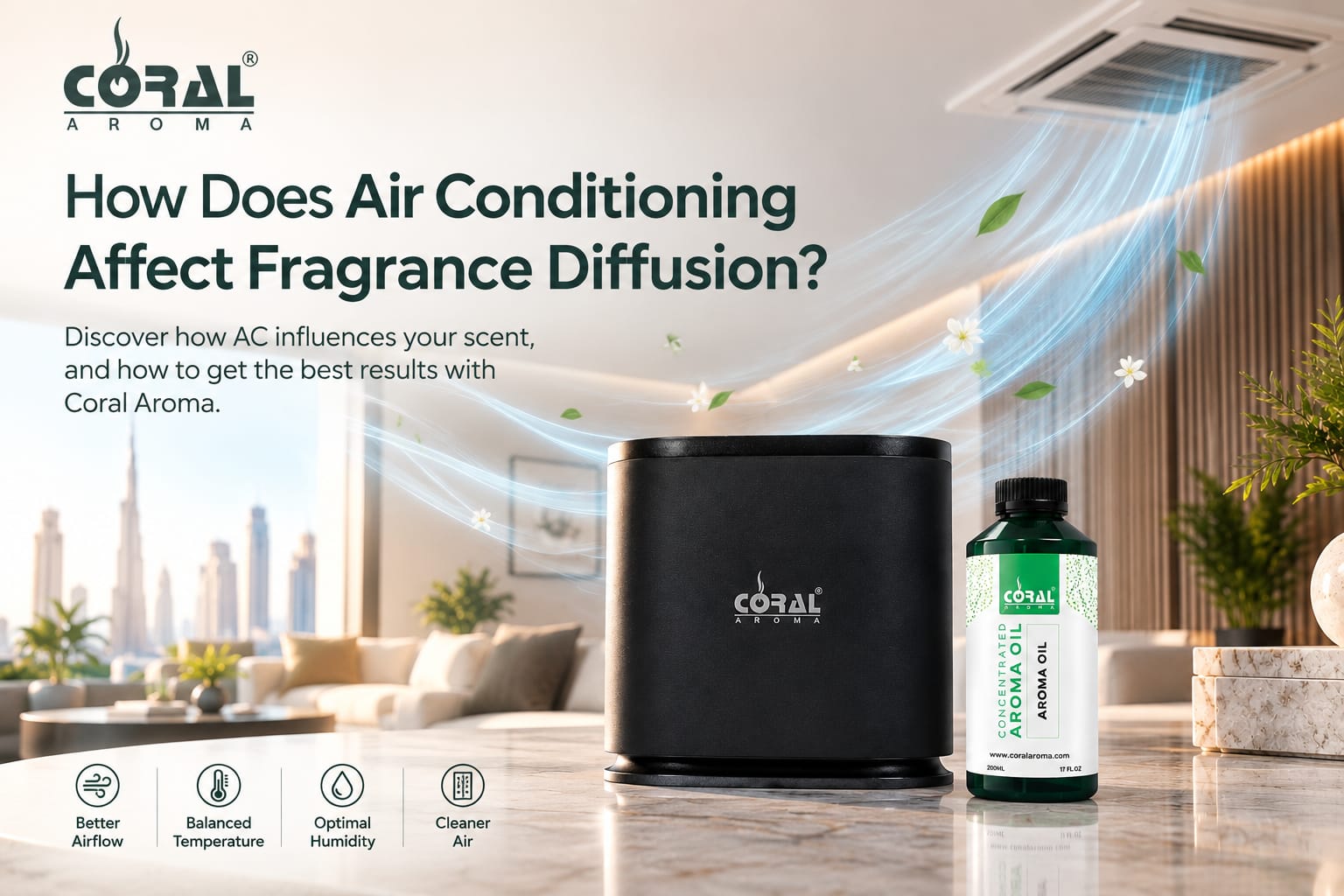
Place the diffuser where air can circulate naturally, while avoiding direct placement beside an employee's desk, near a visitor's seat, or immediately next to an air-conditioning outlet. Strong airflow can make fragrance distribution uneven.
Where possible, maintain appropriate ventilation and follow workplace indoor-air-quality practices. If the room feels stuffy or the scent lingers heavily, reduce or stop diffusion and allow fresh air to circulate.
Do not increase fragrance output simply because the scent is less noticeable near the machine. Your nose can become accustomed to a fragrance over time, even while other people continue to notice it.
6. Consider Coworkers' Sensitivities
People experience fragrances differently. A scent that feels pleasant to one employee may cause discomfort, headaches, nausea, or respiratory irritation for another.
In shared offices, keep fragrance use minimal and ask coworkers for feedback before making it part of the daily environment. Pay particular attention to employees who report fragrance sensitivity, asthma, migraines, or other relevant concerns.
If someone experiences symptoms, switch off the diffuser, improve ventilation, and avoid restarting it in the shared space without addressing the concern. In some workplaces, a fragrance-free environment may be the most appropriate choice.
A comfortable office should always take priority over maintaining a particular scent.
7. Review the Settings Regularly
The ideal fragrance level may change throughout the day. More people, closed doors, changes in air conditioning, and longer operating periods can all affect how a fragrance is perceived.
Check the workspace at different times and ask whether the scent is still subtle. If it becomes stronger as the day progresses, shorten the operating schedule or reduce the output.
Coral Aroma offers fragrance and diffuser solutions for different environments, but the most suitable setup depends on the office layout, diffuser specifications, and the preferences of the people using the space. Start conservatively and adjust according to real conditions rather than relying on a single setting for every room.
Conclusion
Preventing fragrance from becoming too strong in a small office comes down to choosing a subtle scent, controlling diffuser output, considering room size and ventilation, and respecting coworkers' sensitivities. A carefully adjusted aroma diffuser can support a pleasant workspace without making fragrance the centre of attention. When in doubt, use less fragrance—or choose a fragrance-free environment if that better supports everyone's comfort.
Frequently Asked Questions
1. Why does fragrance smell stronger in a small office?
Fragrance can become more noticeable in a small office because there is less air volume for it to disperse into, especially when ventilation is limited. Continuous diffusion, multiple machines, and heavy fragrance formulations can make the effect stronger.
2. What is the best setting for an aroma diffuser in a small office?
Start with the lowest practical output setting and use a timer or intermittent mode if available. The ideal setting depends on the room size, ventilation, fragrance formulation, and diffuser specifications, so adjust gradually.
3. Where should I place an aroma diffuser in an office?
Place the diffuser where air can circulate without directing fragrance straight toward employees or visitors. Avoid positioning it immediately beside desks or directly in the path of strong air-conditioning airflow.
4. Can an office aroma diffuser cause headaches?
Strong fragrances can trigger headaches or other symptoms in some people, particularly those who are sensitive to scented products. If anyone experiences discomfort, stop diffusion, ventilate the space, and consider avoiding fragrance in the shared office.
5. How often should I run an aroma diffuser in a small office?
There is no single schedule that suits every office. Use short operating periods or intermittent settings where supported, follow the manufacturer's guidance, and reduce usage if the fragrance builds up or coworkers find it uncomfortable.