The Himalayas are home to an extraordinary variety of plants that have been part of local food traditions and everyday life for generations. Among these lesser-known botanical treasures is the Himalayan stinging nettle, a wild-growing plant valued in several Himalayan communities. Although its appearance may seem ordinary, this plant has attracted growing interest among people exploring traditional herbs and naturally sourced herbal beverages.
One way to experience this botanical heritage is through Himalayan stinging nettle tea, an herbal infusion prepared using nettle leaves. With its earthy character and connection to mountain landscapes, nettle tea offers an interesting alternative to more familiar herbal drinks.
What Is Himalayan Stinging Nettle?
Himalayan stinging nettle refers to nettle plants found across parts of the Himalayan region. One species associated with this botanical heritage is Urtica himalayensis. Like other nettles, it belongs to the Urticaceae family and is recognised by its characteristic leaves and fine stinging hairs.
These plants grow in suitable mountain environments, including moist areas, forest edges and other habitats where soil and climate conditions support their growth.
Local communities have traditionally interacted with wild nettles in different ways, including their use as a seasonal food ingredient. Proper preparation is essential because fresh nettle leaves can cause skin irritation through contact with their stinging hairs.
What Is Himalayan Stinging Nettle Tea?
Himalayan stinging nettle tea is an herbal infusion made from appropriately processed and dried nettle leaves. Unlike conventional tea, which comes from the Camellia sinensis plant, nettle tea is naturally caffeine-free when prepared solely from nettle leaves.
Its flavour is generally described as earthy, mild and herbaceous. Depending on the quality of the leaves and preparation method, the infusion may have a light green or golden appearance.
For people who enjoy exploring botanical beverages, nettle tea provides an opportunity to discover a plant that has a close connection with Himalayan landscapes and traditional knowledge.
Why Are People Exploring Nettle Leaf Tea?
Interest in herbal infusions has encouraged consumers to look beyond conventional tea and coffee. Nettle leaf tea is one of the botanical beverages receiving attention because of its plant-based origin and distinctive flavour.
Here are some reasons people explore this herbal infusion:
1. A Naturally Caffeine-Free Beverage
Pure nettle leaf tea does not naturally contain caffeine. This makes it an option for people looking to enjoy a warm herbal drink without the caffeine associated with traditional black or green tea.
2. A Distinctive Herbal Flavour
Nettle tea offers an earthy and mildly grassy flavour. Its natural taste makes it suitable for people who appreciate simple herbal infusions.
3. Connection with Traditional Plant Knowledge
Nettles have been used in different traditional food cultures. Exploring nettle tea also provides an opportunity to learn about the relationship between Himalayan communities and their surrounding plant life.
4. A Plant-Based Herbal Infusion
Made from dried leaves, nettle tea is a straightforward botanical beverage. It can be enjoyed on its own or combined with other suitable herbs according to personal taste.
5. An Alternative to Everyday Tea
People interested in diversifying their beverage choices may find nettle tea an interesting addition to their daily routine.
How to Prepare Himalayan Stinging Nettle Tea
Preparing nettle leaf tea is relatively simple when using commercially processed, food-grade dried leaves.
Follow these steps:
Boil approximately 200–250 ml of fresh drinking water.
Add one tea bag containing dried nettle leaves to a cup.
Pour the hot water over the tea bag.
Allow it to steep for approximately 5–7 minutes, following the product instructions.
Remove the tea bag and enjoy the infusion.
You can enjoy it warm or allow it to cool for a refreshing herbal drink. A little lemon or honey can also be added according to your preference.
Himalayan Nettle Tea vs Conventional Green Tea
Although both beverages are prepared by steeping leaves in hot water, they come from different plants and offer different drinking experiences.
FeatureHimalayan Nettle TeaGreen TeaPlant sourceNettle speciesCamellia sinensisCaffeineNaturally caffeine-free when pureNaturally contains caffeineFlavourEarthy and herbaceousFresh, grassy or slightly astringentPreparationDried nettle leavesProcessed tea leavesBeverage categoryHerbal infusionTrue tea
The main difference is their botanical origin. Nettle tea is an herbal infusion rather than a traditional tea made from the tea plant.
Choosing Good-Quality Himalayan Nettle Tea
The quality of an herbal infusion depends on several factors, including the source of the plant material, harvesting practices, processing and storage.
When selecting nettle tea, consider the following:
Ingredient transparency: Check the botanical ingredients listed on the packaging.
Plant identification: Look for clear information about the nettle species where available.
Processing standards: Choose products made using appropriate food-grade processing methods.
Packaging: Properly sealed packaging helps protect dried leaves from moisture and contamination.
Preparation instructions: Reliable products should provide clear brewing and storage guidance.
These details can help consumers make more informed choices when purchasing herbal beverages.
Discovering Himalayan Nettle with Himvana
The growing interest in regional herbal beverages has created opportunities to explore plants that are often less familiar to modern consumers. Himalayan nettle is one such botanical ingredient, connecting the world of herbal infusions with the natural diversity of the Himalayan region.
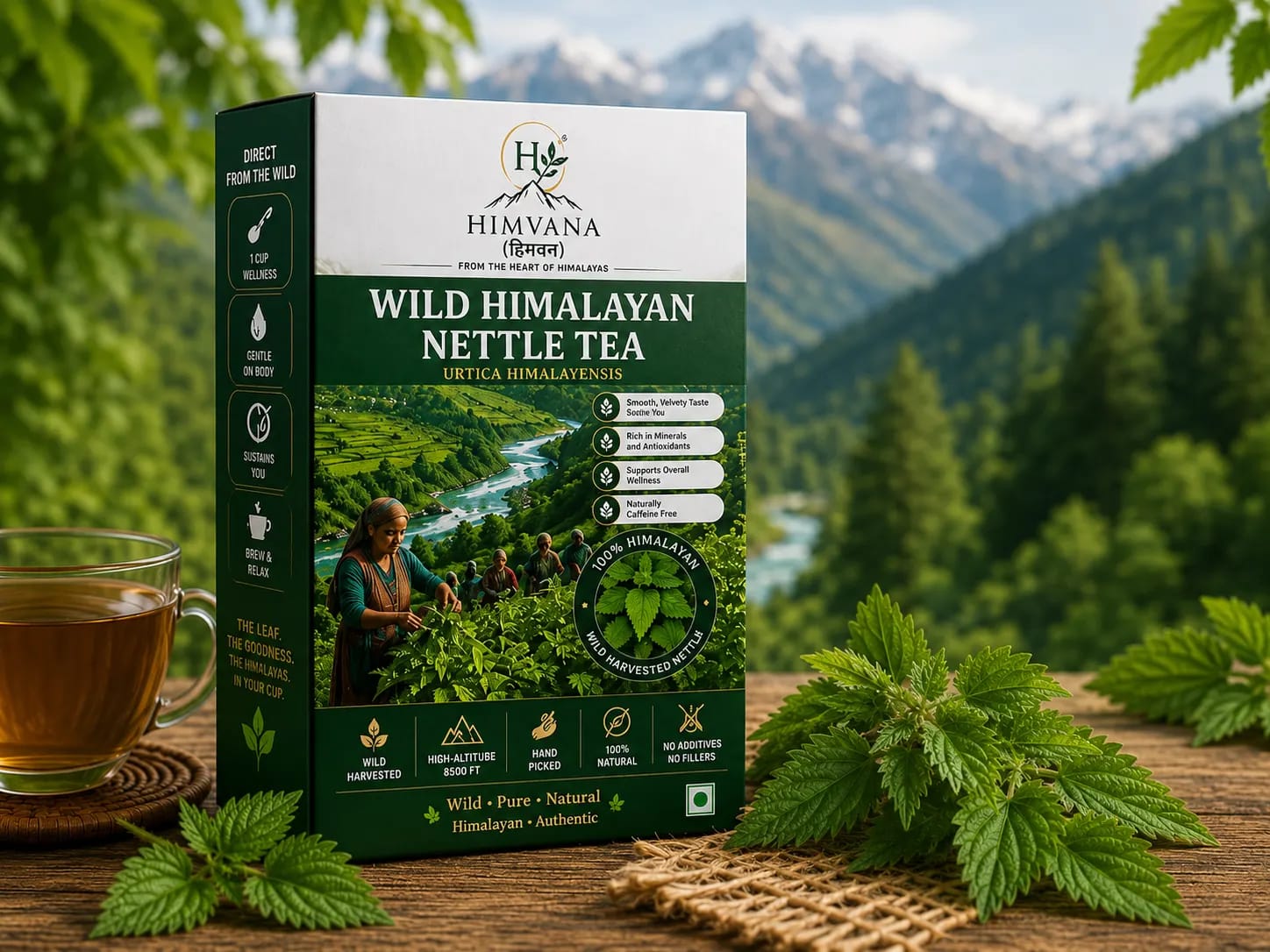
At Himvana, the focus is on bringing distinctive Himalayan botanical ingredients into convenient tea formats. The Himvana Wild Himalayan Nettle Leaf Tea Bags offer an accessible way to explore this traditional herbal infusion.
For those interested in discovering something beyond conventional tea, Himalayan nettle tea provides a simple way to experience an earthy, caffeine-free botanical beverage.
Final Thoughts
Himalayan stinging nettle tea represents more than an alternative herbal drink. It offers a glimpse into the botanical richness of the Himalayas and the traditional relationship between local communities and wild plants.
Whether you are interested in caffeine-free beverages, regional botanical ingredients or simply exploring new herbal flavours, nettle leaf tea is worth discovering. Choosing properly processed, clearly labelled products and preparing them correctly can make the experience both enjoyable and informed.