As technology continues to evolve, protecting digital information has become a major responsibility for organizations. Cyberattacks can affect websites, business networks, applications, and sensitive data. This makes skilled cybersecurity professionals important across many industries.
Ethical hacking is one area of cybersecurity that focuses on finding and reporting security weaknesses before malicious attackers can exploit them. It requires technical knowledge, analytical thinking, and practical experience.
Understanding the Ethical Hacking Process
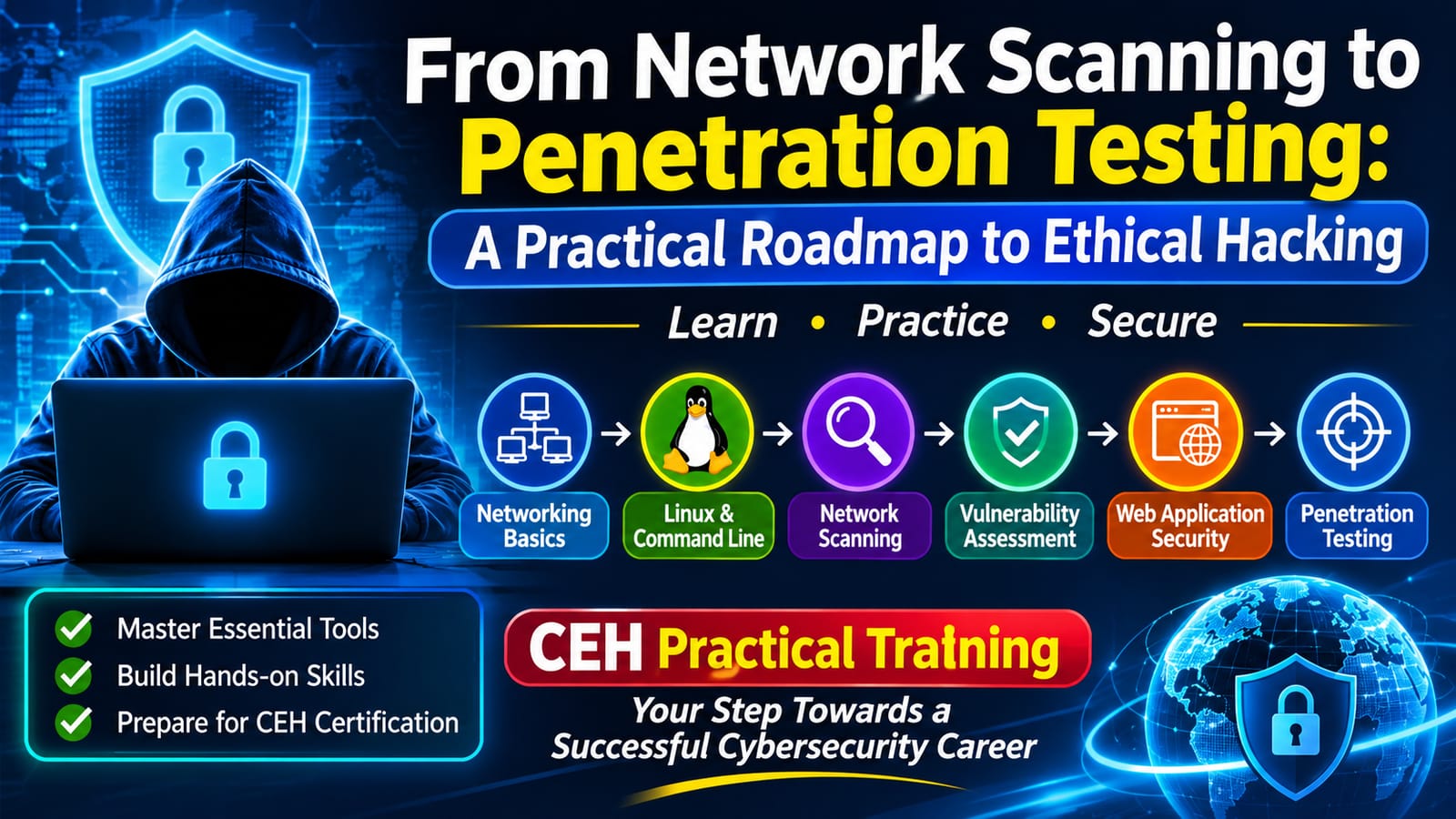
Ethical hackers follow a structured approach to evaluate security. They begin by understanding the target environment and identifying systems that are included in the authorized testing scope. They then perform activities such as information gathering, network scanning, service enumeration, vulnerability assessment, and controlled security testing.
Each stage helps security professionals understand possible risks and recommend suitable improvements.
Important Skills for Beginners
A strong foundation is essential for anyone starting an ethical hacking journey. Networking concepts such as IP addresses, ports, DNS, and protocols help learners understand how devices communicate.
Linux knowledge is also valuable because many security tools operate in Linux environments. Learners should become familiar with command-line operations, file permissions, system processes, and basic scripting.
Practical tools such as Nmap, Wireshark, Metasploit, and Burp Suite can help students understand network discovery, traffic analysis, security testing, and web application vulnerabilities.
Why Hands-On Practice Is Important
Reading about cybersecurity concepts is useful, but practical exercises help turn that knowledge into real skills. Working in authorized lab environments allows learners to practice security techniques, understand common mistakes, and improve their troubleshooting abilities.
Lab-based learning also helps students become familiar with the tools and workflows used in professional cybersecurity environments.
Learning Through Professional Training
A structured training program can help learners follow a clear learning path, from security fundamentals to practical testing activities. WebAsha Technologies provides CEH Practical Training for learners interested in developing ethical hacking knowledge through practical exercises and guided training.
Career Opportunities in Cybersecurity
With the right knowledge and consistent practice, learners can prepare for roles such as penetration testing associate, security analyst, vulnerability assessment specialist, and information security professional. Career requirements vary by organization and often include practical experience and additional technical skills.
Final Thoughts
Ethical hacking is a continuous learning process. Building strong networking and Linux fundamentals, understanding security tools, and practicing in authorized environments can help learners develop useful cybersecurity skills. Practical experience is an important step toward understanding real-world security challenges and building a career in information security.