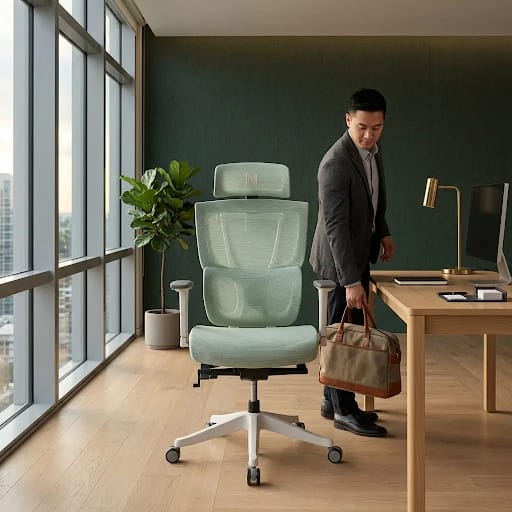
Space is tight in many modern homes. But you can still create an ergonomic workspace in it with the right plan and furniture. This will help you turn a small nook into a setup that supports your back, neck, and wrists.
Key Takeaways
A smaller space is enough to create an ergonomic workspace with the right planning.
You should choose an adjustable ergonomic chair that supports comfort and productivity.
Always measure the space first and then plan out the space.
You should use walls and shelves so the floor stays clear for movement.
Working from home is common for many people. However, not everyone has enough space to have a separate home office.
As a result, many people are left to work from a bedroom corner or a spot beside the living room. Well, a lack of space and a proper setup often come in the way of one’s productivity. The lack of a proper setup comes with a real cost. Singapore's Ministry of Manpower reported an average of 338 work-related musculoskeletal disorder cases a year from 2020 to the first half of 2024, with most people experiencing pain in the neck (46%), shoulders (42%), and lower back (42%).
But here’s what you need to know: These small areas can work well, and you just need a plan. In this blog, we will help you understand how you can create a proper ergonomic home workspace under 50 square feet. From how to plan your space, choose seating, and set up your desk, we will cover it all.
How Much Space Do You Actually Need?
50 square feet is a tight space. This is roughly 7 by 7 feet, or about 4.6 square metres. Well, believe it or not, this is enough to plan a space that supports ergonomics.
This is how you are required to plan the entire space:
Measure Before You Buy
The first step of the process is to measure the floor area, wall height, and window position. You must note where the door swings. Once all these measurements are cleared, it becomes easier to plan the rest.
Just write down the depth you can spare behind the desk for pushing your Ergo office chair in the workspace.
Keep a Clear Zone
Cramped spaces do not support productivity as it creates a mental blockage.
So, it is always important to leave some space to move around. We suggest leaving at least an arm's length of free space between the seat and the wall. This lets you stand, stretch, and turn without knocking into furniture.
Which Seat Works Best in a Small Workspace?
Your seat is the most important item in a compact setup. This is where you will sit, work from, and it will support your posture for hours.
Choose a Compact, Adjustable Chair
A good chair in office ergonomic design is a must for all. This should come with adjustable height, lumbar support, and a seat depth that suits your legs.
For a compact space, you should always look for a slim frame that tucks fully under the desk. Besides that, mesh backs are also great as they keep the chair light and breathable in warm rooms.
Match the Chair to the User
All individuals do not use their chair the same way. On top of that, everyone has a different body type, so you should choose a chair that feels comfortable to you.
We suggest you choose that Ergo office chair model, which lets your feet rest flat without dangling. Your knees should sit near hip height. However, if your feet cannot reach the floor, then you should get a small footrest.
How Can You Save Space Without Losing Comfort?
Working from a small space doesn’t mean you have to compromise on comfort. The plan is to focus on vertical space instead of horizontal space. This is what you need to do:
Store books and files on wall shelves just above the desk line.
Free up desk surface and adjust screen height.
Use under-desk drawers to keep supplies close without adding bulk.
Buy cable clips to tidy wires so they do not snag your chair.
Use a foldable desk if you want your workspace to tuck away.
What Daily Habits Keep a Small Workspace Comfortable?
Creating a compact workspace doesn’t end the story. You will still have to focus on proper movement to maintain the best posture in the long run.
Here’s what we suggest you do:
You should take a break and stand up after every 30-45 minutes.
Roll your shoulders and stretch your neck.
Remember to pause your work and look away from the screen every half an hour.
Take a short walk around the home to reset your body.
In Summation
A good workspace is about fit, not size. This is why you should start with a supportive seat, set the desk and screen to your body, and use walls for storage. Once all this is done, focus on building healthy habits that help you maintain a good posture.
Remember that under 50 square feet is enough to create an ergonomic workspace. The trick lies in smart planning and zero clutter.
Ready to Create an Ergonomic Workspace?
Setting up an ergonomic workspace at home is easy. Just follow the right plan and shop for the right furniture from a reputable shop.