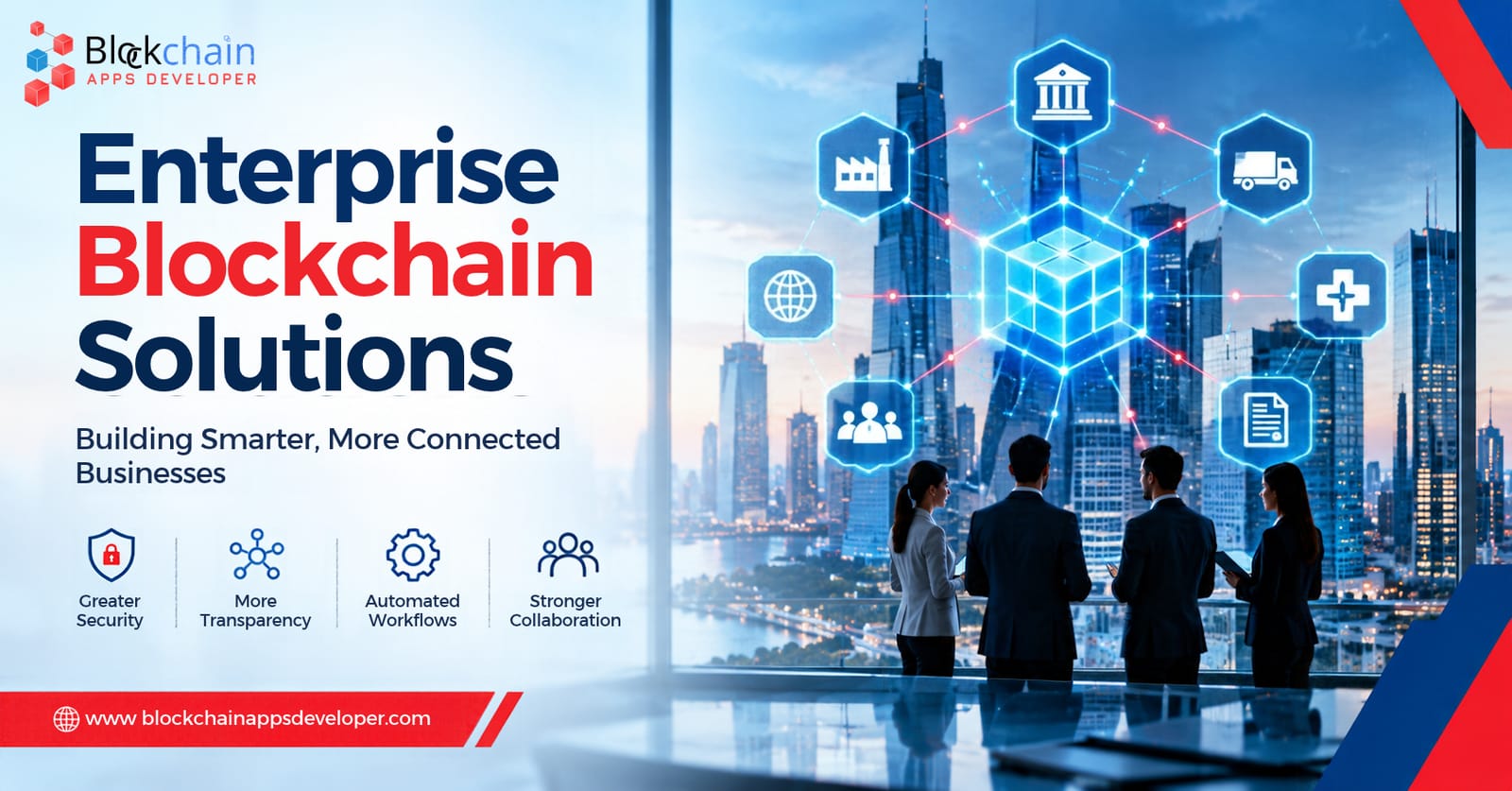
Businesses today need reliable ways to manage data, improve transparency, and simplify everyday operations. Blockchain technology offers new possibilities for achieving these goals. With enterprise blockchain solutions, companies can build secure networks, automate repetitive tasks, and share information more efficiently across departments and business partners.
What Are Enterprise Blockchain Solutions?
Enterprise blockchain solutions are designed to address specific business challenges using blockchain technology. Depending on their needs, organizations can use private or consortium networks to control who accesses information and how transactions are recorded.
Unlike traditional systems that may keep information in separate databases, blockchain can help authorized participants work with consistent records. This can be particularly useful when multiple organizations need to exchange information and coordinate their activities.
Key Benefits of Enterprise Blockchain
1. Better Data Security
Businesses handle sensitive information every day. Blockchain uses cryptographic techniques and access controls to help protect records and make unauthorized changes easier to detect. Proper implementation also requires security testing and effective permission management.
2. Improved Supply Chain Transparency
Tracking products across suppliers, manufacturers, and distributors can be challenging. Blockchain can provide a shared record of product movements and transactions, helping businesses improve traceability and identify discrepancies.
3. Automated Business Processes
Smart contracts can automatically execute predefined rules when specified conditions are met. Businesses can use them to streamline processes such as payment settlements, approvals, and transaction verification, reducing some manual work.
4. More Reliable Record Management
When different teams or organizations maintain separate records, inconsistencies can occur. A shared blockchain ledger can help authorized participants access consistent transaction histories and simplify verification.
5. Stronger Business Collaboration
Enterprise blockchain can help businesses exchange information across organizational boundaries. This is useful in industries where several parties need to coordinate activities while maintaining appropriate control over their data.
Industries That Can Benefit from Enterprise Blockchain
Enterprise blockchain has potential applications across several industries.
Banking and finance: Streamline transaction reconciliation and settlement processes.
Healthcare: Support secure information sharing between authorized participants.
Manufacturing: Improve product tracking and supply chain traceability.
Logistics: Maintain records of shipments and transfers between parties.
Real estate: Support property-related record management and tokenization initiatives.
The right application depends on the industry's requirements, existing infrastructure, and regulatory environment.
How to Choose the Right Enterprise Blockchain Solution
Before implementing blockchain, businesses should identify the problem they want to solve. Not every process requires a blockchain network, so it is important to compare the technology with conventional database solutions.
Organizations should also consider scalability, network permissions, integration with existing systems, security requirements, and long-term maintenance. Choosing the right architecture from the beginning can help prevent unnecessary complexity and expenses.
Businesses exploring blockchain adoption can also learn about different development approaches through this blockchain development company resource.
Conclusion
Enterprise blockchain can help businesses improve transparency, coordinate operations, and automate selected workflows. However, its real value comes from solving practical problems rather than adopting the technology simply because it is popular.
Before getting started, organizations should evaluate their requirements, identify suitable use cases, and choose an approach that fits their existing systems and future goals.
Final Thoughts
Blockchain is not a replacement for every traditional business system, but it can be useful when multiple parties need reliable records, controlled access, and a shared view of transactions. With the right planning and implementation, enterprise blockchain can become a valuable part of a company's digital transformation strategy.