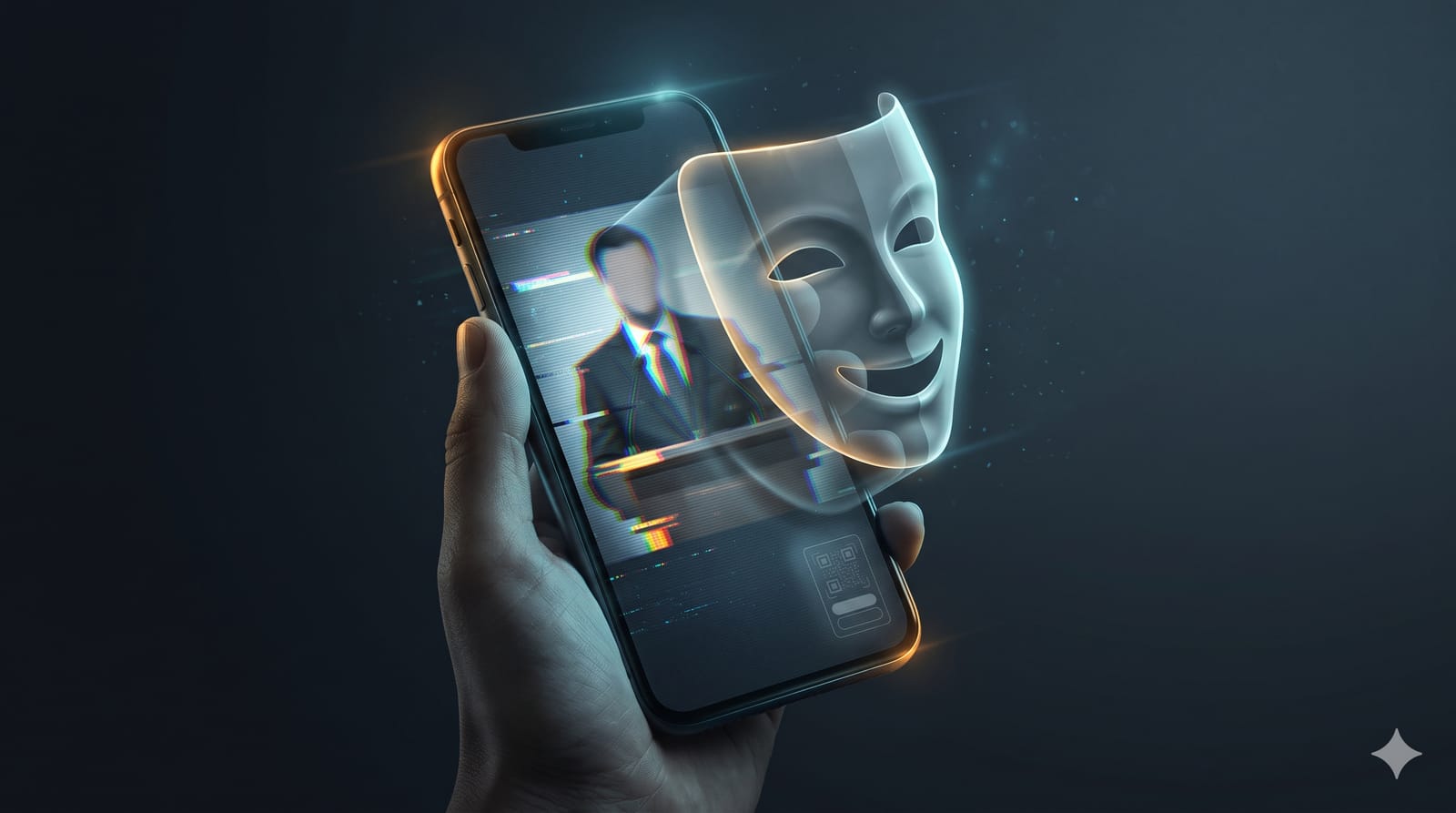
You are scrolling Instagram and a video appears: a chief minister, or the Prime Minister, announcing a new scheme that pays ₹10,000 to every eligible family. There is a number to call, or a "check eligibility" button. The face looks right. The voice sounds right. It is fake. On 19 October 2026 the Ministry of Home Affairs warned about exactly these ads, built with deepfake videos of senior leaders and run on Facebook and Instagram. Here is how the scam works step by step, the signs that give it away, and what to do if someone in your family has already paid.
What the government warned about
The advisory came from the National Cybercrime Threat Analytics Unit, part of the Indian Cyber Crime Coordination Centre (I4C) under the Home Ministry. As reported by Devdiscourse, carrying ANI's report and Sarkaritel, the ads use manipulated or deepfake videos of the Prime Minister, the Finance Minister and chief ministers to promote welfare schemes that do not exist.
According to Outlook Money, they come in two flavours:
Fake "yojanas" that promise direct cash payouts to eligible citizens.
Gamified cashback: scratch cards or spin-the-wheel contests offering instant prizes.
Outlook Money also reports that some of these ads are filed under political ad categories, which may help them dodge scrutiny.
How the scam works, step by step
Understanding the sequence makes it much easier to spot, so here it is in order.
The hook. A convincing video of a well-known leader announcing money for ordinary people. Deepfakes borrow the trust you already have in a familiar face.
The move off-platform. The ad sends you to a WhatsApp chat, a phone number or a cloned website with a spin wheel or scratch card. Once you are off Instagram, nobody is moderating the conversation.
The good news. You are told you have been "randomly selected" for aid or have won a prize.
The fee. Before the money can be released, there is a charge: processing, registration, verification, a "file fee" or a tax. Pay one and another appears.
The UPI trick. In the cashback version, you receive a UPI collect request, or are asked to enter your UPI PIN to "receive" the prize. Entering the PIN sends money out of your account.
That last step catches people who would never pay a fee. If you remember one thing from this article, make it this line from the advisory as reported: a UPI PIN authorises payments; it is never needed to receive money. We have seen the same trick in sale-season UPI scams, and it works because the screen looks like you are accepting something.
Red flags to watch for
A leader announcing a sudden cash grant or investment scheme in a social media ad, not on a government website.
Any request for money before you receive money. Genuine government schemes do not ask you to pay a fee or tax to claim a benefit.
Calls or WhatsApp messages from international numbers. The advisory specifically flags numbers starting with +92, Pakistan's country code.
A UPI collect request you did not expect, or any request for your UPI PIN, OTP, Aadhaar, PAN or bank details.
"You have been randomly selected." Nobody is randomly selected for a government scheme.
And a note on the video itself: do not rely on spotting the deepfake. Some are clumsy; the better ones are hard to tell from real footage on a phone screen. Check the claim, not the face. The same advice applies to cloned voices on phone calls, which we covered in AI voice-cloning scams and family safe words.
Do this today
For yourself
When you see a scheme announced in an ad, search for it on the official website of the ministry or state department named. If it is not there, it is not real.
Check every UPI collect request before approving it: who is asking, and how much. If in doubt, decline. A real payment to you never needs your approval.
Report the ad on Facebook or Instagram using the menu on the post. It takes ten seconds and helps take it down for others.
For parents and older relatives
These ads target people who trust leaders and may be less familiar with UPI. Have a five-minute conversation this week. Two rules are enough:
"The government never asks you to pay money to receive money."
"Your UPI PIN is only for sending money. If anyone asks for it to give you money, hang up."
Ask them to call you before paying anyone they met through an ad or an unknown call. It feels slightly awkward. It works.
If someone has already paid
Call 1930 immediately. This is the national cybercrime helpline. Speed matters: the sooner a report reaches the banks, the better the chance of freezing money before it moves on.
Report at cybercrime.gov.in with screenshots of the ad, the chat, the phone numbers and the UPI transaction IDs.
Call your bank using the number on the back of your card or in your banking app, not one from any chat.
Stop paying. Scammers often ask for "one last fee" to release the original amount. There is no release.
Watch for follow-up calls offering to help recover the money for a fee. That is usually the same scam, round two.
The short version
Real welfare schemes live on government websites, not in social media ads, and they never charge you to claim them. A UPI PIN only ever sends money. If you keep those two facts in mind, and share them with the people in your family most likely to see these ads, a deepfake video loses most of its power. For a similar pattern using SMS instead of video, see our explainer on the fake India Post address update scam.