Corporate Training in 2027: Empowering Employees with Future-Ready Technology Skills
Introduction
The business world is changing rapidly with advancements in Artificial Intelligence, automation, cloud computing and digital technologies. Organizations must continuously upgrade their employees' skills to remain competitive and adapt to changing industry requirements.
Corporate training has become an important investment for businesses that want to improve employee performance, strengthen technical capabilities and build a skilled workforce.
Whether an organization wants to introduce new technologies, improve productivity or prepare employees for digital transformation, structured corporate training can make a significant difference.
1. What Is Corporate Training?
Corporate training refers to structured learning programmes designed to improve employees' knowledge, technical abilities and professional skills.
These programmes help employees understand new technologies, improve their existing capabilities and perform their responsibilities more effectively.
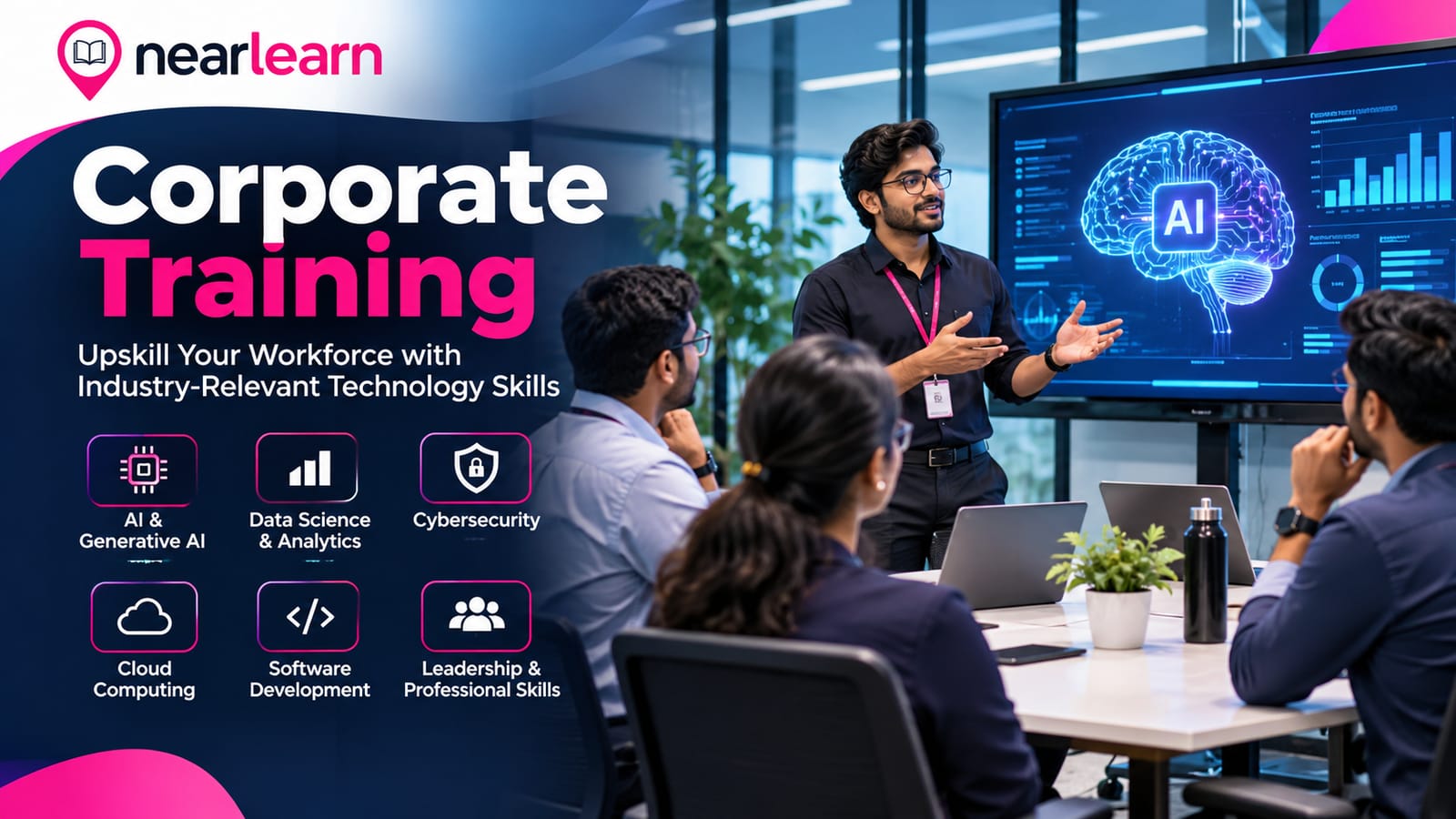
Corporate training can include:
Technical and IT training
Leadership and management development
Communication and professional skills
Artificial Intelligence and automation
Data Science and analytics
Cybersecurity awareness
Cloud computing and software development
Training programmes can be delivered through classroom sessions, online learning, workshops and hands-on practical activities.
2. Why Is Corporate Training Important?
Investing in employee development provides several benefits to organizations.
Improved Employee Productivity
Employees with relevant skills can complete tasks more efficiently, solve problems effectively and adapt to new workplace technologies.
Better Technology Adoption
When organizations introduce new software, tools or digital systems, employees need proper training to use them effectively.
Stronger Cybersecurity Awareness
Employees should understand common cyber threats, phishing attacks, password security and safe digital practices to help protect organizational information.
Employee Growth and Retention
Learning opportunities encourage professional development and help employees build long-term careers within their organizations.
Increased Business Competitiveness
Organizations with skilled employees can respond more effectively to industry changes, technological developments and customer requirements.
3. Emerging Corporate Training Trends in 2027
Corporate learning is evolving as businesses adopt new technologies and learning methods.
Artificial Intelligence Training
AI knowledge is becoming increasingly valuable across different business functions. Employees can learn how to use AI tools for research, automation, content creation and productivity improvement.
Data Analytics Training
Businesses depend on data to make informed decisions. Training in Excel, Power BI, Tableau, Python and data analytics can help employees understand and interpret business information.
Cybersecurity Training
As digital operations expand, employees need to understand cybersecurity fundamentals, secure access practices and common online threats.
Cloud Computing Training
Cloud platforms help organizations manage infrastructure, applications and data. Training in cloud technologies helps employees understand modern digital environments.
Automation and Digital Transformation
Organizations are increasingly exploring automation to reduce repetitive tasks and improve operational efficiency. Employees need relevant skills to work with these technologies.
4. Essential Corporate Training Programmes for Organizations
Businesses can choose training programmes according to their operational requirements and employee skill gaps.
Some valuable technical training areas include:
Artificial Intelligence and Generative AI: Understanding AI applications, prompt engineering, automation and practical AI tools.
Data Science and Machine Learning: Learning data analysis, predictive modelling, Python and machine learning fundamentals.
Cybersecurity: Understanding network security, ethical hacking fundamentals, security awareness and vulnerability management.
Cloud Computing: Exploring cloud infrastructure, deployment, storage and cloud security concepts.
Software Development: Developing programming knowledge, application development skills and modern software practices.
Business Intelligence: Learning data visualization, reporting and dashboard development using tools such as Power BI and Tableau.
Selecting suitable programmes helps organizations align employee learning with their business objectives.
5. How to Build an Effective Corporate Training Strategy
An effective training programme should be planned according to organizational goals and employee requirements.
Here are some important steps:
Identify Skill Gaps: Understand the technical and professional skills employees need to improve.
Define Training Objectives: Establish clear learning outcomes that support business requirements.
Choose Relevant Programmes: Select courses and workshops based on employee roles and industry needs.
Include Practical Learning: Use demonstrations, projects and real-world business scenarios.
Measure Training Outcomes: Evaluate employee progress through assessments, feedback and practical activities.
Encourage Continuous Learning: Provide opportunities for employees to update their skills regularly.
A structured approach makes corporate training more relevant and effective.
6. Benefits of Practical and Industry-Oriented Training
Theoretical knowledge provides a foundation, but practical experience helps employees understand how technologies are applied in professional environments.
Hands-on training allows employees to work with relevant tools, explore real-world scenarios and develop confidence in using new technologies.
Organizations should prioritize programmes that combine expert guidance, practical exercises, interactive sessions and measurable learning outcomes.
Conclusion
Corporate training is an important part of building a future-ready workforce. As businesses continue to adopt Artificial Intelligence, Data Science, Cloud Computing and other emerging technologies, employee skill development will remain essential.
Organizations that invest in continuous learning can improve technical capabilities, encourage innovation and prepare their teams for changing business requirements.
Choosing the right corporate training programmes can help businesses develop skilled employees and build a stronger foundation for long-term growth.
Empower Your Workforce with NearLearn
NearLearn provides technical training opportunities designed to help students, professionals and organizations develop industry-relevant skills.
From Artificial Intelligence and Machine Learning to Cybersecurity, Data Science, Cloud Computing and Software Development, NearLearn supports practical, career-focused technology learning.
Looking to upgrade your employees' technical skills?
Explore Corporate Training Opportunities with NearLearn.
https://nearlearn.com/corporate-training-company-india
Website: https://nearlearn.com/
Contact NearLearn to discuss your organization's technical training requirements.