Introduction
Artificial intelligence has transformed the SEO industry faster than almost any technology before it.
Today, AI can generate blog posts, suggest keywords, create meta descriptions, audit websites, analyze competitors, and even build content strategies in minutes.
This rapid advancement has sparked an important question:
Can AI replace SEO experts?
Some believe AI will eliminate traditional SEO jobs, while others see it as a productivity tool rather than a replacement.
The reality lies somewhere in between.
At Publisha, we've extensively explored AI-powered SEO workflows, and one thing is clear: AI is changing how SEO professionals work—but not why they matter.
AI Is Transforming SEO, Not Eliminating It
SEO has always evolved.
From keyword stuffing to semantic search, mobile-first indexing, Core Web Vitals, and AI-powered search experiences, marketers have continuously adapted.
AI is simply the next evolution.
Instead of replacing professionals, it automates repetitive tasks so experts can focus on strategy, creativity, and business outcomes.
AI Can Already Handle Many SEO Tasks
Modern AI platforms can assist with:
Content outlines
Keyword clustering
Topic ideation
FAQ generation
Meta title creation
Internal linking suggestions
Technical issue summaries
Content refresh recommendations
These capabilities save significant time.
Contextual Reading
If you're exploring the best platforms available today, our guide "15 Best AI SEO Tools That Actually Save Hours in 2026" explains how AI can automate large parts of an SEO workflow while helping marketers scale content production efficiently.
What AI Still Cannot Replace
Despite impressive capabilities, AI has clear limitations.
1. Strategic Thinking
SEO is not simply publishing articles.
Professionals must understand:
Business goals
User psychology
Conversion funnels
Competitive positioning
Brand voice
Revenue impact
These decisions require human judgment.
2. Experience and Expertise
Search engines increasingly reward content demonstrating real expertise.
A medical professional, financial advisor, or experienced marketer brings credibility that AI cannot genuinely possess.
Original insights, case studies, and lived experience remain powerful ranking signals.
3. Creativity
AI predicts language.
Humans create ideas.
The most successful SEO campaigns often involve unique research, experiments, storytelling, and creative positioning that stand out from generic content.
4. Building Brand Authority
Ranking today is about more than keywords.
Brands must build trust through:
Original research
Consistent publishing
Expert opinions
Community engagement
Strong editorial standards
AI can assist but cannot establish authentic authority on its own.
Why Human + AI Is the Winning Combination
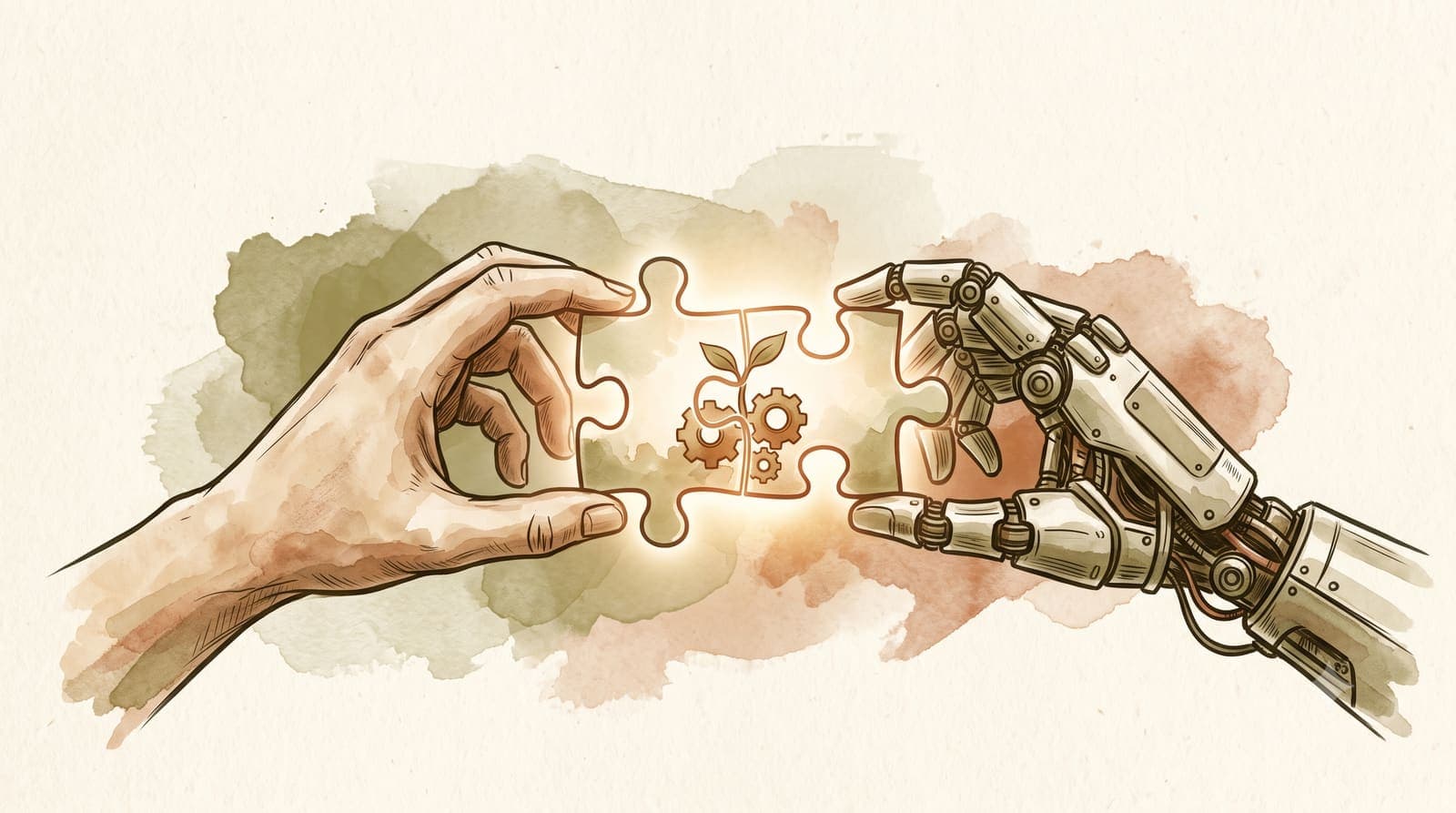
The highest-performing SEO teams use AI as an assistant rather than a replacement.
A practical workflow looks like this:
AI generates ideas
Humans validate search intent
AI drafts outlines
Humans add expertise
AI assists with optimization
Humans review accuracy and brand alignment
This collaboration produces content that is efficient, accurate, and valuable.
Internal Reading
Many marketers assume premium software is essential for this workflow. However, our article "Free AI SEO Tools That Beat Expensive Software" demonstrates how freelancers and startups can build effective SEO systems without significant software costs.
How Google Views AI Content
Google does not rank content simply because it was written by AI or by humans.
Instead, it evaluates whether the content is:
Helpful
Accurate
Original
Trustworthy
Comprehensive
Low-quality automated content may struggle, while AI-assisted content enhanced with human expertise can perform exceptionally well.
The Rise of AI Overviews Changes the Game
Google's AI-powered search experiences prioritize concise, authoritative answers.
To compete, publishers must:
Answer questions clearly
Cover topics comprehensively
Use structured headings
Include FAQs
Build topical authority
This is why SEO experts remain essential—they understand how to organize information for both users and search engines.
Related Reading
If your goal is to increase visibility in AI-generated search results, explore our guide "AI Tools That Help You Rank in Google's AI Overviews," where we explain how AI-ready content structures improve discoverability.
The Future Role of SEO Experts
SEO professionals are becoming:
AI workflow managers
Content strategists
Data interpreters
Brand builders
Entity optimization specialists
User experience consultants
Their role is evolving beyond keyword optimization into holistic digital growth.
Should Beginners Learn SEO or AI?
The answer is both.
Understanding search intent, content strategy, and technical SEO provides a foundation.
Learning AI then allows professionals to execute these tasks more efficiently.
Those who combine traditional SEO knowledge with AI skills will have a competitive advantage.
Another Helpful Resource
Choosing the right AI assistant also matters. Before committing to one platform, read "ChatGPT vs Claude vs Gemini for SEO: Which One Wins?" to understand the strengths and limitations of each tool and how they fit into modern SEO workflows.
Final Verdict
AI will continue transforming SEO.
It will automate repetitive work, improve productivity, and accelerate research.
However, strategy, creativity, experience, and critical thinking remain uniquely human strengths.
The future does not belong to AI alone.
It belongs to professionals who know how to combine AI with expertise to create genuinely helpful content.
At Publisha, we believe the next generation of SEO leaders will not compete against AI—they will collaborate with it to build stronger brands and better user experiences.
Frequently Asked Questions
Can AI completely replace SEO experts?
No. AI can automate many repetitive tasks but still lacks strategic thinking, industry expertise, creativity, and business context.
Will SEO jobs disappear because of AI?
SEO roles are evolving rather than disappearing. Professionals who learn AI-powered workflows are likely to remain highly valuable.
Is AI-generated content bad for SEO?
Not necessarily. AI-assisted content that is reviewed, expanded, and enhanced with original insights can perform well in search results.
Should agencies use AI for SEO?
Yes. AI can improve efficiency, but human review should remain part of every publishing workflow.
What is the future of SEO in an AI-first world?
The future combines AI automation with human expertise, focusing on authority, trust, topical depth, and user experience.