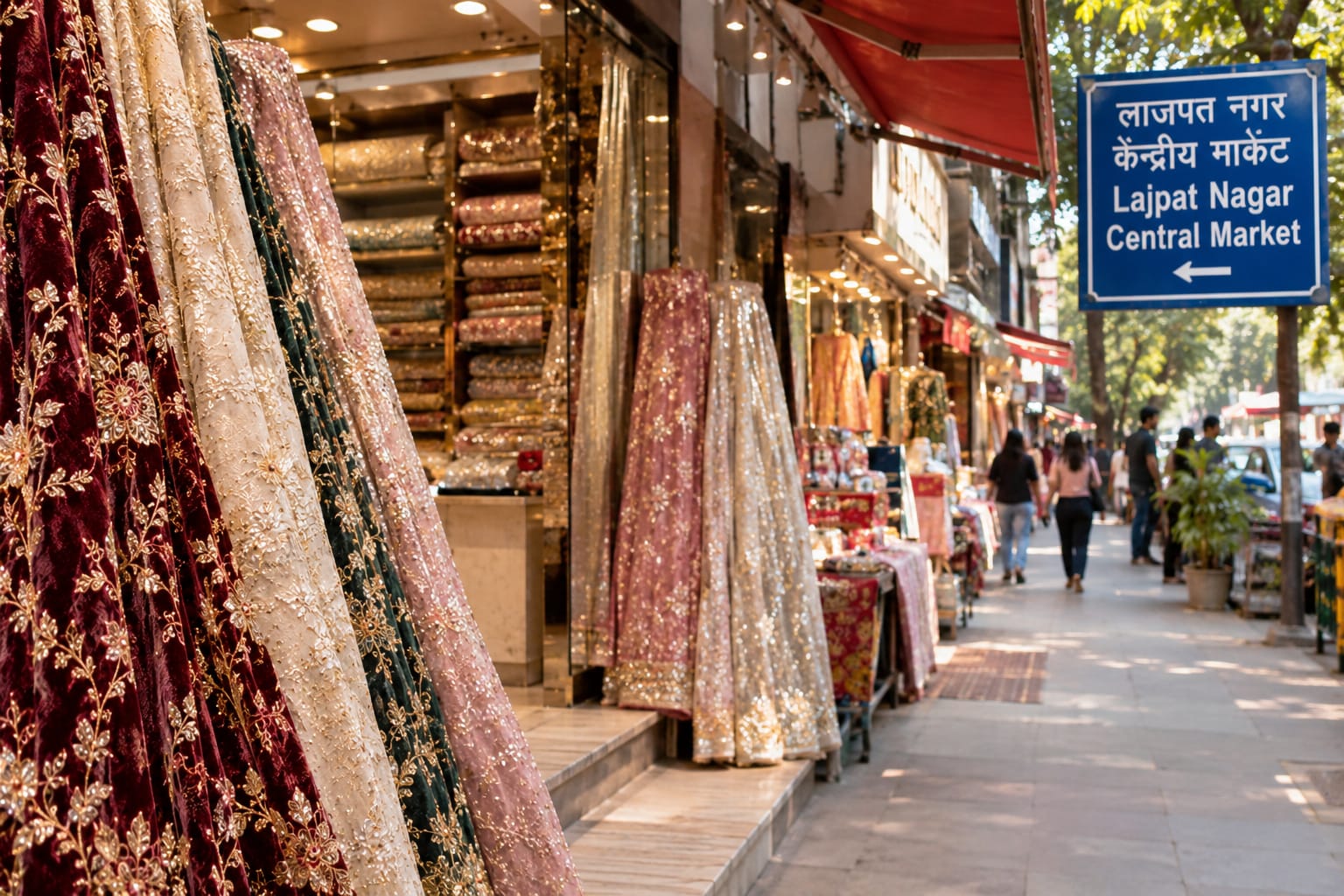
India buys gemstones for more reasons than almost any market in the world — for jewelry, for tradition, and for the planetary associations of the navagraha stones. That breadth is a strength, but it also means a buyer can be offered everything from a fine natural sapphire to a piece of coloured glass, sometimes across the same counter. The good news: protecting yourself does not require becoming a gemologist. It requires insisting on a few specific things, in a specific order.
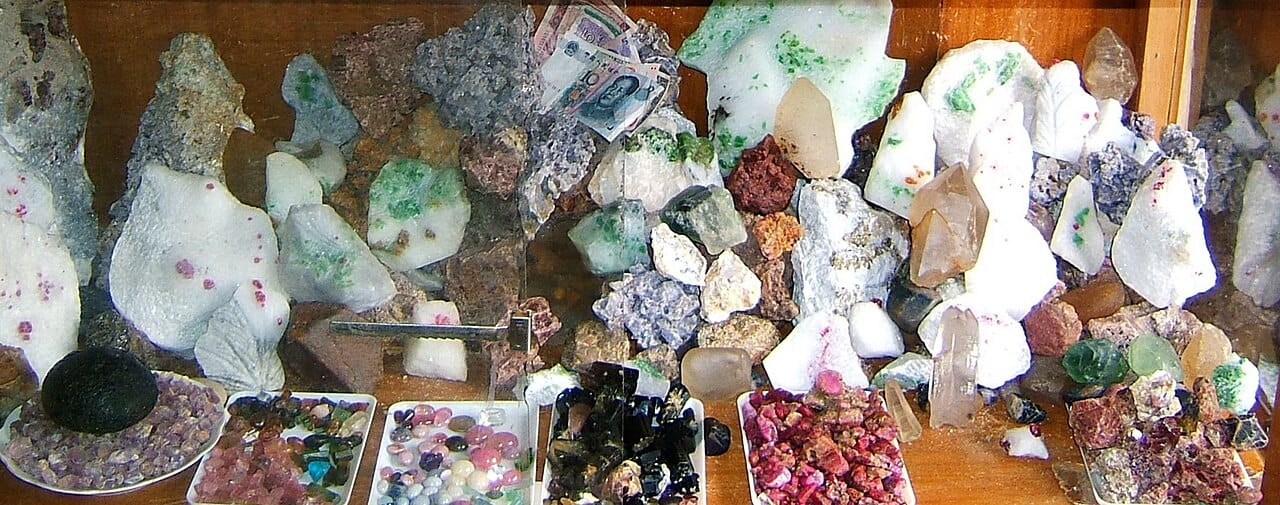
Gemstones on sale at a market stall in Luc Yen, Vietnam. Photo: Viethavvh, public domain, via Wikimedia Commons.
1. Know exactly what is being sold
Every offer should answer three questions plainly. Is the stone natural or laboratory-grown? Has it been treated — heated, filled, coated, irradiated — and how? And what, precisely, is the material: a yellow sapphire, or a yellow stone being sold beside sapphires? Laboratory-grown stones are real gemstones chemically, and they have a legitimate place in the market — at laboratory-grown prices. The problem is never the material; it is the description. If a seller is vague about any of the three answers, that vagueness is itself information.
Emerald crystals in their host rock, Muzo Mine, Colombia. Photo: Géry PARENT, CC0, via Wikimedia Commons.
2. Ask for a laboratory report — and verify it
For any purchase that matters, ask for a report from a recognised gemological laboratory, and treat the report as part of the product. A proper report identifies the stone, states whether it is natural or synthetic, and records the treatments the laboratory detected. Just as important: reports carry a report number, and issuing laboratories let you confirm that number against their own records. A photocopied or unverifiable "certificate" from an unknown source is decoration, not documentation. If a seller resists providing a report for a significant stone, or resists you having the stone tested, walk away — reputable sellers expect the question.
3. Learn the few checks you can do yourself
You cannot grade a stone at a counter, but you can screen one. Look at the stone in daylight, not only under the shop's spotlights, which flatter everything. Check whether the colour is even or concentrated in patches. Look for a windowing effect — a pale, washed-out centre you can almost read through — which signals a shallow cut. Ask to see the stone against white paper. And be suspicious of perfection at a low price: a large, flawless, vividly coloured "ruby" or "emerald" offered cheaply is almost certainly not what the label implies, because genuinely fine natural material is scarce and the trade prices it accordingly. A structured gemstone identification guide can help you work through these observations in order and understand where home checking stops and laboratory testing begins.
4. Understand what you are paying for
Gemstone prices are driven by colour, clarity, cut, size, treatment status and — for the finest material — documented origin. Two stones with the same name can legitimately differ in price many times over. That is why "per carat" questions make little sense without quality attached: always ask per carat for what grade, with what treatment, and on whose report? Be especially careful with per-carat comparisons between a certified natural stone and an uncertified one; you are usually comparing two different products. And keep the purpose in view: a stone bought for jewelry should be judged on beauty and durability, while a stone bought for astrological tradition is usually chosen by type, weight and natural origin — in both cases, the documentation matters more than the sales pitch.
5. Get the terms in writing
Before paying, have the seller state on the invoice what the stone is, whether it is natural or laboratory-grown, and what treatments it has — and agree the return terms if a laboratory report contradicts that description. An invoice that simply says "gemstone" protects the seller, not you. This single habit — a written description tied to a verifiable report — prevents most disputes before they start, because a seller who knows the description will be checked is a seller who describes carefully.
The short version
Buy the stone, but verify the story. Insist on knowing whether it is natural or laboratory-grown, what has been done to it, and what a recognised laboratory says about it — then check the report number yourself. Do that, and India's gemstone market becomes what it should be: one of the most interesting places in the world to buy a stone, with its risks reduced to the ones you chose knowingly.
KnowYourGem publishes gemstone identification, pricing and buying guides at knowyourgem.com.