Why independent testing deserves attention
BPC-157 third party testing is often mentioned in research-product descriptions, but the phrase alone does not explain what a laboratory actually measured. A responsible comparison starts with the original report, its sample description, and the limits of the tests performed. Independent analysis means that an organisation separate from the seller carried out the stated work. It does not automatically guarantee every aspect of a product, or prove that an item is suitable for human use. For UK research buyers, understanding that difference is more useful than relying on a prominent quality badge.
What a report can establish
A certificate of analysis may contain an analytical method, sample identifier, laboratory name, dates, measured results, and conclusions. Some reports examine identity, while others focus on chemical purity or measured content. Those are related but different questions. A purity percentage cannot by itself confirm the amount of material inside an individual device. Similarly, a content figure does not demonstrate sterility. The buyer should check the exact scope before repeating a number in a purchasing comparison or internal research record. If a report uses unfamiliar abbreviations, asking the supplier for an explanation is reasonable.
Matching the result to the product
The strongest paperwork is traceable to the item being assessed. Ideally, the listing, packaging and analytical document share a consistent batch reference or other unambiguous identifier. If one document describes loose powder but the item offered is a pen-format product, the two should not be treated as interchangeable evidence. Additional formulation questions may remain unanswered. For a product such as KLIK157, the relevant question is whether documentation can be connected to that specific supplied batch and format, rather than simply to the general name BPC-157.
Reading chromatograms with care
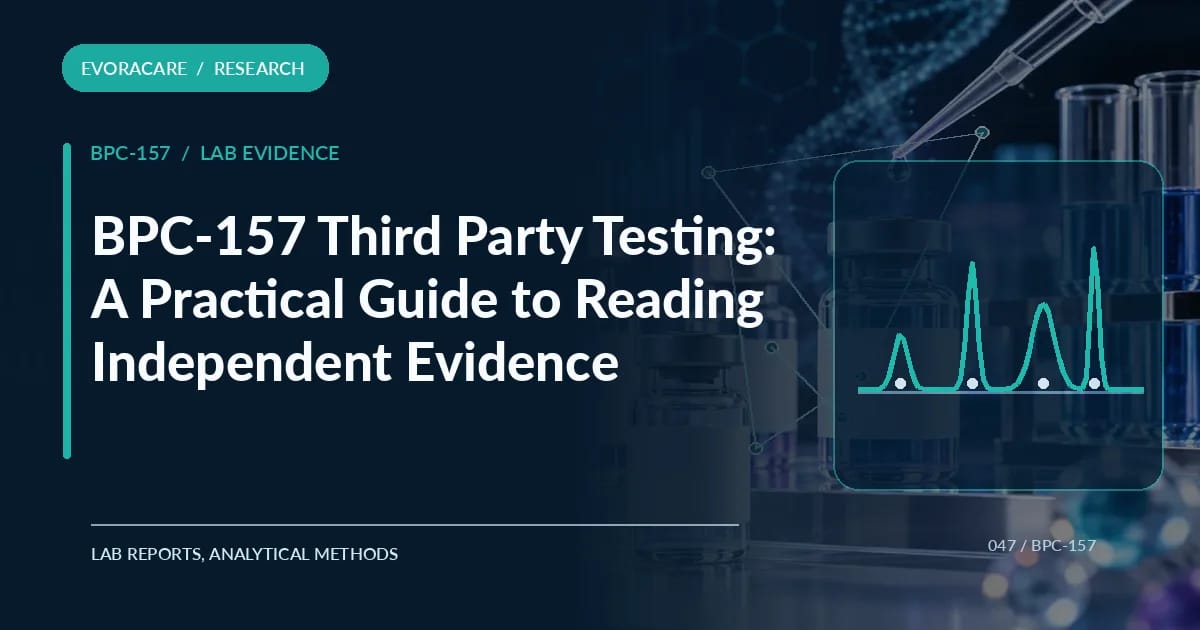
High-performance liquid chromatography, commonly shortened to HPLC, may separate different components and support an assessment of relative purity. However, a chromatogram does not speak for itself. Results depend on the method, detection conditions, integration and reference standards. A visually impressive peak is not a complete quality dossier. Researchers may also look for appropriate identity testing, such as mass-spectrometric analysis, when justified by the scope. A laboratory report should describe what was done, not leave the audience to infer it from a marketing image.
Questions worth asking the seller
A prospective research purchaser can ask whether the report was generated for the exact batch, whether an unedited copy is available, and whether the test laboratory can be identified. The testing date also matters: an old certificate may concern an earlier production run. It is helpful to ask which measures were not included, particularly where a product presentation raises separate questions about content or microbiological quality. A clear reply is more meaningful than a blanket promise of perfection. No supplier should be described as independently verified without appropriate evidence.
Reviewing the EvoraCare listing responsibly
EvoraCare lists KLIK157 as a BPC-157 research product in its catalogue. Anyone comparing available product information can consult the KLIK157 product listing to identify the named item and review the details presented by the seller. The listing itself should not be confused with a laboratory certificate. A researcher still needs the actual analytical records before drawing conclusions about batch-specific testing. This approach lets the product page act as a reference point, without turning an unverified quality claim into an established fact.
A clear decision record
A short research purchasing note can preserve the supplier name, listing date, product identity, claimed format, document filename, batch reference and any outstanding questions. That record is useful when reports change or different batches become available. It also distinguishes independent evidence from seller statements and advertising language. Where independent documentation is absent or incomplete, the honest description is simply that the evidence has not been established. Careful documentation supports a more credible buying decision than repeating an unexplained laboratory percentage.
EvoraCare product information
For current product specifications and availability, view the EvoraCare BPC-157 product page.
Additional documentation: EvoraCare certificates of analysis.
Research-related information, not a medical treatment or personal-use guide. Editorial approval and live URL verification are required before publication.