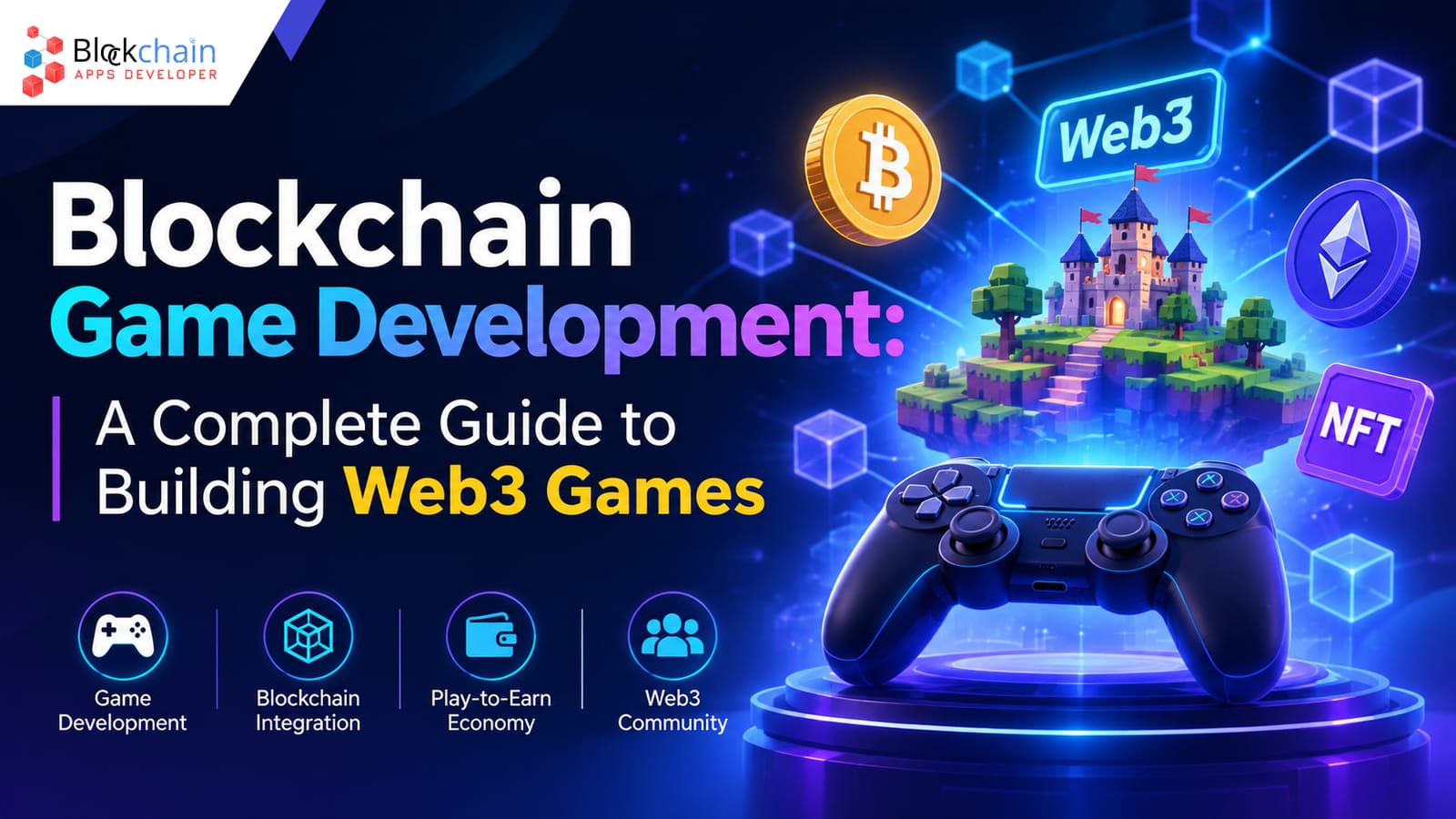
The gaming industry continues to evolve as developers explore new ways to make digital experiences more interactive, rewarding, and connected. Blockchain technology has introduced another dimension to this evolution by allowing games to incorporate digital asset ownership, decentralized transactions, and token-based economies.
Unlike conventional gaming platforms, blockchain-powered games can connect gameplay activities with blockchain networks. This creates opportunities for players to manage eligible digital assets while giving businesses new ways to design gaming products and monetization models.
For gaming startups, independent studios, and established businesses, understanding how this technology works is an important first step. Working with an experienced blockchain game development company can help turn a gaming concept into a functional Web3 platform with suitable blockchain infrastructure and engaging gameplay.
What Is Blockchain Game Development?
Blockchain game development is the process of designing and building video games that use distributed ledger technology to support features such as digital asset ownership, cryptocurrency transactions, NFT integration, and automated game operations.
In a conventional game, player accounts, virtual currencies, and purchased items are generally managed through the developer's centralized infrastructure. Blockchain gaming introduces an additional layer where selected assets and transactions can be recorded on a blockchain network.
For example, a multiplayer adventure game may allow players to collect unique weapons represented as non-fungible tokens (NFTs). These assets can be associated with a player's blockchain wallet and traded through compatible marketplaces if the game supports those functions.
Smart contracts can also manage specific operations, including asset transfers, reward distribution, and marketplace transactions.
The goal is not simply to add cryptocurrency to a video game. It is to build an enjoyable gaming experience where blockchain functionality serves a clear purpose.
How Does a Blockchain Game Work?
A blockchain game combines conventional game development technologies with blockchain infrastructure. The game engine handles the visual environment, player interactions, and gameplay mechanics, while blockchain components manage selected digital assets and transactions.
The process generally involves several interconnected elements.
1. Game Application and User Interface
The game application provides the environment where players interact with characters, complete missions, compete with others, and explore different game features.
Developers use game engines and programming frameworks to create the actual gaming experience. Blockchain functionality is integrated where it adds value to the gameplay.
2. Blockchain Network
The blockchain network records supported transactions and digital asset ownership. Depending on the project, developers may select Ethereum, Polygon, Solana, BNB Chain, or another suitable network.
The choice depends on transaction costs, network performance, security requirements, ecosystem support, and development considerations.
3. Smart Contracts
Smart contracts are programs deployed on blockchain networks that execute predefined instructions when specified conditions are met.
In gaming applications, they can support NFT creation, token transfers, marketplace operations, player rewards, and other blockchain-related activities.
4. Digital Wallet Integration
Wallet integration connects players to blockchain functionality. It allows users to manage supported tokens and NFTs, approve transactions, and interact with decentralized applications.
Developers can choose external wallet connections or suitable embedded wallet experiences depending on the intended audience.
5. Game Backend and Blockchain Communication
The backend manages application data, player sessions, matchmaking, leaderboards, and other conventional gaming operations.
Blockchain communication services connect the game application with smart contracts and network data. A well-designed architecture separates activities that require blockchain transactions from those that can be processed through conventional backend systems.
This approach helps avoid unnecessary on-chain operations that could affect gameplay performance.
Why Are Businesses Investing in Blockchain Game Development?
Blockchain gaming provides businesses with opportunities to experiment with new digital experiences and commercial models. Its usefulness depends on the game's purpose, target market, and implementation strategy.
Verifiable Ownership of Digital Assets
NFTs allow developers to represent unique digital items as blockchain-based tokens. These may include characters, virtual land, weapons, costumes, and collectible items.
Players can verify the ownership of supported assets independently of the game's internal inventory system. Compatible marketplaces may also allow these items to be traded.
New Gaming Business Models
Blockchain technology allows businesses to explore different approaches to monetization.
Some examples include NFT marketplaces, token-based purchases, collectible sales, premium game features, and optional digital asset trading.
A successful model should prioritize the actual gaming experience instead of relying entirely on token speculation.
Automated In-Game Transactions
Smart contracts can automate selected transactions according to predefined conditions.
For instance, a tournament platform can use a contract to distribute rewards to eligible participants after the competition results are verified. This can reduce manual transaction handling and provide an auditable record of supported payments.
Greater Transaction Visibility
Blockchain networks maintain records of transactions that can be independently inspected. This can help improve visibility into digital asset transfers and supported in-game economic activities.
However, developers should carefully manage personal information because public blockchain transactions do not automatically provide user privacy.
Community Participation
Certain blockchain gaming platforms introduce governance mechanisms that allow token holders to participate in selected community decisions.
These mechanisms can support discussions about game updates, ecosystem development, and community initiatives. Their effectiveness depends on how voting rights and governance responsibilities are designed.
Different Types of Blockchain Games You Can Build
Blockchain technology can be integrated into multiple gaming genres. The right format depends on the intended audience, gameplay mechanics, and business objectives.
1. Play-to-Earn Games
Play-to-earn games introduce digital rewards for selected player activities, such as completing missions, winning competitions, or achieving milestones.
These rewards may include tokens or NFT-based collectibles. Developers must design balanced token economies to prevent excessive token supply and maintain long-term participation.
2. NFT-Based Collectible Games
NFT collectible games allow players to acquire, collect, upgrade, and trade unique digital items.
Characters, trading cards, weapons, and other collectibles can be represented through NFTs. These games are suitable for businesses exploring digital collectibles and player-driven marketplaces.
3. Multiplayer Blockchain Games
Multiplayer games can incorporate blockchain features for asset ownership, player rewards, and selected transaction activities.
Developers can use conventional servers for real-time gameplay while relying on blockchain networks for functions that benefit from verifiable records.
4. Metaverse and Virtual World Games
Metaverse games create interactive digital environments where players can explore virtual spaces, customize avatars, and participate in community activities.
Blockchain can support digital land ownership, virtual collectibles, and marketplace transactions within these environments.
5. Blockchain Strategy and Role-Playing Games
Strategy and role-playing games can incorporate NFT characters, equipment, resource management, and token-based features.
Players may collect items, develop characters, and participate in competitive activities while blockchain infrastructure manages selected digital assets.
6. Fantasy Sports and Competitive Games
Blockchain-powered fantasy sports platforms can combine digital player cards, competition-based rewards, and verifiable transaction records.
Businesses can also develop tournament-based gaming platforms with automated reward distribution and wallet functionality.
Technologies Required to Build a Blockchain Game
Selecting the appropriate technology stack is an important part of game development. Each component should support the project's performance, security, and user experience requirements.
Blockchain Networks
Different blockchain networks offer different technical capabilities.
Ethereum: Suitable for applications requiring established smart contract infrastructure and a broad developer ecosystem.
Polygon: Provides EVM-compatible infrastructure for applications seeking alternative transaction costs and scaling options.
Solana: Offers a high-throughput environment for applications with frequent transaction requirements.
BNB Chain: Supports smart contract applications, token development, and decentralized gaming features.
Arbitrum: An Ethereum Layer 2 network that can support applications seeking Ethereum compatibility with alternative transaction economics.
Network selection should be based on the game's architecture rather than popularity alone.
Game Development Engines
Unity
Unity is widely used for mobile, desktop, and interactive 2D and 3D games. Its development ecosystem makes it a practical option for projects that need to combine conventional gameplay with Web3 functionality.
Unreal Engine
Unreal Engine is commonly used for visually detailed 3D games and complex interactive environments. It can be considered for projects requiring advanced graphics and sophisticated gameplay experiences.
Smart Contract Programming
Solidity is commonly used to develop smart contracts for Ethereum-compatible networks.
Rust is used in blockchain ecosystems such as Solana.
The programming language and contract framework should match the selected blockchain network and the application's technical requirements.
Wallet and Web3 Integration
Wallet integration allows players to connect their accounts and interact with blockchain assets.
Depending on the product, developers may implement external wallets, embedded wallets, authentication services, and transaction approval interfaces.
Backend and Database Technologies
Blockchain does not replace every component of a gaming application.
Backend technologies and databases remain important for player profiles, game sessions, analytics, matchmaking, and other application-level functions.
A hybrid architecture can combine centralized application services with decentralized asset management.
Step-by-Step Process of Building a Blockchain Game
Building a blockchain game requires planning across game design, blockchain engineering, security, and deployment.
Step 1: Define the Game Concept and Business Model
Start by identifying the gaming category, target audience, and primary objective.
Determine whether the project needs NFT collectibles, token-based rewards, a marketplace, multiplayer functionality, or another blockchain feature.
Also define the business model. Potential revenue sources include in-game purchases, subscriptions, marketplace fees, and premium features.
Step 2: Select the Right Blockchain Infrastructure
Evaluate potential networks based on transaction fees, scalability, security, ecosystem maturity, and developer support.
The infrastructure should support the game's expected transaction volume without introducing unnecessary complexity.
Step 3: Design Gameplay and User Experience
Develop the core game mechanics before adding blockchain features.
Create wireframes, character designs, game environments, player journeys, and interaction flows. Wallet connections and transaction approvals should feel natural rather than interrupting the gameplay experience.
Step 4: Develop Smart Contracts and Digital Assets
Create the contracts needed for NFTs, tokens, marketplaces, and other blockchain functions.
Define ownership rules, token supply, transfer permissions, and transaction conditions. Contract development should include thorough testing and independent security review where appropriate.
Step 5: Integrate Wallets and Blockchain Features
Connect the game application with the selected blockchain infrastructure.
Implement wallet authentication, asset visibility, transaction handling, and other required Web3 interactions.
For new users, provide clear onboarding instructions and avoid unnecessary technical barriers.
Step 6: Test Gameplay, Performance, and Security
Conduct functional testing, gameplay testing, contract testing, and performance evaluations.
Check transaction failures, wallet connectivity, asset ownership verification, network interruptions, and smart contract vulnerabilities.
Testing should also examine how the game performs when the number of active players increases.
Step 7: Deploy and Maintain the Gaming Platform
After successful testing, deploy the application and its required blockchain components.
Monitor application performance, transaction activity, player feedback, and security alerts. Regular updates can improve gameplay, resolve technical issues, and support future features.
Challenges in Blockchain Game Development
Although blockchain offers new development possibilities, businesses should understand the challenges before launching a gaming platform.
Network performance: Blockchain transactions can introduce delays. Developers should keep real-time gameplay operations off-chain whenever appropriate.
Transaction costs: Network fees may discourage players if common actions require frequent on-chain transactions. Selecting suitable infrastructure and minimizing unnecessary transactions can improve accessibility.
Smart contract security: Contract vulnerabilities can affect tokens, NFTs, and marketplace operations. Code reviews, testing, and security audits are important before deployment.
User onboarding: Wallet creation, transaction approvals, and blockchain terminology may confuse traditional gamers. Simple authentication and clear instructions can help reduce friction.
Token economy management: Poorly designed reward systems can create unsustainable token supply and economic instability. Tokenomics should be developed around genuine game participation and long-term product sustainability.
Regulatory considerations: Token distribution, digital asset trading, rewards, and other financial features may involve jurisdiction-specific legal obligations. Businesses should obtain appropriate legal advice before launching these functions.
What Should You Consider Before Hiring a Blockchain Game Development Company?
Choosing a development partner is an important decision for businesses planning to launch a blockchain gaming platform.
Before selecting a company, evaluate the following areas:
Game development experience: Check its capabilities in game mechanics, UI/UX design, multiplayer functionality, and game engine development.
Blockchain expertise: Review experience with relevant blockchain networks, token standards, and smart contract development.
NFT and marketplace capabilities: Determine whether the team can develop asset creation, ownership management, and trading functionality.
Security practices: Understand its smart contract testing, auditing, and deployment procedures.
Scalability planning: Ensure the proposed architecture can support expected player activity and future expansion.
Post-launch support: Discuss maintenance, upgrades, performance monitoring, and technical assistance.
A development partner should be able to explain why a particular technology is appropriate for the project rather than recommending blockchain features without a clear business purpose.
Future Opportunities in Blockchain Gaming
The future of blockchain gaming will depend on its ability to deliver experiences that players genuinely enjoy.
Several areas offer interesting development opportunities.
Improved Web3 onboarding: Embedded wallets, account abstraction, and simplified authentication can help reduce the technical barriers faced by new players.
Cross-platform gaming ecosystems: Developers may explore systems that allow supported digital assets to interact with multiple applications and platforms.
Player-created digital content: Tokenization can support ownership and trading of selected player-created items, subject to the rules of each gaming ecosystem.
Hybrid gaming infrastructure: Combining conventional game servers with blockchain-based asset management can offer a practical balance between performance and transparency.
Community-led development: Governance tools may allow communities to participate in selected decisions concerning gaming ecosystems.
The most promising projects will be those that use blockchain where it provides measurable value while keeping gameplay, accessibility, and security at the center.
Conclusion
Blockchain game development is creating new possibilities for businesses that want to combine interactive entertainment with digital ownership, tokenized assets, and decentralized infrastructure.
From NFT collectibles and multiplayer experiences to virtual worlds and reward-based gaming systems, blockchain technology provides developers with additional ways to design and manage gaming ecosystems.
However, building a successful blockchain game requires more than selecting a network or integrating a cryptocurrency wallet. It involves thoughtful game design, appropriate infrastructure, secure smart contracts, sustainable economic planning, and a smooth player experience.
Businesses that approach development with these priorities can create blockchain gaming platforms designed to serve both current players and future Web3 audiences.