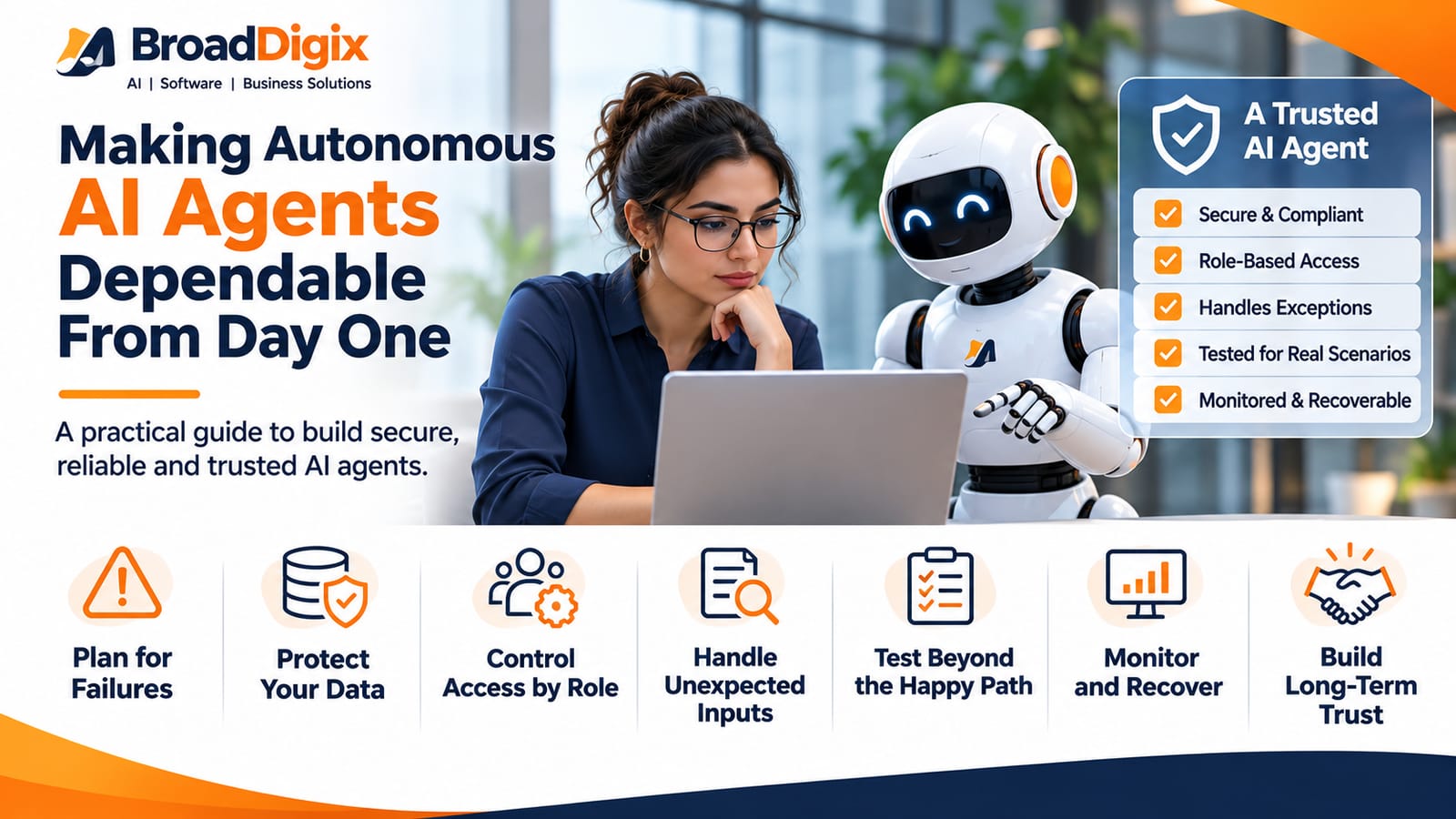
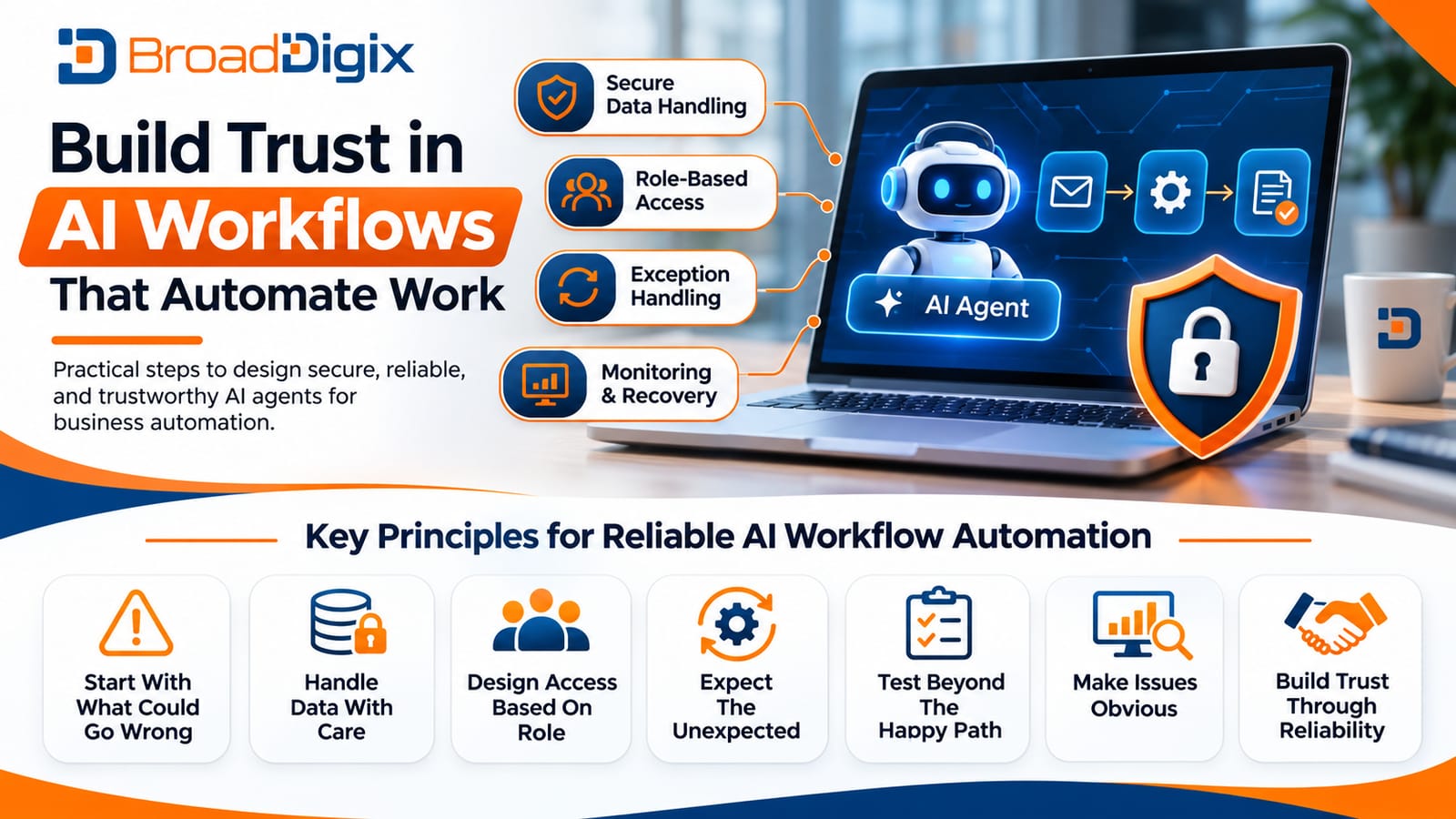
Start with What Could Go Wrong AI agents for workflow automation.
Trust is easy to spot when IT goes wrong. Just one piece of incorrect information, confusing permissions or unknown error can cause any positive feelings to fall away. When designing your product, you should always think of security and reliability as part of how your product works, rather than bolt-on features in the last sprint. Think about what would be the most difficult issue to explain to your customer or colleague. If you are building an agent to consume work, gather any missing information and produce structured decisions then your main concern will be that your agent has handled a request correctly, but also that if a request has been made incorrectly, incompletely or maliciously then your system is behaving securely. For example, if a supplier sends an email with a request to skip approval. Trust in your AI agents for workflow automation depends on your ability to handle this scenario without any guesswork.
Think about the impact of having incorrect information. Be specific. An incorrect update could result in time being wasted, data being exposed or an unauthorized transaction. If you're consuming work, gathering any missing information and producing structured decisions then you'll want to be specific about what risks you have and how you're going to control them. This makes a general statement about security into something tangible that you can test. Who would be impacted by an error? Having a reliable system to handle errors can be just as valuable as having a fast system for your AI agent to automate workflows.
Handle Data with Care
Data can be passed along in ways you never intended. Think about what data you're collecting, why you're collecting IT and what systems can see IT. By involving process owners and automation teams early on you're giving privacy a design consideration. By reducing the amount of unnecessary data you're reducing the amount of work and exposure. Trust in your AI agents for workflow automation depends on your ability to handle personal and business data without any guesswork.
Automating can seem cheap but if you have lots of exceptions you'll need to manually clean them up. Think about what information you need to know for each step and if IT's something you expect the user to share. Think about how long you're keeping the data, logging and third party access. Having data in multiple systems (email, CRM, ticketing, workflow engines and internal databases) means that if there isn't clear ownership IT can be copied without anyone knowing. Often by keeping the data flow minimal IT will be easier to secure and maintain. Try to keep the information to a minimum and be clear on why you're collecting IT. Having a reliable system to handle personal and business data can be just as valuable as having a fast system for your AI agent to automate workflows.
Design Access Based On Role
For example, employees want to know why their request was escalated. Think about what permissions you should give. You shouldn't give people access to change a record if they don't need to. Don't give system accounts full access just because IT makes things easier. Think about what processes should be deterministic and who authorizes any exceptions. Trust in your AI agents for workflow automation depends on your ability to handle access controls without any guesswork.
Access is part of the user experience. Design your permissions based on what different roles can do. Think about what they can do, what requires approval and what should fail completely. If your automation goes wrong and passes a bad record through all your downstream systems, then having a safe fail is great. Ensure your audit logs are showing what was attempted without exposing more private data than needed. Use role based permissions. Having a reliable system to handle access controls can be just as valuable as having a fast system for your AI agent to automate workflows.
Expect The Unexpected
A reliable system should be able to cope with unexpected scenarios. If your system receives the same event twice or there is an API timeout during processing then your system should pause, ask for clarification, safely retry or pass to a human. Your safest option should be achievable, not just in your policy. For example, if your update to the CRM is successful but the downstream notification service is down. Trust in your AI agents for workflow automation depends on your ability to handle exceptions and misuse without any guesswork.
Test any suspicious, incomplete or conflicting information. Think about what unexpected information you want to test. Requests could be ambiguous, conflicting or trying to trick your system into skipping rules. By designing impotency, boundaries, audit logs and human approvals you'll know what validation steps you want, what safe defaults you want and what you want to escalate. Sometimes the correct thing to do is pause and ask. Never give untrusted information permission to do anything new. Having a reliable system to handle exceptions and misuse can be just as valuable as having a fast system for your AI agent to automate workflows.
Test Beyond the Happy Path
Testing the happy path will only tell you half the story. Ask your reviewers to try missing fields, connection issues, duplicates and conflicting requests. Involve people who haven't been involved in the design so they can find any assumptions you've made. A negative test will tell you what happens when your usual assumptions fail. Trust in your AI agents for workflow automation depends on your ability to handle negative tests without any guesswork.
For example, if your scheduled trigger is fired twice after a retry. Think about what you can test. Try missing values, duplicates, delayed responses and incompatible records. Think about what the system does and any side effects. If your message is correct but your database is updated incorrectly then IT's still a failure. Make sure you can diagnose any failures and recover any important actions. Think about including failed payments, missing records and unavailable services. Having a reliable system to handle negative tests can be just as valuable as having a fast system for your AI agent to automate workflows.
Make Issues Obvious
For example, your workflow could automatically gather any missing information but ensure the responsible manager can approve. Think about what you can test. Your monitoring should answer questions humans have. What went wrong? Who was impacted? Was an important action repeated? Can they piece together what happened without guessing? Impotency, boundaries, audit logs and human approvals will be most valuable when your team are under pressure. Trust in your AI agents for workflow automation depends on your ability to handle monitoring and recovery without any guesswork.
Ensure people know when there is uncertainty or unavailability. Make sure your alerts tell you what changed, when IT changed and if IT went through. Assign someone to review major issues. Practice what you would do in an incident. Often having clear logs and practice will be more valuable than having a pretty security dashboard. Give your staff enough context to investigate an incident. Having a reliable system to handle monitoring and recovery can be just as valuable as having a fast system for your AI agent to automate workflows.
Build Trust Through Reliability
Reliable outcomes, clear explanations and a way to fix issues will build trust. No team can guarantee their software won't fail but they can design a system that will respond in a way that makes sense and learn from their mistakes. For example, future orchestrators may need to connect more tools but can still have deterministic controls for important rules. Think about what you can test. Trust in your AI agents for workflow automation depends on your ability to handle reliable behavior without any guesswork.
Having a reliable and predictable system should be part of your brand promise. Systems that admit they don't know and are consistent will gain trust. If you can't complete a task let people know what the next safe step is. If you fix an error, then make IT obvious to those impacted. This gives process owners and automation team’s tangible reasons to trust the service will look after them. Consistency will be built by doing the right thing in everyday transactions. Trust will come from lots of little decisions. Being honest with error messages, limiting permissions, having auditable decisions and someone to intervene.