Account-based marketing is evolving as B2B buyers change the way they research, compare, and select technology solutions. Large campaign programs and fixed account-based marketing calendars are increasingly being supplemented by real-time account signals, first-party intent data, and buying-group engagement.
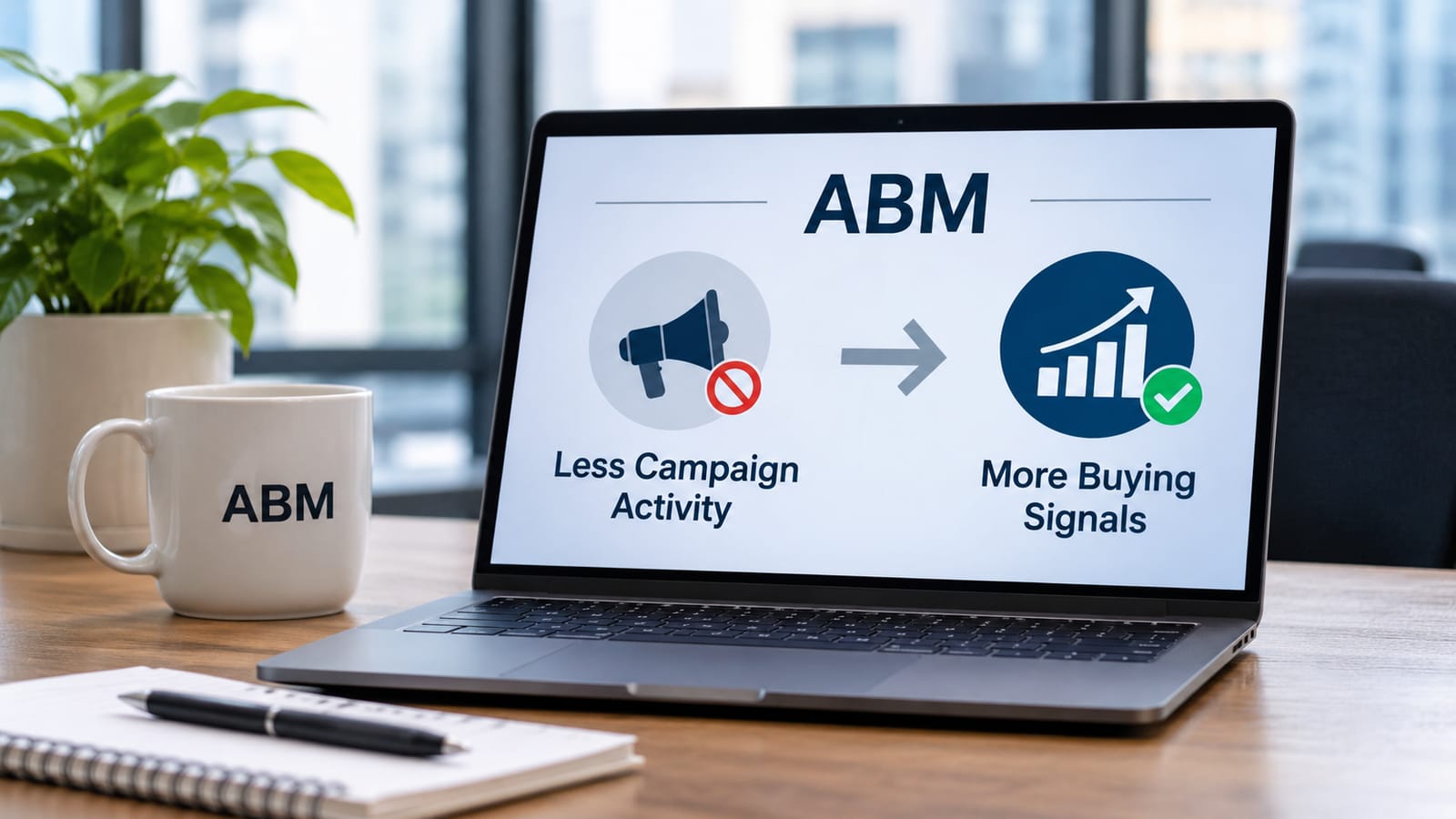
The emerging ABM trends 2027 show that successful ABM programs will depend less on campaign size and more on the ability to identify meaningful account activity and respond at the right time.
For B2B SaaS companies and technology businesses, this shift affects targeting, data management, content strategy, sales coordination, and revenue measurement.
From traditional ABM tiers to signal-led campaigns
Traditional ABM programs use account tiers to organize marketing resources. While this remains a useful planning method, account tiers alone do not explain when a business is ready to engage.
Signal-led marketing uses observable activities to identify potential buying interest.
Examples include repeated visits to pricing pages, engagement with product comparison content, new executive appointments, increased product usage, and activity from multiple employees at the same organization.
These signals help teams prioritize accounts based on current behavior rather than relying entirely on a predefined campaign schedule.
Gartner's 2026 buyer research, as referenced in the original article, found that buyers used an average of seven information sources and that 67% preferred a rep-free experience. This makes timely, relevant information important throughout the buying journey.
First-party intent data becomes a strategic asset
First-party intent data is generated through a company's own digital channels and customer interactions. It can include website activity, content engagement, email replies, product usage, trial participation, and chat conversations.
A strong first party intent abm framework connects these interactions to individual accounts.
For example, a single visit to an educational article may represent general interest. Repeated visits to pricing, integrations, security, and comparison pages can provide stronger evidence that an organization is evaluating a solution.
B2B marketing teams should connect website analytics with CRM data and identify the pages that indicate commercial interest.
This makes it easier to create relevant follow-up campaigns and coordinate marketing and sales activity.
Using third-party intent data responsibly
Third-party intent data can identify organizations researching topics related to a company's products or services. It can help expand target-account discovery and identify potential opportunities before a prospect engages directly.
However, external research activity should not be treated as confirmed purchase intent.
Effective intent data lead generation combines external intent signals with account fit, first-party website activity, and engagement from relevant stakeholders.
For example, an account showing third-party research activity may receive educational content. If that account also visits high-value pages on the company's website, the team may consider a more focused campaign.
Organizations should also assess data-provider sourcing practices and review applicable privacy requirements, including GDPR and relevant US state privacy laws.
Buying-group engagement is becoming a core ABM metric
B2B purchasing decisions typically involve multiple stakeholders across business, finance, technical, and procurement functions.
Forrester's 2026 State of Business Buying release, cited in the original article, reports a typical buying decision involving 13 internal stakeholders and nine external influencers.
This creates a need to measure engagement across the entire buying group rather than focusing on one lead or champion.
Marketing teams should develop role-based resources that address the priorities of executives, finance teams, IT leaders, procurement professionals, and end users.
Account coverage can then be measured by tracking the number of relevant roles engaged within each target organization.
High-intent lead capture is changing
Traditional lead-generation programs often rely on gated content forms. However, buyers increasingly expect to research independently and access useful educational information without unnecessary barriers.
High-intent actions provide a better opportunity to identify active evaluations.
Examples include:
Pricing and quotation requests.
Product trials and interactive demonstrations.
Security and compliance document requests.
Questions about implementation or integrations.
Repeat visits from several employees at the same company.
A modern high intent lead capture strategy should make these actions easy to complete while keeping general educational content accessible.
This approach can help organizations distinguish early-stage research from more meaningful buying activity.
Extending ABM into account-based experience
Account-based experience (ABX) applies account-level engagement principles to existing customers as well as prospects.
Customer activity can reveal expansion opportunities and potential retention risks. Signals such as new users, declining product activity, increased usage, approaching usage limits, and changes in key contacts can help teams determine the next appropriate action.
SaaS Capital's 2026 benchmarking research, as referenced in the original article, highlights the positive relationship between net revenue retention and company growth.
For this reason, marketing, sales, and customer success teams should share account information and coordinate customer engagement.
AI and the future of signal-led ABM
AI can support account research, engagement analysis, content preparation, and campaign personalization.
It is also influencing buyer research. The original article cites Gartner findings that 45% of buyers used generative AI during a recent purchase.
B2B companies should therefore maintain accurate, useful, and current website content. AI can accelerate research and drafting, but human review remains essential to ensure that messages are relevant and factually correct.
Practical steps for B2B marketing teams
Organizations preparing for the next phase of ABM can begin with five actions:
Audit available signals across CRM, website analytics, email, and product systems.
Select five reliable account triggers.
Develop two focused campaigns with clear owners and response times.
Map the buying-group roles within priority accounts.
Review account engagement and opportunity progression every month.
The direction of these ABM trends 2027 is clear: effective ABM will be built around verified signals, buying-group coverage, and relevant engagement rather than campaign volume alone.
TaRaj Global Solutions works with B2B SaaS and technology teams across the US, EMEA, and APAC on account-based demand generation and lead generation.