Planning the lighting for a commercial building involves several decisions. The lighting must support the activities taking place in the space while also complementing the interior design. Offices, shops, hotels, educational institutions, and showrooms all have different requirements, which means one lighting arrangement may not work equally well everywhere.
Commercial strip lighting is one option that can be considered for modern projects. Its streamlined appearance and flexibility in planning make it relevant to a variety of commercial interiors. However, selecting the right product requires careful consideration of the space, installation conditions, and intended use.
What Are Commercial Strip Lights?
Strip lights are lighting products designed in an elongated format. They can be incorporated into different interior layouts depending on the product design and installation method. In commercial environments, they may be considered for general lighting, architectural details, display sections, and selected functional areas.
The choice of lighting should always depend on the technical specifications of the product and the requirements of the project. Exploring the Commercial Strip Lights collection by Jaquar can help buyers and designers review available options.
Identify the Purpose of the Space
The first step in choosing commercial lighting is understanding how the area will be used. A workspace, for example, needs lighting suitable for regular office activities. A retail store may need lighting that supports product visibility, while a hotel reception area may require an arrangement that complements its interior design.
Before selecting fixtures, consider the following questions:
What activities will take place in the space?
Does the area require general or focused lighting?
How large is the room?
What is the ceiling height?
Are there existing lighting fixtures?
Does the design require integrated or surface-mounted lighting?
Answering these questions can help narrow down the available options.
Choosing Strip Lighting for Different Commercial Environments
Different commercial spaces have different lighting priorities. Here are some common applications to consider.
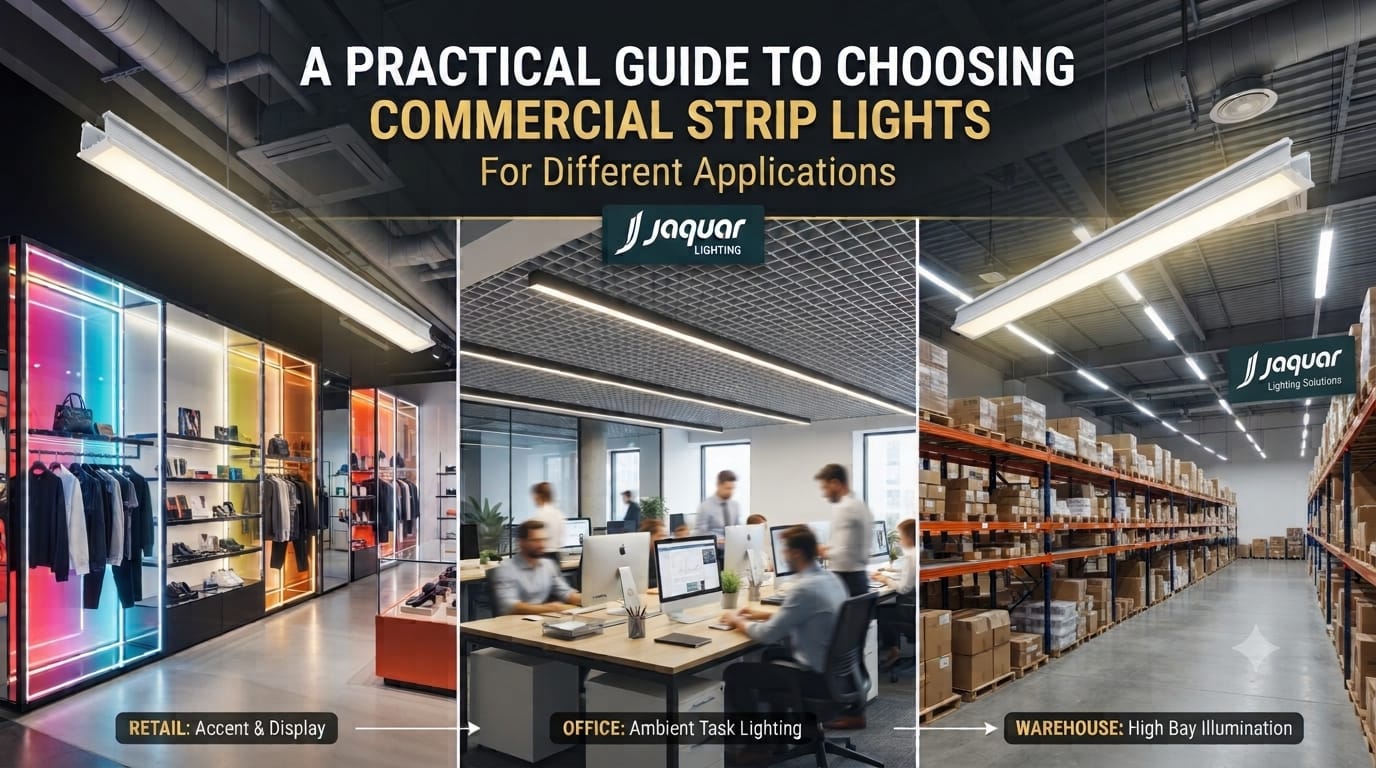
1. Offices and Corporate Buildings
Office lighting should support concentration and everyday work. Lighting arrangements need to provide appropriate visibility in workstations, meeting rooms, reception areas, and corridors.
Strip lights may be considered as part of the overall ceiling or architectural lighting design. The final arrangement should be planned according to the size and function of each area.
2. Retail Shops
Retail stores use lighting to create an organised shopping environment and improve the visibility of products. Strip lighting may be incorporated into selected display sections, shelves, or architectural features.
The lighting should complement the products and interior rather than distract customers.
3. Hotels and Restaurants
Hospitality spaces often combine functional and decorative lighting. Restaurants, reception areas, corridors, and waiting lounges may each require a different lighting approach.
Designers should consider the atmosphere they want to create while ensuring that the lighting remains suitable for everyday use.
4. Showrooms and Exhibition Areas
Showrooms need lighting that allows visitors to view products clearly. A combination of general illumination and focused lighting may be useful, depending on the type of products being displayed.
Strip lighting can be considered for selected architectural and display applications.
5. Educational and Institutional Buildings
Schools, training centres, and other institutions require lighting that supports reading, writing, presentations, and movement. Lighting decisions should be based on the function of classrooms, laboratories, libraries, and shared spaces.
Important Factors When Selecting Commercial Strip Lights
Once the application is clear, the next step is evaluating the lighting product.
Brightness and illumination: Check the light output and determine whether it is suitable for the intended application. Different areas may have different illumination requirements.
Colour temperature: Light colour can influence the appearance of an interior. Select a suitable colour temperature according to the purpose of the space and the desired ambience.
Energy efficiency: Commercial buildings may operate lighting for several hours each day. Reviewing energy consumption and efficiency ratings can help businesses understand long-term operating costs.
Product specifications: Check dimensions, electrical requirements, installation method, and other technical details before purchasing.
Installation conditions: The ceiling structure, available mounting space, wiring, and accessibility should be considered during planning.
Maintenance requirements: Commercial lighting should be easy to inspect and maintain. Consider how fixtures can be accessed if cleaning, replacement, or servicing is required.
Planning a Balanced Lighting Layout
Using only one type of fixture throughout a commercial building may not provide the best result. A balanced lighting plan can combine general illumination with focused or decorative lighting where needed.
For example, an office may use general ceiling lights in work areas and additional lighting in meeting rooms. A retail store may combine overall illumination with focused lights around selected displays.
The placement of fixtures is equally important. Poor positioning can create glare, unwanted shadows, or uneven illumination. For this reason, lighting layouts should be reviewed before installation, preferably with the help of a qualified lighting professional.
Why Explore Jaquar's Commercial Lighting Collection?
When planning a commercial lighting project, it is helpful to review products from a dedicated lighting range. Jaquar provides a collection of commercial lighting options that buyers and professionals can explore according to their project requirements.
The Commercial Strip Lights page provides a starting point for reviewing the range. Before making a purchase, compare the available product specifications with the technical and installation requirements of your space.
Conclusion
Choosing commercial strip lights involves understanding the purpose of the space, evaluating product specifications, and planning the installation carefully. Offices, retail stores, hotels, showrooms, and institutions all require lighting arrangements suited to their daily activities.
Factors such as brightness, colour temperature, energy efficiency, mounting requirements, and maintenance should be considered before making a final decision. With proper planning and suitable product selection, commercial strip lighting can become a useful part of a functional and visually coordinated interior.
Explore Jaquar's commercial lighting range to learn more about available options for your next commercial project.