Introduction
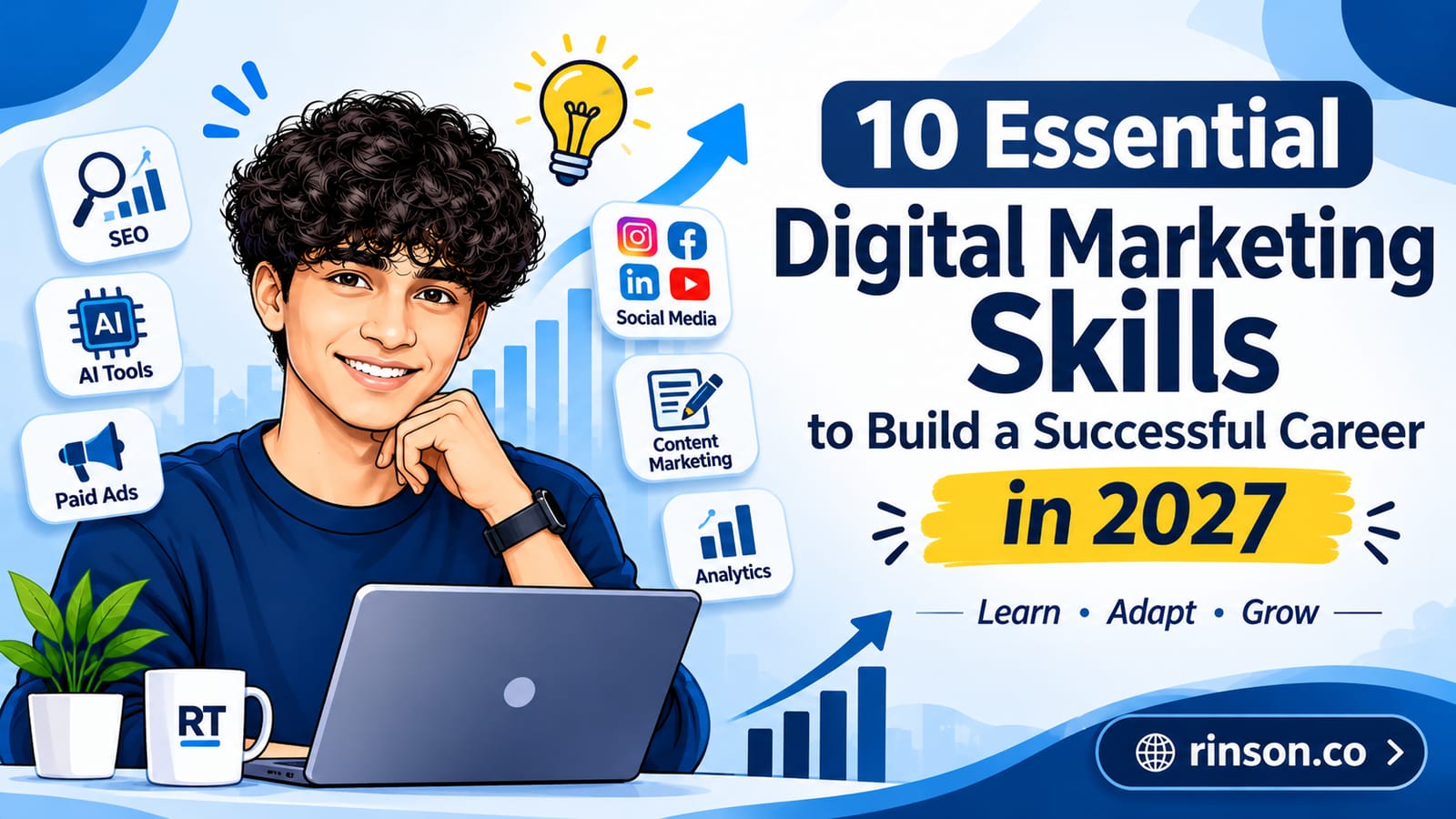
The digital marketing industry is changing rapidly, creating new opportunities for people who understand how online platforms work. In 2027, knowing how to post on social media or write website content may not be enough. Marketers will also need skills in artificial intelligence, advertising, data analysis and customer communication. This article covers 10 important skills that can help beginners and aspiring professionals prepare for a career in digital marketing.
Topics Covered in This Blog
1. Search Engine Optimization (SEO)
2. Artificial Intelligence and AI Marketing Tools
3. Performance Marketing and Paid Advertising
4. Social Media Marketing
5. Content Marketing and Copywriting
6. Data Analytics and Reporting
7. Video Marketing and Visual Storytelling
8. Email Marketing and Customer Relationship Management
9. Marketing Automation
10. Communication, Creativity and Strategic Thinking
10 Essential Digital Marketing Skills Every Marketer Needs in 20271. Search Engine Optimization (SEO)
When people search online for a product or service, businesses want their websites to appear among the relevant results. SEO helps improve a website's visibility and makes it easier for potential customers to discover it.
A modern SEO professional needs to understand how people search, what information they expect and how search engines evaluate websites. The role also involves improving website content and technical performance.
Key skills include:
- Finding relevant keywords and understanding search intent
- Improving website pages and content
- Technical SEO and website performance
- Local SEO and link-building strategies
- Adapting to AI-powered search experiences
Google Search Console and Google Analytics 4 are useful tools for understanding website performance.
Why it matters: SEO can bring relevant visitors to a website and help businesses develop a consistent online presence.
2. Artificial Intelligence and AI Marketing Tools
AI is becoming a useful assistant in everyday marketing work. It can help professionals explore ideas, organize research, prepare content drafts and understand large amounts of information.
However, using AI does not mean accepting everything it produces. Marketers still need to check facts, add original insights and make sure the final content matches the brand's voice.
Useful skills include:
- Writing clear and effective AI prompts
- Research and idea generation with AI
- Improving content with AI assistance
- Exploring data and identifying patterns
- Using AI to simplify repetitive tasks
Platforms such as ChatGPT and Gemini can support these activities.
Why it matters: Understanding AI helps marketers work more efficiently while keeping human judgement and creativity at the centre of their work.3.
Performance Marketing and Paid Advertising
Businesses often invest in online advertisements to reach people who are more likely to become customers. Performance marketing focuses on measuring the results of these campaigns rather than simply counting views or clicks.
Marketers should know how to plan advertisements, choose suitable audiences and manage budgets across platforms such as Google Ads and Meta Ads.
Important skills include:
- Creating and managing advertising campaigns
- Researching keywords and target audiences
- Planning budgets and bidding strategies
- Testing different advertisements
- Measuring conversions and campaign results
- Understanding CPC, CTR, CPA and ROAS
Why it matters: These skills help businesses understand whether their advertising investment is generating meaningful results.
4. Social Media Marketing
Social media gives businesses a direct way to communicate with people, share updates and develop their brand identity. But effective marketing requires more than publishing posts regularly.
A marketer needs to understand the interests of the audience and select content formats that suit each platform.
Essential skills include:
-Creating content schedules and social media tactics
- Researching audiences and competitors
- Creating posts, reels and stories
- Managing paid social campaigns
- Responding to audiences and building communities
- Reviewing engagement and account performance
Instagram, Facebook, LinkedIn and YouTube each offer different ways to communicate with potential customers.
Why it matters: A well-planned social media presence can help a business become more recognizable and build stronger customer relationships.
5. Content Marketing and Copywriting
People often look for information before deciding whether to purchase a product or service. Content marketing helps businesses answer those questions through blogs, website pages, videos and social media content.
Copywriting has a related purpose: it uses clear and persuasive language to encourage readers to take a specific action.
Marketers should develop skills in:
- Writing informative blogs and website pages
- Creating search-friendly content
- Preparing advertisements and social captions
- Writing promotional emails
- Using storytelling to communicate brand messages
The best content is relevant to its audience, easy to understand and useful rather than written only to promote a business.
Why it matters: Valuable content can build trust, explain a brand's offerings and support customers during their buying journey.
6. Data Analytics and Reporting
A marketing campaign may receive thousands of views, but that does not automatically mean it has achieved its goal. Data helps marketers understand what happened after people interacted with a campaign.
Professionals should learn to interpret website visits, engagement, leads and sales instead of relying only on assumptions.
Important skills include:
- Monitoring website traffic
- Understanding conversion rates
- Measuring advertising performance
- Comparing campaign results
- Preparing reports and dashboards
Google Analytics 4, Google Tag Manager and Looker Studio are useful platforms for collecting and presenting marketing information.
Why it matters: Data analysis helps marketers identify successful activities and make informed improvements to future campaigns.
7. Video Marketing and Visual Storytelling
Video has become an important format for explaining ideas, demonstrating products and introducing brands. Short videos can communicate a message quickly, making them useful for businesses trying to capture audience attention.
Marketers do not necessarily need to be professional filmmakers, but they should understand the basic process of planning and producing video content.
Useful skills include:
- Developing video ideas and scripts
- Creating short-form videos
- Learning basic editing techniques
- Building a story around a product or message
- Writing engaging openings and calls to action
Instagram Reels and YouTube Shorts are examples of platforms where businesses can use video to reach audiences.
Why it matters: Visual storytelling makes information easier to understand and gives brands another way to connect with viewers.
8. Email Marketing and Customer Relationship Management (CRM)
Email remains a direct communication channel between businesses and their customers. Companies use it to share announcements, send offers, introduce products and maintain contact with existing audiences.
CRM systems help organize customer details and record interactions, making communication easier to manage.
Marketers should understand email list management, campaign writing, audience segmentation, personalization and basic CRM processes. Tools such as HubSpot and Mailchimp can support these activities.
Why it matters: Email marketing and CRM help businesses maintain customer connections and communicate with audiences in a more organized way.
9. Marketing Automation
Some marketing activities involve repeating the same steps for different customers. Automation allows businesses to create workflows that handle tasks such as email confirmations, lead follow-ups and customer notifications.
For example, after a visitor submits an enquiry form, an automated workflow can send a confirmation message and alert the sales team.
Useful skills include setting up email sequences, organizing leads, creating follow-up workflows and monitoring automated processes.
Why it matters: Automation reduces repetitive work and helps businesses maintain consistent communication with potential customers.
10. Communication, Creativity and Strategic Thinking
Digital marketing involves more than operating software and managing online campaigns. Professionals also need to understand people, explain ideas and solve business problems.
Creativity helps marketers develop interesting campaigns, while strategic thinking connects those ideas to clear objectives.
Valuable skills include clear communication, teamwork, problem-solving, time management, adaptability and presenting campaign results.
Why it matters: These abilities help marketers collaborate with clients and colleagues, understand customer expectations and make better decisions.
How to Prepare for a Digital Marketing Career in 2027
Reading about marketing is a useful starting point, but practical experience is what helps turn knowledge into ability.
Here are five ways to begin:
1. Understand the basics: Learn SEO, social media, content creation, paid advertising and analytics.
2. Work on practical projects:Try creating a website, managing a social media page or planning a sample campaign.
3. Learn industry tools: Practise using Google Ads, Analytics 4, Meta Ads Manager and AI platforms.
4. Create a portfolio: Collect examples of your work, strategies and campaign results to demonstrate your abilities.
5. Keep learning: Follow industry developments and regularly explore new tools and techniques.
Starting with small projects and improving through practice can help build confidence and prepare you for professional opportunities.
Conclusion
A successful digital marketing career in 2027 will involve a combination of technical ability, creative thinking and an understanding of customer behaviour. SEO, AI, paid advertising, social media, content and analytics are among the areas worth developing.
You do not have to learn everything in one day. Choose a starting point, practise what you learn and gradually expand your knowledge. The ability to adapt, experiment and understand real business needs will remain valuable as the industry develops.
Frequently Asked Questions (FAQs)
1. Which digital marketing skills should beginners learn first?
Beginners can start with SEO, social media marketing, content creation and basic analytics before moving into paid advertising and automation.
2. Is AI knowledge necessary for digital marketers?
AI knowledge is increasingly useful because it can support research, content development and everyday marketing tasks. Human review and decision-making are still essential.
3. Can I build a digital marketing career without experience?
Yes. Personal projects, internships and practical exercises can help beginners develop experience and create a portfolio to show potential employers.
4. Which tools are useful for learning digital marketing?
Google Analytics 4, Google Search Console, Google Ads, Meta Ads Manager, Canva, ChatGPT and Gemini are useful starting points.
About the Author
Rinson Thomas is a digital marketer interested in SEO, performance marketing, social media and content strategy. He focuses on helping businesses strengthen their online presence and reach relevant audiences.
Discover more digital marketing insights and services at - https://rinsonthomas.com/