Every fabricator knows this moment. The machine is within its limits and the program is correct, but the first part comes off the brake and the angle is wrong. You adjust, bend again, adjust again, and an hour of production time disappears.
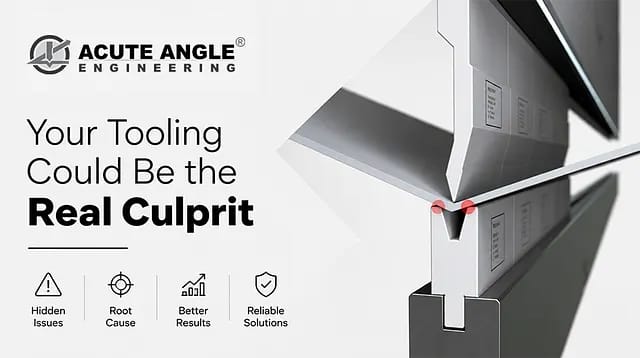
Often the problem isn’t the machine. It’s the tooling: a punch profile that doesn’t suit the bend, a die opening that doesn’t match the sheet thickness, or a tool that was never right for the job. Choosing the right CNC Press Brake Tool is one of the cheapest ways to protect accuracy, and one of the most overlooked.
Why the Tool Matters as Much as the Machine
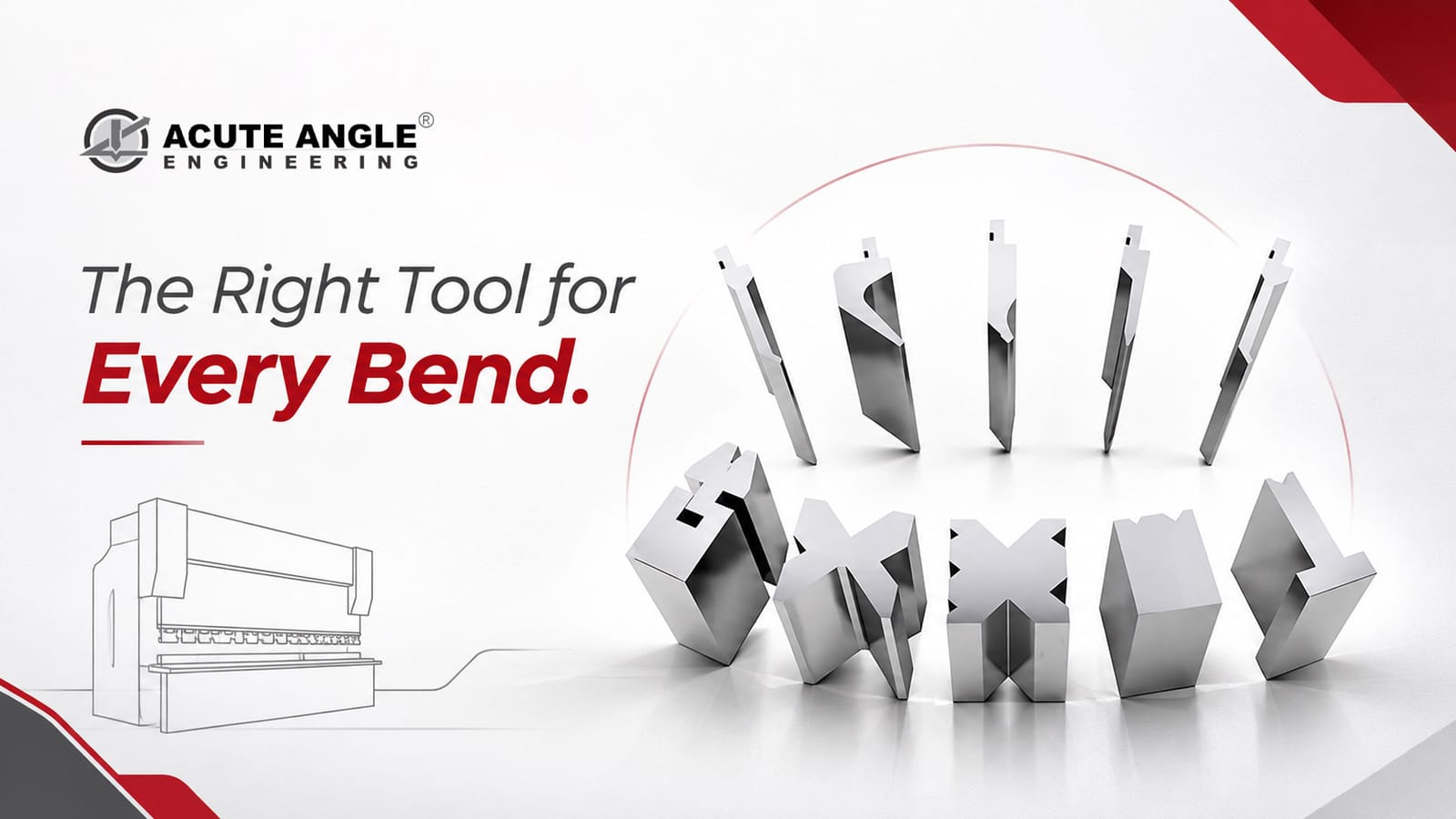
Punches and dies do the actual forming. Their geometry sets the bend angle and internal radius, while the steel and its heat treatment decide how well they survive repeated use.
Acute Angle Engineering makes its European Precision Style tooling from premium tool steel with induction heat treatment. Good steel is only half the answer, though. The tool also has to fit your machine’s clamping interface and your component’s design, or even the best tool will cause trouble.
Start with Your Machine: Compatibility Comes First
Each press brake brand uses its own tooling interface and clamping arrangement, so before you compare anything else, check your machine model, punch and die profiles, segment dimensions and retention mechanism. Here is how the main systems differ, and what each difference means on the shop floor.
System Amada. Punches, dies and accessories come in segmented, half-length and full-length configurations. The material options include 42CrMo4 (1,100–1,200 N/mm²), C45 (650–800 N/mm²) and toughened C45 (800–850 N/mm²). The choice of grade depends on how hard the tool will work and what it will form.
System Trumpf. Bending radii are hardened to 52–55 HRC. Segments under 12.5 kg use a simple clamp, and heavier ones use a safety pin. That split matters for both setup speed and safe handling. The system is also designed for two-sided use.
System Wila Type I. Punch tooling supports two-sided use, with the same simple-clamp and safety-pin split by segment weight. Materials include 42CrMo4 tempered to 1,100–1,200 N/mm² and C45 tempered to 800–850 N/mm².
System LVD. Intake radii are hardened to 52–55 HRC, and clamping follows the same segment-weight distinction.
System Bystronic. Material options include 42CrMo4 (1,100–1,200 N/mm²) and C45 (650–800 N/mm²).
The point isn’t to memorise numbers. Segment weight decides which clamp you use, and the steel grade decides how the tool behaves under load. Both are worth confirming before you order.
Let the Workpiece Make the Final Call
Once the tool fits the machine, the part decides everything else. Sheet thickness, material type, bend angle and internal radius all point toward a specific punch-and-die combination, and that combination must stay within your machine’s limits.
Harder isn’t automatically better either. 42CrMo4 and C45 behave differently, and heat treatment changes the finished tool’s properties again. A hardness rating means something only when you read it against the component you’re making.
Picture a run where every part needs the same internal radius. If the punch profile or die opening is slightly wrong, the parts drift from the drawing. Then come setup tweaks, extra inspections and a slower shift. Checking the tooling configuration before the run starts is far cheaper than finding the problem on part 20.
What to Look for in a Tooling Partner
A good Press Brake Tools manufacturer should give you clear technical documentation, tooling that matches your equipment, and configurations that work across every machine in your shop. That last point matters most if you run more than one brand.
Acute Angle Engineering supplies tooling for Amada, Trumpf, Wila, LVD and Bystronic machines. To get an accurate quotation, have these ready:
Your machine model and tooling interface
Required punch and die profiles
Segment dimensions
Material specifications
With those details, the right configuration is much easier to identify.
Ready to stop chasing bends?
Explore Acute Angle Engineering’s press brake tools to review the available systems and talk through your tooling requirements.