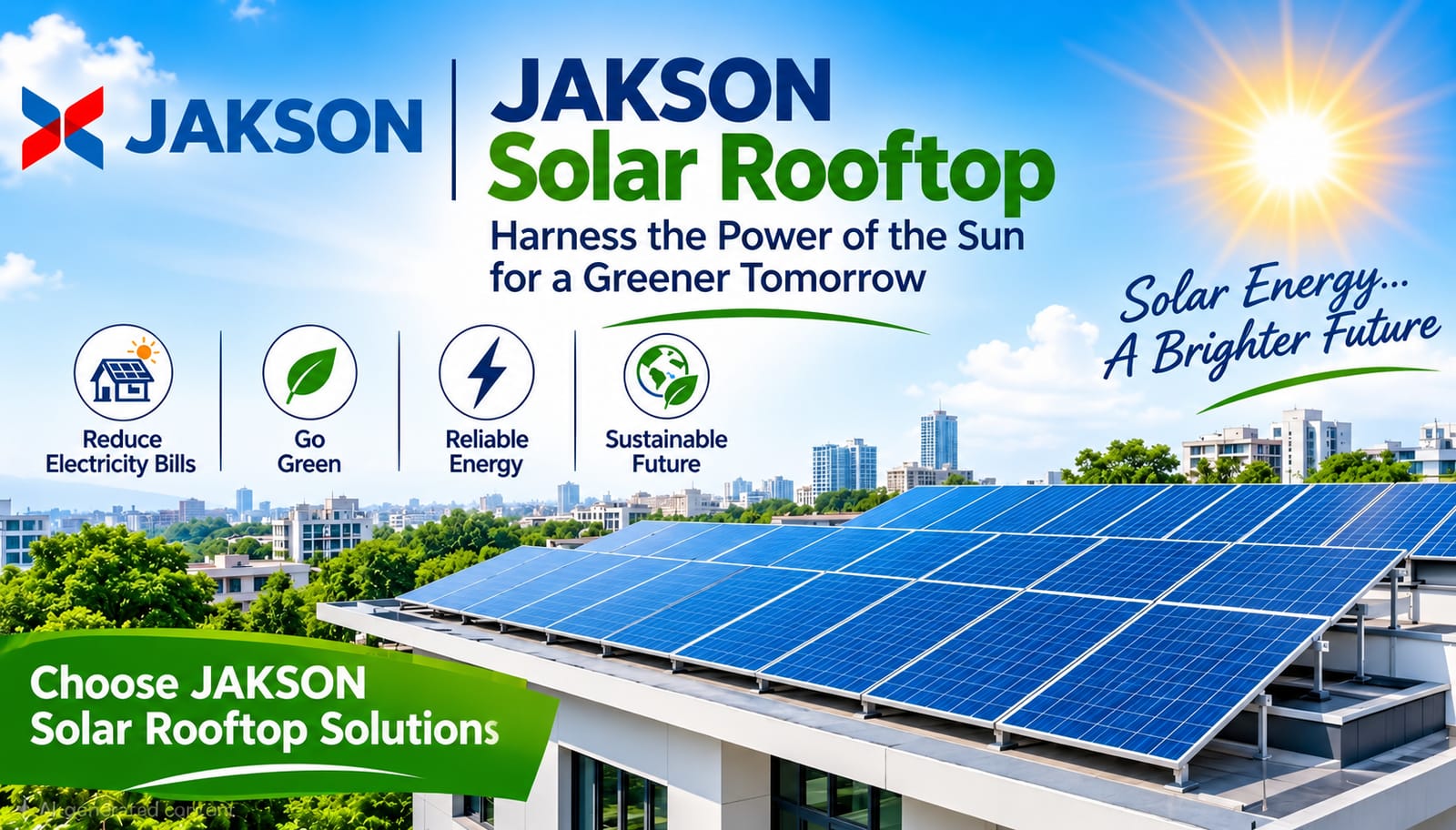
India is witnessing a growing shift towards renewable energy as households and businesses look for smarter ways to manage electricity consumption. Among the available renewable energy options, solar rooftop systems have become an attractive solution for generating clean electricity directly from sunlight.
With abundant sunshine across many parts of the country, rooftop solar offers an opportunity to transform unused roof space into a productive energy source. From residential buildings to commercial facilities and industrial establishments, solar energy is helping consumers explore more sustainable electricity solutions.
JAKSON, a leading energy and infrastructure company, offers solar rooftop solutions designed to support different energy requirements. Through engineering expertise and project execution capabilities, JAKSON is contributing to India's growing renewable energy landscape.
What Are Solar Rooftop Solutions?
Solar rooftop solutions involve installing photovoltaic (PV) panels on rooftops to convert sunlight into electricity. The electricity generated can be used to power appliances, machinery, lighting, and other electrical equipment.
A typical rooftop solar installation includes solar panels, an inverter, mounting structures, and electrical components. Depending on the system design, battery storage may also be incorporated.
The major benefits of rooftop solar include:
Potential reduction in electricity expenses
Lower dependence on conventional grid electricity
Efficient utilisation of available rooftop space
Cleaner electricity generation
Improved long-term energy management
For businesses with high daytime electricity consumption, rooftop solar can be especially useful because solar generation often aligns with operational energy demand.
Why Is Rooftop Solar Important for India?
India's renewable energy ambitions have increased interest in solar power across residential, commercial, and industrial sectors. Rooftop solar enables consumers to generate electricity closer to the point of consumption.
Homeowners can explore solar installations to manage household electricity bills. Commercial buildings, factories, warehouses, and educational institutions can utilise their rooftops to generate renewable electricity for daily operations.
Government initiatives, applicable subsidies, and net metering policies may further support solar adoption, depending on location, consumer eligibility, and regulatory requirements.
Rooftop solar also supports environmental sustainability by reducing reliance on electricity generated from fossil fuels.
Explore JAKSON Solar Rooftop Solutions
Selecting an experienced solar energy provider is important for designing a system that meets your electricity requirements.
JAKSON provides rooftop solar solutions for commercial and industrial applications, helping customers explore renewable energy opportunities through engineering and project execution expertise.
Explore the company's offerings here: JAKSON Solar Rooftop Solutions.
JAKSON's rooftop solar solutions can be explored across three major system configurations.
1. On-Grid Solar Systems
On-grid solar systems are connected to the electricity grid. They generate electricity during sunlight hours and can help reduce the quantity of electricity purchased from the grid. Depending on local regulations, surplus electricity may be exported through an applicable metering arrangement.
2. Off-Grid Solar Systems
Off-grid solar systems operate independently of the electricity grid. They are useful for remote locations or areas with limited grid connectivity. Battery storage can provide electricity when solar generation is unavailable.
3. Hybrid Solar Systems
Hybrid systems combine solar generation, grid connectivity, and battery storage. They offer flexibility for consumers who want to use solar electricity while maintaining an additional energy storage option.
The right system depends on electricity consumption, rooftop conditions, budget, and backup requirements.
Key Benefits of Choosing Rooftop Solar
Energy Cost Management: Generating electricity from sunlight can reduce dependence on grid electricity and support better energy budgeting.
Sustainable Electricity: Solar power provides a renewable source of electricity without direct greenhouse gas emissions during operation.
Efficient Rooftop Utilisation: Unused rooftop areas can become productive spaces for electricity generation.
Better Energy Planning: Monitoring systems can help users track solar generation and understand system performance.
Long-Term Energy Potential: A properly designed solar installation can provide electricity over an extended operating life.
Actual savings depend on system capacity, electricity tariffs, location, maintenance, and consumption patterns.
How to Choose the Right Solar Rooftop System
Before installing rooftop solar, evaluate your average electricity consumption, available rooftop area, structural suitability, and local sunlight conditions.
Commercial and industrial users should also consider daytime energy demand, applicable metering regulations, and expected financial returns.
Consulting an experienced solar provider can help determine the appropriate system capacity and installation approach for your property.
Conclusion
Solar rooftop solutions are becoming an important part of India's transition towards cleaner and more sustainable energy. They provide homes and businesses with an opportunity to generate renewable electricity, manage energy expenses, and utilise available rooftop space effectively.
With its solar rooftop offerings and engineering capabilities, JAKSON supports customers exploring renewable energy solutions for their electricity requirements.
If you are considering solar energy for your home or business, discover how rooftop solar can help you harness the power of sunlight.