A sharp rally can change the mood on Dalal Street in a matter of hours. But it doesn't necessarily change the bigger picture.
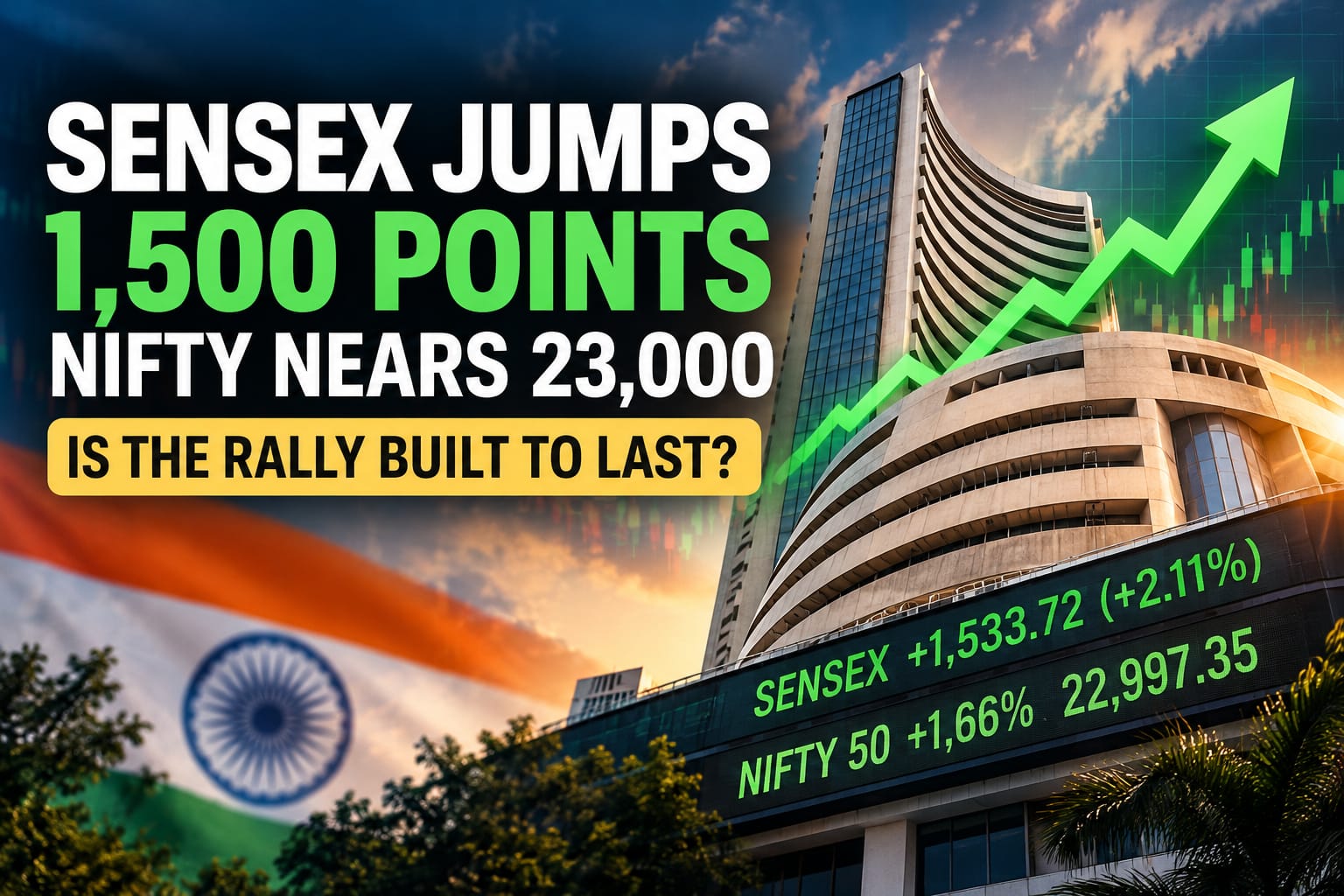
That is worth remembering after Thursday's strong comeback in Indian equities. On October 15, the Sensex surged 1,533.72 points, or 2.11%, to close at 74,315.61. The Nifty 50 climbed 1.66% to 22,997.35, coming within touching distance of the 23,000 mark.
Buying picked up in banking, IT and heavyweight stocks, helping Indian markets recover even as parts of Asia struggled with a technology-led sell-off. On Friday morning, the rally continued, with IT shares once again providing support.
There is a catch, though. Brent crude was hovering around $105 a barrel, and concerns about US inflation remained on investors' minds. In other words, the recovery is real, but the risks haven't disappeared.
A strong rally doesn't automatically mean a cheap market
When the market jumps more than 1,500 points in a session, it's tempting to assume the worst is over. Traders start looking for breakout levels, investors wonder whether they missed the bottom, and social media quickly fills with bullish predictions.
I'd be careful about drawing that conclusion from one or two sessions.
The latest gains have been supported by company earnings and buying in major stocks. That's encouraging. But a sustainable market recovery usually needs more than a burst of optimism. Earnings growth, interest rates, crude oil prices, foreign investor flows and the performance of mid-cap and small-cap shares all deserve attention.
The broader market picture matters, too. A rally concentrated in a handful of large companies can make benchmark indices look healthier than the average investor's portfolio actually is.
And with quarterly results arriving, stock selection could become increasingly important. A company delivering stronger revenue and profits may attract buyers even when the wider market is uncertain. Another company facing margin pressure might struggle despite a rising index.
One valuation indicator worth checking
Price charts tell us what the market is doing. They don't always tell us whether investors are paying a reasonable price for the market as a whole.
This is where the Buffett Indicator can help.
The indicator compares the total market capitalisation of listed companies with the country's GDP. Put simply, it offers a broad way to assess how large the stock market has become relative to the economy supporting it.
Investors looking for a quick starting point can check the India Buffett Indicator and its market valuation interpretation.
The idea isn't complicated. If market capitalisation grows much faster than economic output over an extended period, valuations may deserve closer scrutiny. If the ratio falls, the market may look more reasonable relative to GDP.
But don't treat this as a magic number.
India's listed companies don't represent every part of the economy equally. Many businesses earn revenue overseas, while economic growth and corporate earnings don't move in perfect synchronisation. Interest rates, profit margins, market composition and liquidity can also influence what constitutes a reasonable valuation.
A high reading does not tell you exactly when a correction will arrive. A lower reading doesn't guarantee that share prices are about to rise.
Think of it as a useful piece of context, not a trading signal.
What should investors watch next?
First, keep an eye on earnings quality. The IT sector's recent strength has been linked to quarterly results, including better-than-expected revenue from Tech Mahindra and Wipro. Whether that momentum lasts will depend on future business growth, margins and deal execution.
Second, watch crude oil. India imports substantial quantities of oil, so persistently high prices can increase pressure on import costs, inflation and corporate margins. That could complicate the outlook even if share prices continue recovering.
Third, look beyond the headline indices. Are more sectors participating in the rally? Are mid-cap and small-cap shares recovering too? Is buying supported by improving earnings, or is it mostly a reaction to recent declines?
Finally, check valuations against realistic business expectations. A good company can still be an expensive investment if its share price already assumes years of strong growth.
For long-term investors, this doesn't have to mean making dramatic portfolio changes after every market swing. Reviewing asset allocation, keeping emergency money separate from investments and avoiding excessive concentration are often more useful than trying to predict the next daily move.
The rally is encouraging, but patience still matters
The Sensex's latest jump has given bulls a reason to smile. Yet one strong session cannot settle the debate about where Indian equities are headed next.
A sensible approach is to follow earnings, monitor macroeconomic risks and use broad valuation measures alongside company-level analysis. The Buffett Indicator can help frame the bigger picture, while financial statements and sensible portfolio planning help turn that context into better decisions.
Markets will have good days and bad ones. The trick is not to confuse either with a complete investment thesis.
Disclaimer: This article is for educational purposes only and is not personalised investment advice. Market indicators are imperfect, and investors should consider their financial circumstances and risk tolerance before making investment decisions.