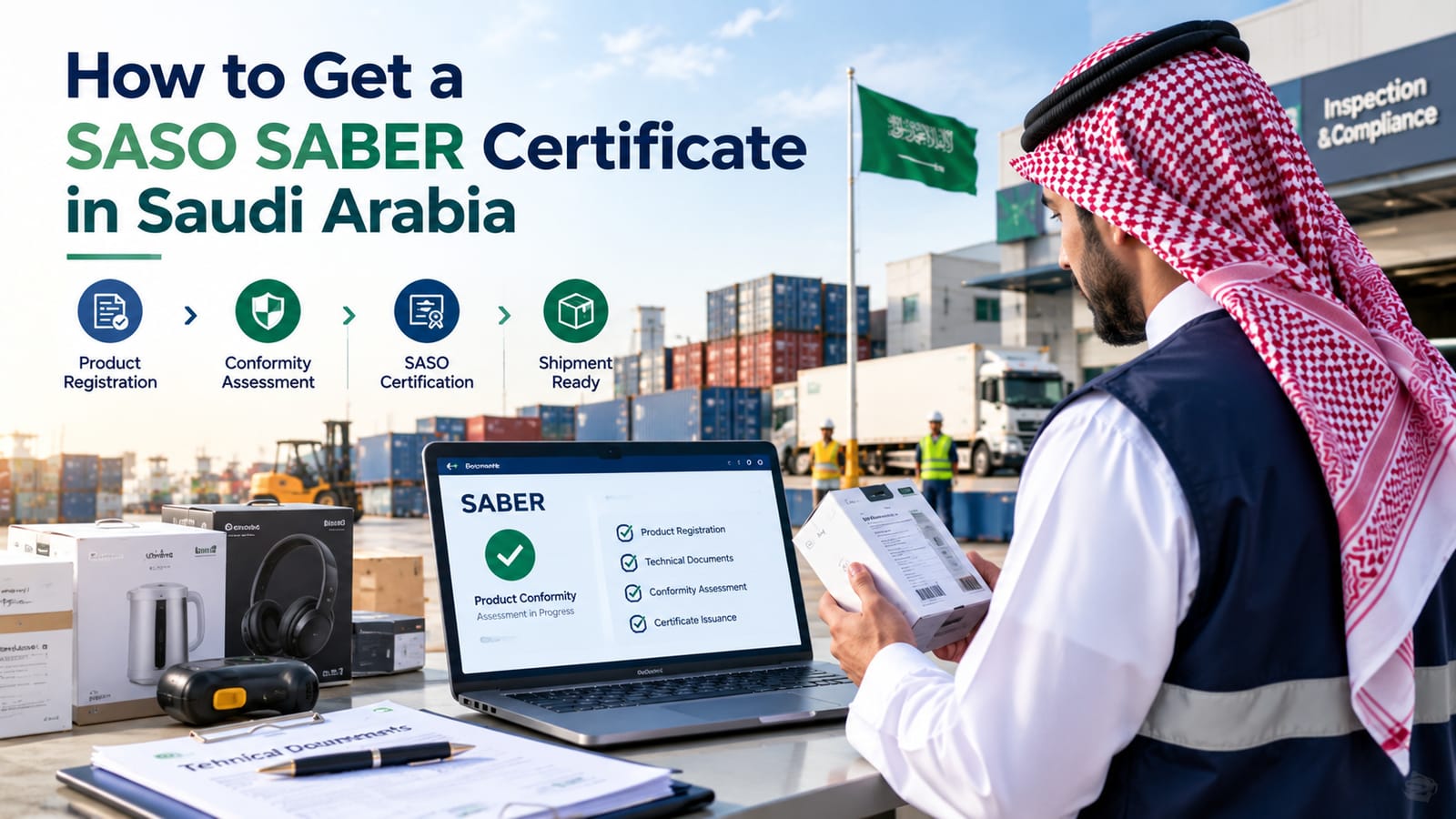
Importing products into Saudi Arabia requires careful attention to product safety, quality standards, and customs regulations. Businesses that want to sell or distribute regulated products in the Saudi market must ensure that their goods meet the applicable requirements before shipment clearance.
A SASO SABER certificate is a commonly used term for the conformity certification process managed through the SABER platform under the Saudi Standards, Metrology and Quality Organization (SASO). This electronic system helps importers register products, obtain the necessary conformity certificates, and prepare shipments for entry into Saudi Arabia.
Understanding the certification process can help importers avoid unnecessary delays, reduce compliance problems, and manage international shipments more efficiently.
What Is a SASO SABER Certificate?
SASO is the Saudi Standards, Metrology and Quality Organization, the authority responsible for developing standards and overseeing product conformity requirements in Saudi Arabia.
SABER is an online platform that supports product registration and conformity certification for imported and locally manufactured products. It allows businesses to complete relevant certification procedures electronically.
Depending on the product category and applicable technical regulations, an importer may need a Product Certificate of Conformity (PCoC), a Shipment Certificate of Conformity (SCoC), or another applicable declaration or approval.
The exact requirements depend on the product, its classification, and the regulations that apply to it.
Why Is SABER Certification Important for Importers?
Obtaining the correct conformity documents is an important part of importing regulated goods into Saudi Arabia.
The SABER system helps businesses:
Demonstrate compliance with applicable Saudi technical regulations.
Register products and their relevant models.
Arrange product conformity assessments where required.
Obtain shipment-specific conformity documentation.
Support customs clearance through the relevant electronic procedures.
Reduce the risk of delays caused by missing or incorrect documents.
Without the required approvals, a shipment may face additional checks, clearance delays, or other regulatory consequences.
How to Get a SASO SABER Certificate in Saudi Arabia
Importers can follow the steps below to understand the general certification process. The exact procedure may differ according to the product and its regulatory classification.
Step 1: Identify Your Product and Its HS Code
The first step is to identify the product accurately and determine its applicable Harmonized System (HS) code.
The HS code helps customs authorities classify goods and determine the relevant import requirements. Incorrect classification can result in documentation problems, additional inspections, or delays.
Before starting the application, collect the following information:
Product name and description
Manufacturer and country of origin
Product model or model numbers
Applicable HS code
Product specifications and technical details
You should also check whether the product falls under a specific Saudi technical regulation.
Step 2: Register on the SABER Platform
Visit the official SABER platform and access the relevant registration service.
Importers generally need to provide the required business and contact information to use the appropriate services.
Once the account is ready, select the relevant product pathway and prepare the product information required by the platform.
Accurate registration is important because product details must match the supporting documents used during certification and customs clearance.
Step 3: Register Your Product
After accessing the platform, register the product using the available product registration service.
Depending on the applicable requirements, you may need to provide:
Product name and description
Manufacturer details
HS code or product classification
Model numbers
Product images and technical specifications
Supporting documents requested by the platform
Make sure the product information is consistent across the application, invoice, technical file, and other supporting records.
Product registration alone does not necessarily mean that the product has received all required conformity approvals.
Step 4: Determine Whether a Product Certificate Is Required
The next step is to determine whether the product is subject to a Saudi technical regulation and which conformity route applies.
For regulated commercial products, a Product Certificate of Conformity (PCoC) may be required.
How to Obtain a Product Certificate of Conformity
If the product requires a PCoC, the general process includes:
Select the relevant product and models in SABER.
Submit the required technical documentation.
Select an accepted Conformity Assessment Body where required.
Complete the assessment and provide any additional information requested.
Obtain the required conformity approval.
Ensure the certificate is registered in the SABER system.
The assessment may involve reviewing technical specifications, test reports, safety documentation, or other evidence of compliance.
Important: Products that are not subject to technical regulations may follow a self-declaration or another applicable route instead. Do not assume that every product requires the same certificate.
Step 5: Prepare the Required Documents
Preparing the correct documents before applying can make the process more efficient.
Depending on the product category, the required documents may include:
Commercial invoice
Product technical specifications
Manufacturer information
Model numbers and product photographs
Test reports from an appropriate laboratory
Existing certificates or declarations, where applicable
Other documents requested by the conformity assessment provider
Some product categories have additional regulatory requirements. For example, electrical equipment, toys, building materials, and other regulated goods may be subject to different technical rules.
If a product requires additional approvals from another Saudi authority, those requirements must also be addressed.
Step 6: Obtain the Shipment Certificate of Conformity
After completing the applicable product conformity requirements, the importer can proceed with the shipment certification stage.
A Shipment Certificate of Conformity (SCoC) relates to a particular shipment rather than providing a general approval for every future shipment.
For commercial products, the general process is:
Log in to the SABER platform.
Select the shipment certificate service.
Choose the registered products included in the shipment.
Enter the requested shipment and invoice information.
Submit the application and pay the applicable fees.
Complete any required review.
Obtain the issued shipment certificate.
Check that the invoice details, product quantities, and other shipment information are accurate before submitting the application.
A valid product conformity certificate does not automatically replace the shipment certificate when the latter is required.
Step 7: Complete Saudi Customs Clearance
Once the required conformity documents have been issued, the importer can proceed with the remaining import and customs clearance formalities.
SABER is integrated with relevant Saudi electronic systems to support verification of conformity documents during customs procedures.
The importer or customs clearance agent should check that the required certificates are available and that the shipment information matches the customs declaration and commercial documents.
Other requirements, such as import permits, product-specific approvals, duties, taxes, or inspection procedures, may also apply.
How Much Does a SASO SABER Certificate Cost?
The total cost depends on the product category, certification route, assessment requirements, and number of products or models involved.
The official SABER information lists the following platform fees for two common services:
Service
Published fee
Registration of a Product Certificate of Conformity
SAR 500
Issuance of a Shipment Certificate for commercial products
SAR 350
These amounts are published platform fees and exclude VAT. They should not be treated as the complete cost of every certification application.
Additional charges may apply for conformity assessment, laboratory testing, technical reviews, or other product-specific requirements. Check the current official fee schedule before applying.
How Long Does SABER Certification Take?
Processing time varies according to the product, completeness of the documents, assessment requirements, and the workload of the relevant service provider.
An application involving complete documentation may move more smoothly than one requiring additional testing or corrections.
To reduce unnecessary delays:
Confirm the HS code before registration.
Provide accurate model numbers.
Prepare technical documents in advance.
Respond promptly to requests for additional information.
Start the certification process before arranging shipment dispatch.
Do not assume that every product will receive approval within the same timeframe.
Common Mistakes to Avoid During SABER Certification
Importers can experience avoidable problems when they overlook important details.
Incorrect Product Classification
An incorrect HS code may lead to confusion about applicable regulations and certification requirements. Confirm the classification before submitting the application.
Incomplete Technical Documents
Missing specifications, test reports, or model information can delay the conformity assessment process.
Applying Too Late
Starting certification only after the goods have been shipped can create additional pressure if documents are incomplete or approval is delayed.
Ignoring Product-Specific Regulations
Some products require additional approvals or must meet special technical requirements. Always check the rules that apply to the particular product.
Incorrect Shipment Information
Differences between the invoice, registered product details, quantities, and shipment documents can create problems during verification.
How a Customs Clearance Agent Can Help
A professional customs clearance agent can help importers understand documentation requirements, coordinate with conformity assessment providers, and prepare the paperwork needed for import clearance.
An experienced agent can also help identify potential documentation gaps before shipment arrival and coordinate with the importer when additional approvals are needed.
However, businesses should confirm the agent's experience with their specific product category. Certification decisions remain subject to the applicable regulations and the relevant assessment or government authorities.
Conclusion
Obtaining a SASO SABER certificate is an important part of preparing many regulated products for the Saudi Arabian market. The process generally involves identifying the product and HS code, registering the product on SABER, obtaining the applicable conformity approval, and securing a shipment certificate when required.
Businesses should verify the specific requirements for their products before shipping goods to Saudi Arabia. Accurate documents, correct product classification, and early preparation can help reduce avoidable delays and support smoother customs clearance.
For the latest requirements, fees, and application procedures, consult the official SABER platform and the SASO website.