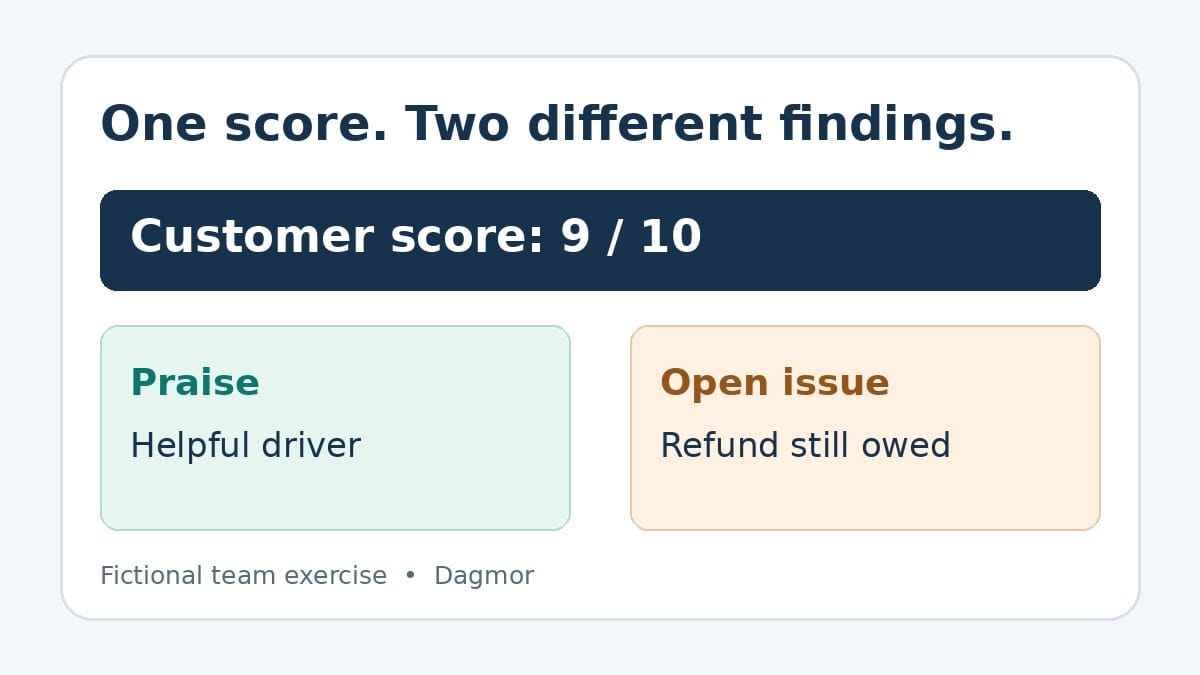
A score is the quickest way to tidy a recorded call into one line. It is also the quickest way to miss what happened. A caller can give a high mark and still describe an unresolved problem. A low mark may hide an agent who did everything right while another part of the business let the caller down.
Start with the call log. Pick the call by date, agent, outcome or the question you are trying to answer. Randomly replaying recordings until something sounds interesting is a miserable way to spend an afternoon. Keep the recording name beside its transcript so you can return to the exact call whenever the words alone leave a doubt.
Read the transcript before you listen. Look at the answers to the planned questions, then read the sentences between them. That is where people often explain why a number is high or low, what they were promised, and what they still need. Imagine a caller praising a helpful driver while asking for a refund. The praise and the open issue belong in the same account; this is an illustrative example, not a customer testimonial.
Listen again where tone, interruption or uncertainty matters. A transcript is a fast route into a call, not a substitute for the recording when the decision depends on how something was said. Human review matters too: an experienced reviewer can tell whether an agent followed the script well, rescued a difficult exchange, or needed a clearer question.
Next, look beyond one call. Coverage reports show which questions were asked. Conduct reports show how the exchange went. Trend reports reveal themes that keep coming back. The agent view can make strong work visible so others can learn from it. A script can be controlled directly or improved from repeated answers across real calls, rather than rewritten because one unusual conversation shouted the loudest.
Some teams want the whole call-review process. Others already have recordings and simply want to drop them in and get the reports. Both are sensible starting points. I built Dagmor to make the words, the recording, the script and the final report part of one usable account. The goal is a clear next action, not just a prettier score.
Rickie Doherty