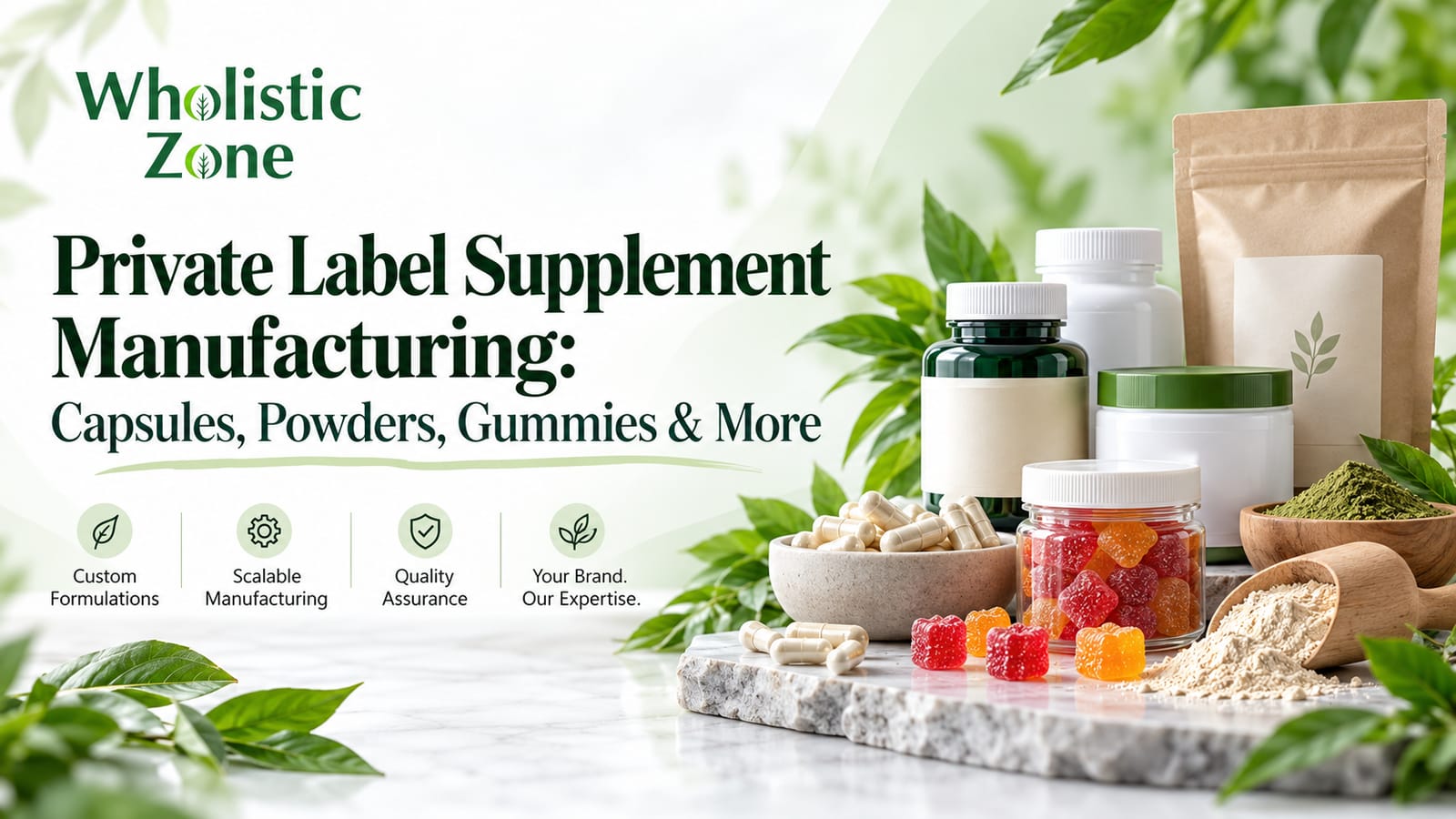
Private label supplement manufacturing helps wellness brands launch products without building their own production facility. A partner can support formulation, ingredient sourcing, manufacturing, testing, packaging, labeling, and fulfillment while the brand focuses on growth. Done well, the process is not simply about placing a logo on a bottle. It is about creating a product that fits customer needs, follows applicable requirements, meets overall quality expectations, and can be produced consistently.
What Is Private Label Supplement Manufacturing?
Private label supplement manufacturing allows a business to sell supplements under its own brand while an experienced manufacturer handles production. Brands can usually choose an existing formula or request a customized one.
A stock formula can reduce development time and suit businesses that want to launch quickly. Custom development provides control over ingredients, serving size, delivery format, flavor, and positioning.
The best option depends on budget, target market, launch timeline, minimum order quantity, and required differentiation.
Why Product Format Matters
Choosing the right format is an important part of developing private label supplements. Capsules, powders, gummies, liquids, and other formats each have different technical considerations.
The right choice should reflect how the product will be used, serving size, ingredient compatibility, stability, convenience, taste, and packaging. A capable manufacturer should help evaluate these factors before production rather than recommending a format only because it is popular.
Capsules Manufacturing for Supplement Brands
Capsules are convenient, portable, and suitable for many vitamins, minerals, botanicals, and specialty ingredients.
Capsules manufacturing requires attention to ingredient density, fill weight, flow characteristics, capsule size, compatibility, and stability. Brands may also choose gelatin or plant-based capsule shells according to product requirements.
Before production, ask how raw materials are identified and tested, what documentation is available, and how finished products are evaluated before release. These questions provide insight into the quality system supporting the product.
Powder Manufacturing for Flexible Formulations
Powders can work well for superfoods, botanical blends, drink mixes, protein products, and formulas requiring larger serving sizes.
Effective powder manufacturing involves more than combining ingredients. Particle size, density, moisture, solubility, flavor, and blend uniformity can affect product quality and customer experience.
Packaging matters too. Tubs, jars, pouches, sachets, and stick packs offer different advantages. The final package should protect the product from relevant environmental factors while remaining practical for everyday use.
Gummies Manufacturing: Convenience With Added Complexity
Gummies offer a familiar and convenient supplement format, but gummies manufacturing can be more technically demanding than capsules or powders.
Texture, flavor, heat exposure, moisture, active ingredient compatibility, and shelf stability require careful consideration. Some ingredients may not work well in a gummy system or may only be practical at lower concentrations.
Brands also need to consider sweeteners, colors, flavors, pectin or gelatin, and dietary preferences. A gummy should be chosen because it fits the formula and intended customer experience, not simply because the format is trending.
Using Botanical Ingredients Such as Amla Berry
Botanical products require careful sourcing. Amla berry, also known as Indian gooseberry or Phyllanthus emblica, is used in traditional wellness products and modern supplement formulations.
When evaluating amla berry or another botanical, consider the plant part, origin, extraction method, identity testing, contaminant testing, potency specifications, and supplier documentation.
These details help manufacturers maintain consistency between batches and give brands better information for product development, labeling, quality review, and customer education.
What to Look for in a Manufacturing Partner
Private label contract manufacturing works best when the brand and manufacturer agree on clear specifications before production.
Specifications may cover ingredients, serving size, product format, packaging components, label requirements, testing, storage conditions, and acceptance criteria.
Do not evaluate a manufacturer only by price. Quality systems, communication, documentation, lead times, change control, complaint handling, and capacity for future production matter. A low initial price offers little value if inconsistent quality or delays weaken customer trust.
Quality, Compliance, and Responsible Claims
Supplement businesses need to understand the regulatory responsibilities that apply in every market where products are sold.
In the United States, dietary supplements are regulated differently from conventional foods and drugs. Manufacturing practices, ingredients, labeling, and marketing claims require appropriate attention.
Brands should provide accurate information, avoid unsupported disease-treatment claims, review labels carefully, and maintain suitable quality documentation. Experienced regulatory and quality professionals can help identify problems before production or launch and support more responsible decision-making.
Questions to Ask Before Requesting a Quote
Before contacting a manufacturer, prepare information about your desired format, ingredients, target customer, estimated quantity, packaging preference, target price, and launch timeline.
Ask exactly what the quotation includes. Formula development, samples, testing, packaging, labels, freight, storage, and fulfillment may be priced differently.
Also ask about minimum order quantities, production lead times, relevant certifications, available documentation, sample policies, and repeat-order procedures. Clear questions early in the process make quotations easier to compare and reduce the risk of unexpected costs later.
From Product Idea to Market-Ready Supplement
A dependable manufacturer should be able to explain its production process clearly.
Typical stages may include formula confirmation, ingredient sourcing, sample approval, packaging selection, label review, production scheduling, manufacturing, quality checks, release, and shipment.
The exact process varies by product and manufacturer, particularly when custom formulation is required. Written specifications, responsibilities, timelines, and approval points help both parties understand what must happen before finished products reach the market.
Why Choose Wholistic Zone for Private Label Supplement Manufacturing?
Wholistic Zone supports businesses looking to launch or expand their supplement brands with end-to-end private label manufacturing solutions. Its services cover capsules manufacturing, powder manufacturing, gummies manufacturing, custom formulation, ingredient sourcing, packaging, label design, quality testing, and product development. Brands can choose from existing formulations for a faster launch or work with the team on customized products designed around specific ingredients, formats, and market requirements. Wholistic Zone also supports wellness and nutraceutical businesses at different stages of growth, from emerging brands to established companies seeking scalable production. By bringing formulation, manufacturing, packaging, and branding support together, the company aims to simplify the journey from product concept to market-ready supplement. Businesses interested in developing private label supplements can discuss their formula, quantity, packaging, and production requirements with the Wholistic Zone team to receive a customized manufacturing solution.
Choosing the Right Private Label Strategy
The strongest private label supplement manufacturing strategy begins with the customer. Consider how often the product will be used, what serving size is practical, which ingredients are compatible, and what format creates the best experience.
Capsules manufacturing can suit concentrated formulas. Powder manufacturing can accommodate larger servings and drink-based products. Gummies manufacturing may offer convenience when ingredients and dosage are technically suitable. Botanicals such as amla berry may work in several formats depending on the formulation goal.
Private label manufacturing can shorten the path from concept to market, but sustainable growth depends on more than speed. Brands that prioritize useful products, transparent information, responsible claims, documented quality, and dependable manufacturing relationships are better positioned to earn repeat business and long-term customer trust.