Oman e-invoicing 2027 will bring a major change to how businesses create and exchange invoices. Through the Fawtara programme, the Oman Tax Authority is introducing a system for sending invoice information electronically. Businesses will need to review their accounting software, invoice records and daily finance processes before their implementation date.
The change will affect companies across different industries. Retailers, wholesalers, service providers and other VAT-registered businesses should understand what the new system means for their operations.
How the Fawtara Invoice Process Works
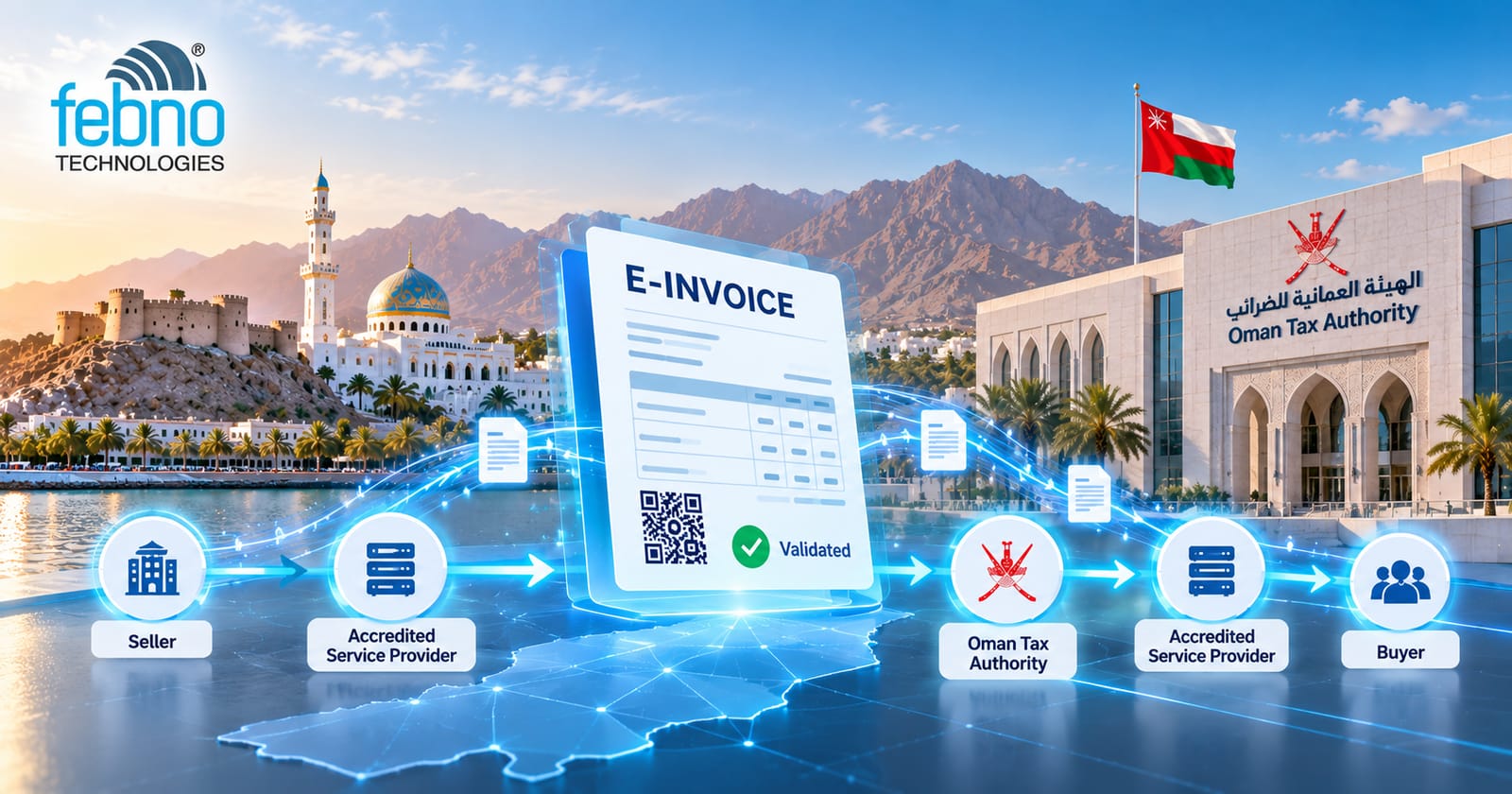
Under Fawtara, an invoice follows a digital process involving the seller, service providers, the buyer and the Oman Tax Authority.
Here is a simple explanation:
The seller creates an invoice using its accounting or ERP system.
The seller's accredited service provider processes the invoice.
The invoice information is exchanged with the buyer's service provider.
The buyer receives the electronic invoice.
The relevant invoice information is reported to the Oman Tax Authority.
This model helps standardise the exchange of invoice data. It also allows businesses and the Tax Authority to process information electronically.
A PDF invoice sent by email does not automatically qualify as an electronic invoice under this system. Businesses must follow the required format and technical process.
For a visual introduction, watch this e-invoicing explainer video from Febno Technologies.
What Changes for Finance and Accounts Teams?
The new process will affect the daily work of finance and accounts employees. Teams will need to check invoice information carefully and understand how their software handles electronic invoices.
Some important areas include:
Customer details: Names, addresses and tax registration details must be accurate.
Supplier records: Businesses should review supplier information and keep records up to date.
Invoice creation: Accounting systems must support the required invoice data and format.
Credit notes: Employees should understand how corrections and credit notes are handled.
Invoice records: Companies need suitable procedures for storing and retrieving electronic invoice information.
These checks can help prevent avoidable errors and make the transition easier for employees.
Oman E-Invoicing 2027: Who Must Prepare First?
Oman has introduced two mandatory implementation dates under Ministerial Decision No. 189/2026.
1 April 2027: VAT-registered businesses whose relevant annual supplies exceed OMR 5 million.
1 October 2027: Other VAT-registered businesses covered by the requirement.
The OMR 5 million test considers relevant supplies during the current assessment period and expected supplies for the following period. Businesses should check the Oman Tax Authority's official guidance and implementation checker to identify their applicable date.
Companies can also read this guide to Oman's 2027 e-invoicing deadlines for more information about the two implementation phases.
Can Existing Accounting Software Support E-Invoicing?
Many businesses already use accounting or ERP software to manage sales, purchases, inventory and financial records. These systems may need updates or integration work before they can support Fawtara.
For example, a business using Odoo or Zoho should review its invoice settings, tax information and customer records. It should also check how the software can connect with its chosen accredited service provider.
The exact requirements will depend on the software version and the company's business processes. Some businesses may need configuration changes, while others may require additional development or API integration.
Five Steps to Prepare Your Business
Companies can begin their preparation with these practical steps:
Review your current invoice process. Identify how sales invoices, purchase invoices and credit notes are created.
Check your business data. Review customer, supplier and tax information for missing or incorrect details.
Speak with your software provider. Ask whether your accounting or ERP system supports the required integration.
Choose an accredited service provider. Check the available services, technical requirements and support arrangements.
Test the complete process. Verify invoice creation, submission, exchange and error handling before going live.
Starting early gives finance and IT teams more time to identify problems and make the required changes.
How Febno Technologies Can Help with Oman E-Invoicing
Febno Technologies provides ERP implementation and e-invoicing readiness support for businesses. Its work includes reviewing existing software, configuring business applications and helping prepare accounting workflows for electronic invoicing.
Companies using Odoo, Zoho or other business applications can assess their integration requirements before selecting the technical approach.
Businesses can learn more about Febno Technologies' Oman e-invoicing services and the available support for preparing their systems.
It is important to understand that ERP implementation partners and OTA-accredited service providers have different responsibilities. Businesses must use an accredited provider for the required network services. Their software partner can help prepare and connect the accounting or ERP system.
Get Ready for the Change
Fawtara will change how businesses in Oman issue and exchange tax invoices. Companies should review their software, update their business records and prepare their employees before their required implementation date.
A well-planned transition can help reduce errors and avoid last-minute pressure. Businesses that start reviewing their systems early will have more time to test their processes and address any technical issues.