The plant needs instrument technicians, maintenance engineers and process operators before commissioning. Job posts go live. Resumes arrive. Interviews happen. Months later, critical seats are still empty—or filled by people who leave within the probation period.
Manufacturing companies struggle to hire skilled technical employees less because “no one wants factory jobs” and more because recruitment is often managed like a generic corporate hiring process. Vague role definitions, ineffective skill assessments, delayed offers and unclear working conditions lead to long vacancies and repeated hiring cycles. Professional recruitment advisory services in India can help manufacturers define technical roles, assess candidate competencies and align hiring timelines with plant commissioning and operational requirements.
What the Struggle Actually Looks Like
In practice it shows up as:
Critical technical roles open for months while production or project timelines slip
High offer decline rates after plant visits or detailed discussions
New joiners who cannot perform independently on the equipment or process
Early attrition in the first three to six months
Over-reliance on contractors because permanent hiring keeps failing
The market may be tight for some skills. Many failures still trace back to how the company defines, sources, evaluates and closes technical talent.
Why Technical Hiring Fails More Often Than Office Hiring
Technical roles need demonstrated skill on machines, standards, safety discipline and shift realities—not only degree titles. Job descriptions copied from other industries do not match the plant. Interview panels test theory more than hands-on ability. Compensation is benchmarked against office roles or outdated internal bands. Location, shift and housing realities are under-explained. By the time a strong candidate is convinced, another employer has already closed.
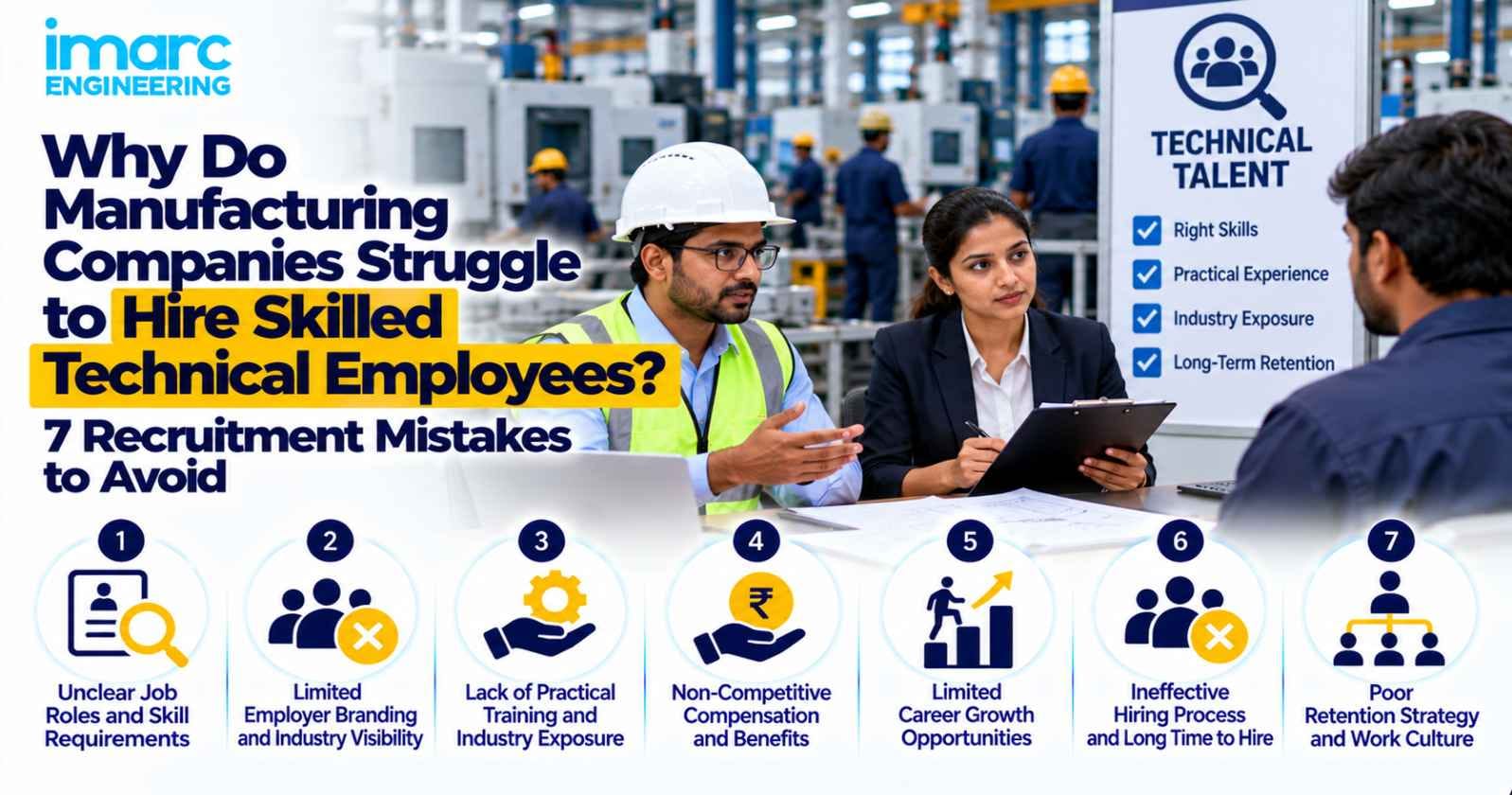
7 Recruitment Mistakes to Avoid
1. Vague or inflated role definitions
Posts ask for “3–5 years experience in manufacturing” without specifying equipment, utilities, standards or shift expectations. Candidates cannot self-select. Recruiters cannot screen. The pipeline fills with mismatched profiles and wastes interview capacity.
2. Screening on keywords and degrees instead of competence
Shortlists prioritise institute names and software keywords. Practical ability—reading drawings, troubleshooting a PLC fault, following LOTO, interpreting a process deviation—is tested late or not at all. People who interview well fail on the floor.
3. Starting hiring too late relative to commissioning or peak load
Recruitment begins when the line is almost ready. Lead time for skilled technicians and engineers is longer than for many corporate roles. Late start forces emergency contractors or under-qualified stop-gaps that create quality and safety risk.
4. Interview panels that do not represent the actual job
HR screens culture fit; a single manager asks generic questions. No practical test, no maintenance or production lead in the loop, no assessment against the real equipment list. Selection becomes subjective and inconsistent across candidates.
5. Slow offer process and weak closing
Approvals take weeks. Counter-offers are handled slowly. The candidate’s notice period and joining constraints are ignored. Strong technical people receive faster decisions elsewhere and drop out at the final stage.
6. Under-selling—or mis-selling—the plant reality
Brochures show a modern facility. The role involves night shifts, remote location or ageing equipment that was never disclosed. Candidates accept, then leave when reality appears. Trust and employer brand both take a hit.
7. No structured onboarding and skill ramp for technical roles
Hiring is treated as complete on day one. There is no supervised skill matrix, buddy system or time-bound competence check. New joiners struggle, supervisors lose patience, and attrition resets the vacancy.
How to Diagnose and Fix Technical Recruitment
Write role profiles from the process, not from a template
List equipment, standards, shift pattern, decision authority and must-have vs trainable skills before any job is posted.Build a competence-based screen
Define what the person must demonstrate in the first 90 days. Use that to design short practical tests or structured technical interviews.Align hiring start dates with project and production milestones
Back-calculate from commissioning, audit peaks or seasonal load. Include notice periods and onboarding time in the plan.Put technical leaders in the evaluation loop
Maintenance, production or quality heads should own the skill assessment; HR owns process speed and candidate experience.Compress decision time on shortlisted candidates
Pre-agree band, approvals and backup options so offers can move within days, not weeks.Disclose working conditions early and honestly
Location, shifts, accommodation support and equipment reality should be clear before the final offer—not after joining.Plan the first 90 days as part of hiring
Competence checklist, trainer assignment and review gates reduce early failure and protect the investment in the hire.Track drop-off reasons
If candidates exit after plant visits or at offer stage, fix the cause—compensation, clarity, speed or role fit—rather than only increasing advert volume.
Practical Scenarios
Scenario A: Late start
Commissioning is eight weeks away. Hiring for instrument technicians starts now. Notice periods alone make on-time deployment unlikely.
Scenario B: Keyword shortlist
Resumes mention “PLC” and “maintenance.” On the floor, candidates cannot isolate a basic interlock fault. Selection criteria never tested that skill.
Scenario C: Offer lag
A strong candidate clears interviews. Internal approval takes three weeks. The candidate joins a competitor who offered in five days.
Scenario D: Structured technical hire
Role profile, practical assessment, fast offer path and 90-day skill plan are defined first. Time-to-fill drops and early attrition falls.
Decision Point: Is the Problem Market Shortage—or Hiring Design?
Ask:
Are role requirements specific enough for a competent person to recognise themselves?
Do we test the skills the job actually needs, or only the CV story?
Did we start hiring early enough for notice periods and ramp-up?
Can we issue a competitive offer within days of final clearance?
Do new joiners receive a structured path to independent performance?
If the answers are weak, adding more job portals will not fix the outcome.
Technical Hiring Checklist
Role profile tied to equipment, process and shift reality
Must-have skills defined and tested in assessment
Hiring timeline backed from commissioning or peak demand
Technical assessors included in the interview loop
Offer approval path pre-agreed for speed
Location, shift and work conditions disclosed before offer
90-day competence and onboarding plan prepared
Drop-off reasons reviewed and acted on
When to Fix These Mistakes
Address them:
before major hiring for a new plant or line
before commissioning and production ramp-up
when the same technical roles stay open across multiple cycles
when early attrition repeats in maintenance, production or quality
when project schedules depend on named technical seats being filled
After vacancies have already delayed production, options narrow to contractors and overtime.
How IMARC Engineering Can Help
IMARC Engineering supports manufacturers who need technical roles filled against real plant requirements—not generic job descriptions. Recruitment advisory can help define role profiles, structure competence-based assessment and align hiring timelines with commissioning and operations so skilled employees are in place when the process needs them.
Relevant support is available through recruitment services for manufacturing and industrial roles.
Talk to IMARC Engineering if skilled technical vacancies are delaying commissioning or stable production and you need role definition, assessment design and hiring execution aligned to the plant—not only to the job portal: https://www.imarcengineering.com/contact?service=recruitment
Conclusion
Manufacturing companies struggle to hire skilled technical employees when roles are vague, screening ignores competence, hiring starts too late, interviews miss the job reality, offers move slowly, plant conditions are mis-sold and onboarding does not build skill. These are recruitment design mistakes, not only labour-market constraints.
Teams that define the work clearly, test what matters, decide quickly and ramp new joiners with intent fill seats that stay filled. Teams that post generic ads and hope for the best recycle the same vacancies through every project phase.
The practical takeaway is straightforward: treat technical hiring as part of plant readiness. If the role, the test, the timeline and the first 90 days are not designed, the market will not correct the gap for you.
Contact Us:
IMARC Engineering
Phone +91-120-433-0800
Email: sales@imarcengineering.com
India: C-130, Sector 2, Noida, Uttar Pradesh 201301
LinkedIn: https://www.linkedin.com/showcase/imarc-engineering/