Live video streaming allows people to watch sports, news, and live events over the internet. But sometimes, a stream stops working or the video keeps buffering. These problems can frustrate viewers and cause them to leave.
OTT platforms can reduce these problems by using reliable servers, backup systems, and regular monitoring. These steps help keep live video streaming stable and improve the viewing experience.
What Causes Live Video Streaming Problems?
Live video streaming can fail for several reasons. Too many viewers may connect at the same time, putting pressure on the servers. A slow internet connection or a server failure can also interrupt a stream.
For example, during a live sports event, thousands of people may try to watch at once. If the streaming system cannot handle the traffic, viewers may experience buffering or lose access to the video.
Understanding these problems helps streaming businesses prepare for unexpected failures.
How a CDN Helps Deliver Live Video
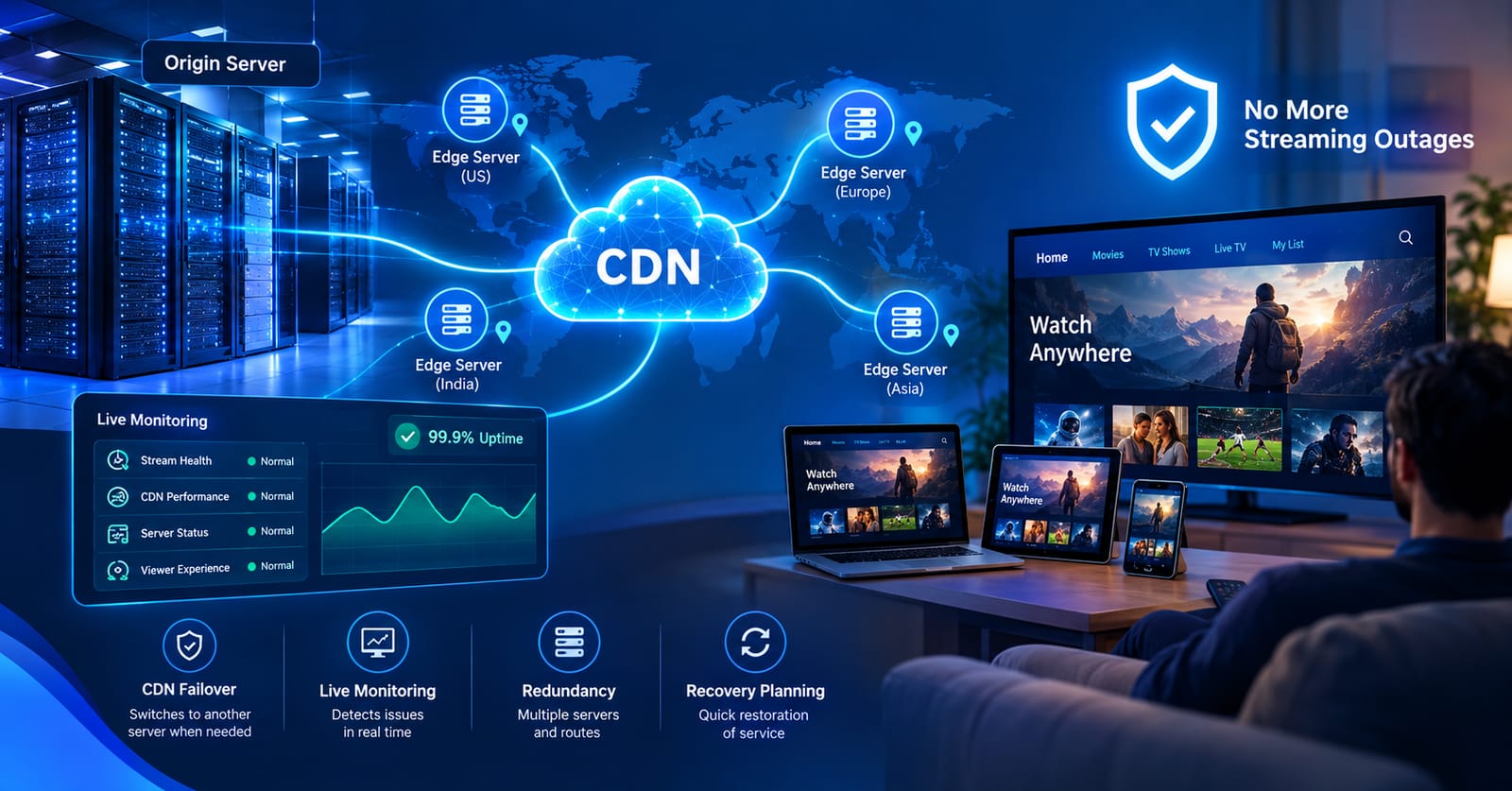
A content delivery network (CDN) uses servers in different locations to deliver video to viewers. This helps viewers receive content from a server closer to them.
Using a CDN can reduce delays and ease the pressure on the main server. However, a CDN can also experience problems. Having a backup delivery option can help reduce interruptions when the main route fails.
Why Monitoring Live Streams Is Important
Monitoring helps teams check whether a live stream is working properly. They can track video quality, buffering, delays, and server performance.
If a problem occurs, alerts can notify the technical team. The team can then investigate and fix the issue before it affects more viewers.
Regular monitoring also helps businesses identify repeated problems and improve their streaming setup.
How Backup Systems Help Reduce Outages
Backup systems provide another option when the main system fails. These backups may include extra servers, backup encoders, another internet connection, or a second CDN provider.
For example, if a main server stops working, a properly configured backup may help keep the stream available. The right backup setup depends on the number of viewers, the type of content, and the business budget.
Why Testing and Recovery Plans Matter
Even a well-designed streaming system can experience problems. A recovery plan helps teams know what to do when a stream goes down.
Streaming businesses should assign clear responsibilities and test their backup systems before major events. Testing helps confirm that the backups work as expected.
After an outage, teams should review what happened and identify ways to prevent similar problems. This can help them restore service faster if another issue occurs.
How Live Video Streaming Supports OTT Platforms
Reliable live video streaming depends on several things working together. These include a suitable CDN, stream monitoring, backup systems, and a clear recovery plan.
Before choosing a streaming solution, businesses should consider how many people may watch at once, which regions they want to reach, and how quickly they need to recover from an outage.
Businesses planning to launch their own branded streaming service can explore Regal Streaming Solutions’ white-label OTT platform to learn about available OTT platform options.
Conclusion
Live video streaming problems can affect viewer satisfaction, but businesses can take steps to reduce interruptions. A reliable CDN, regular monitoring, backup systems, and recovery planning can help OTT platforms handle technical issues.
By testing their systems and preparing for failures, streaming businesses can respond to problems more quickly and offer viewers a more reliable experience.