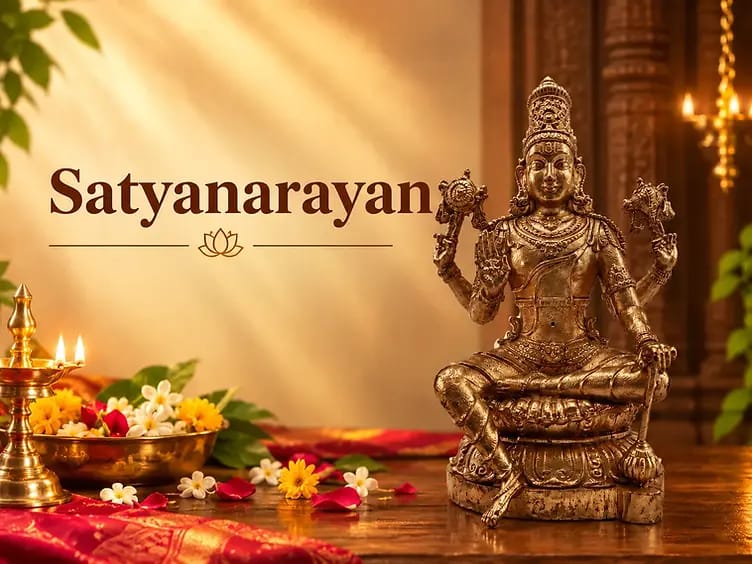
Satyanarayan Puja is one of the most cherished household rituals in Hindu tradition. Dedicated to Lord Vishnu in his form as Satyanarayana, “the Lord who is Truth,” this vratam is performed to express gratitude, seek blessings, and welcome peace and abundance into the home. It needs no grand setting. A sincere heart, a clean puja space, and a beautifully crafted idol are enough.
What Is Satyanarayana Puja?
Satyanarayan Puja, also known as Satyanarayana Vratam or Satyanarayan Katha, is the worship of Lord Vishnu as the embodiment of truth. At its heart is the recitation of the Katha, a set of sacred stories that teach how honesty, devotion, and keeping one’s word lead to a fulfilled life.
Dedicated to Lord Satyanarayana, a form of Lord Vishnu
Performed at home by families, couples, and individuals
Centered on the Satyanarayan Katha, traditionally told in five chapters
Concludes with aarti and the distribution of prasadam
The beauty of this puja lies in its simplicity. Anyone can perform it, and everyone present shares in the blessings.
The Story Behind the Vratam
According to tradition, the sage Narada, seeing people burdened by sorrow across the worlds, asked Lord Vishnu for an easy path to relief. The Lord revealed the Satyanarayana Vratam as that path. The Katha then tells of people from different walks of life, including a poor Brahmin, a woodcutter, a merchant, and a king. Those who kept the vow with faith prospered, while those who forgot it met hardship until they returned to devotion.
Truth and honesty are the foundation of a good life
A promise made to the Divine must be honoured
Gratitude is as important as prayer
The story reminds us that prosperity is not only about wealth. It is about living rightly and remembering the Divine in times of both need and plenty.
When Is Satyanarayana Puja Performed?
The vratam can be performed on any day, but some occasions are considered especially auspicious.
Purnima (full moon day): the most popular and traditional day
Ekadashi and Sankranti: also considered favourable
Special milestones: housewarming (Griha Pravesh), wedding, birth of a child, new job or business, anniversaries
Thanksgiving: performed after a wish or prayer is fulfilled
Some families perform it every month on Purnima, while others observe it once a year or on important family occasions.
Why a Bronze Idol for Satyanarayana Puja?
In South India, bronze (panchaloha) has been the preferred metal for temple and home idols for over a thousand years. The lost-wax method perfected by the Chola artisans continues today, producing idols of remarkable grace and detail.
Traditional and auspicious: panchaloha is a sacred alloy long used for worship
Built to last: a bronze idol can be passed down through generations
Ideal for abhishekam: it withstands regular bathing with water, milk, and panchamritam
Fine detailing: lost-wax casting captures expressive faces, jewellery, and flowing forms
Warm natural finish: the idol gains a gentle glow with regular puja
For Satyanarayan Puja, where the Lord is worshipped with flowers, tulsi, and offerings, a bronze idol becomes the living centre of the ritual.
Items Needed for the Puja
Keeping everything ready beforehand lets the ritual flow peacefully.
Bronze idol of Lord Satyanarayana, with a clean pedestal or wooden plank
Kalash with water, mango leaves, and a coconut
Fresh flowers, garlands, and tulsi leaves
Betel leaves, betel nuts, and banana leaves
Incense, camphor, and oil lamps (vilakku)
Turmeric, kumkum, sandalwood paste, and akshata (rice)
Fruits, coconut, and panchamritam
Satyanarayan prasad, made with semolina (rava), ghee, sugar, banana, and milk
Puja Vidhi: Step-by-Step
Details vary by region and family tradition, but the general flow is as follows.
Preparation: clean the space, decorate with kolam, and bathe before beginning
Sankalpa: state your intention for the puja
Ganesha puja: worship Lord Ganesha to remove obstacles
Kalash sthapana: install the kalash and invoke the divine presence
Abhishekam: bathe the bronze idol gently, then wipe it dry
Alankaram: adorn the idol with fresh flowers, tulsi, and new cloth
Archana and Katha: offer prayers and recite or listen to the Satyanarayan Katha
Naivedyam and Aarti: offer prasadam, perform aarti, and share the prasad with all
Tulsi is especially dear to Lord Vishnu, so it should always be part of the offering.
Benefits of Satyanarayan Puja
Devotees perform this vratam with faith in its many blessings.
Peace and harmony in the family
Prosperity and success in work and business
Fulfilment of sincere wishes
Protection from obstacles
Gratitude, discipline, and inner calm
The puja also brings relatives and neighbours together, strengthening bonds and spreading joy.
Caring for Your Bronze Idol
Bronze is easy to maintain with a little regular attention.
Wipe gently with a soft, dry cotton cloth after each puja
Occasionally clean with a tamarind or lemon-and-water solution, then rinse and dry well
Avoid harsh chemical polishes and abrasive scrubbers
Keep the idol in a dry, ventilated space
Handle with clean hands and avoid knocks or drops
With good care, the idol develops a lovely patina and remains a treasured heirloom.
Choose Your Satyanarayana Idol at Idol Bronze
At Idol Bronze in T. Nagar, Chennai, our bronze idols are cast in the traditional lost-wax method by skilled artisans, following the iconographic guidelines of the shastras. Each piece is finished with care, ready for both daily worship and special ceremonies.
Authentic traditional craftsmanship
Sizes suited to home altars and temples
Detailed iconography with a serene expression
Delivery across India and worldwide
Whether you are planning a housewarming, a family milestone, or your monthly Purnima worship, a bronze idol of Lord Satyanarayana makes a meaningful and lasting addition to your pooja room.
Conclusion
Satyanarayan Puja reminds us that truth, gratitude, and devotion are the real wealth of a home. Performed before a finely crafted bronze idol of Lord Vishnu, it fills the household with peace and positive energy. May Lord Satyanarayana bless you and your family with health, harmony, and prosperity.