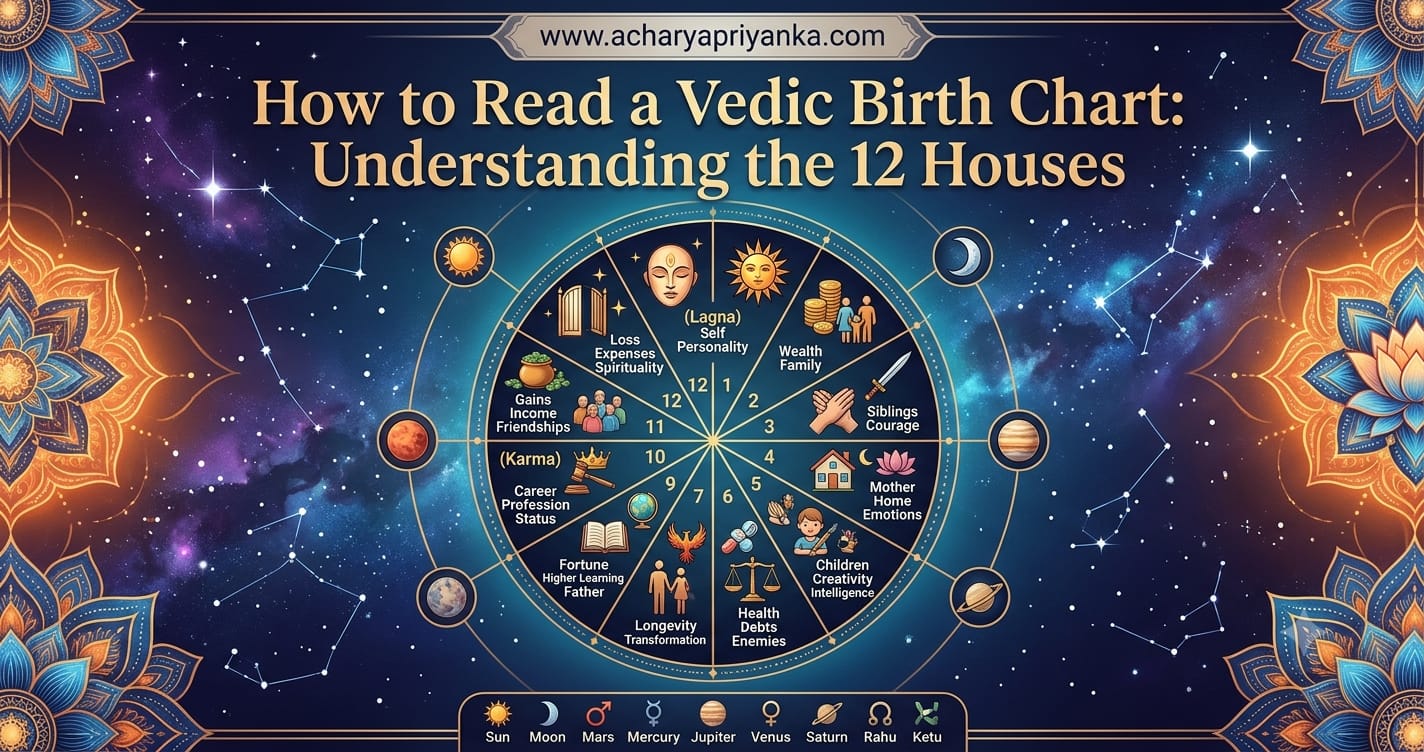
Vedic astrology, also known as Jyotish, is a traditional system that interprets planetary positions at the time of birth. One of its fundamental elements is the birth chart, or Kundli, which is divided into twelve houses. Each house represents different areas of life, and understanding their meanings provides a foundation for learning chart interpretation.
The First House: Personality and Life Direction
The first house, known as the Lagna Bhava, represents the ascendant. It is traditionally associated with personality, physical appearance, general outlook and the way an individual approaches life. The ascendant also determines the arrangement of the remaining houses in the chart.
The Second House: Family and Resources
The second house is associated with family background, speech, accumulated wealth and personal values. Astrologers examine this house when studying traditional astrological indications related to savings, communication and family connections.
The Third House: Courage and Communication
The third house represents courage, communication, practical skills, siblings and personal initiative. It is also associated with efforts made to develop abilities through practice and experience.
The Fourth House: Home and Property
The fourth house is traditionally connected with home, mother, emotional foundations, education in certain contexts and property. Its interpretation involves examining the house lord, planetary placements and relevant aspects rather than relying on one factor alone.
The Fifth House: Intelligence and Creativity
The fifth house relates to learning, creativity, children, intellectual interests and traditional concepts of past-life merit. It is also considered when interpreting certain educational and creative combinations.
The Sixth House: Responsibilities and Challenges
The sixth house is associated with daily responsibilities, service, competition, debts and obstacles. In traditional interpretation, it can provide insights into how challenges and practical duties are approached.
The Seventh House: Partnerships
The seventh house represents marriage, committed partnerships, business associations and agreements. Its condition and ruling planet are traditionally considered when examining partnership-related themes.
The Eighth House: Transformation and Hidden Matters
The eighth house is connected with transformation, longevity, shared resources, inheritance and subjects that require deeper investigation. It is often studied alongside other houses to understand complex chart patterns.
The Ninth House: Wisdom and Higher Learning
The ninth house is associated with higher education, philosophy, faith, teachers, long-distance journeys and fortune. It represents the pursuit of knowledge and broader perspectives in traditional Jyotish.
The Tenth House: Career and Responsibilities
The tenth house is traditionally linked with profession, public reputation, responsibilities and actions in the wider world. Astrologers examine its lord, planetary influences and connections with other houses when studying career-related indications.
The Eleventh House: Gains and Aspirations
The eleventh house represents gains, networks, friendships, ambitions and the fulfilment of desires. It is also considered when examining the potential benefits associated with professional and social connections.
The Twelfth House: Expenses and Spiritual Reflection
The twelfth house is associated with expenses, foreign connections, solitude, sleep, retreat and spiritual reflection. Its meaning depends on the wider chart and the relationships between relevant planets and houses.
Why the Complete Birth Chart Matters
The twelve houses provide a framework for understanding different life themes, but they should not be interpreted independently. Planetary dignity, house ownership, aspects, conjunctions, divisional charts and planetary periods may all contribute to a traditional interpretation.
For example, career analysis may involve the tenth house, its ruling planet, the ascendant and other relevant factors. Similarly, property-related themes may require examining the fourth house alongside its lord and supporting planetary combinations.
Those who wish to explore the subject further can refer to these Vedic astrology course for related information.
Conclusion
Learning the twelve houses is an important first step in studying Vedic astrology. Each house has its own traditional associations, but the real foundation of chart interpretation lies in understanding how the houses and planets work together. A balanced reading considers the complete Kundli instead of drawing conclusions from a single placement.