A festive product video can look wonderful and still leave customers confused about what they are buying.
Imagine a small home decor brand preparing for Diwali. The marketing team wants a short Instagram Reel showing decorative lamps in a warm, inviting living room. An AI-generated scene delivers the atmosphere almost perfectly: soft lighting, elegant furniture, and a smooth camera movement.
There is just one problem. The lamp in the video looks different from the product listed on the store's website.
For an e-commerce business, that's more than a visual inconsistency. It can create the wrong expectation before a customer even reaches the product page.
AI video can be useful for seasonal marketing, but the real challenge is knowing which parts of a campaign can be generated creatively and which details must remain accurate.
1. Why Festive Campaigns Are Difficult for Small Teams
During major shopping periods such as Diwali, small retailers often need promotional content for several channels at once.
A home decor seller might be preparing Instagram Reels, WhatsApp campaign messages, product page banners, and short videos for paid advertisements.
Each channel has different requirements. A vertical Reel needs to communicate its message quickly. A product page video should emphasize accurate details. A WhatsApp promotion may need a direct offer and a clear call to action.
Producing separate videos for every channel can put pressure on a small marketing team.
AI-assisted video generation can help during the planning stage by making it easier to explore backgrounds, compositions, and scene transitions.
But generating more footage is not automatically a better strategy.
A team still needs to decide what the campaign should communicate and which assets are worth producing.
2. Build the Campaign Around One Product and Two Ideas
Consider a hypothetical home decor brand selling decorative lamps for Diwali.
Instead of creating five unrelated videos, the team begins with two distinct concepts.
Concept A: The Festive Living Room
The scene opens in a simple living room. As evening approaches, warm decorative lighting changes the atmosphere.
The message is about how lighting contributes to a festive setting.
AI-generated environments could help the team explore different compositions, colors, and camera movements before choosing the final visual direction.
However, the actual lamp should be represented using verified product photography or footage whenever its appearance matters to the purchasing decision.
Concept B: The Gift Moment
The second concept focuses on gifting rather than interior decoration.
A carefully wrapped package sits on a table. The scene moves toward a gift being opened, followed by a clear product presentation.
This approach might suit a campaign promoting Diwali gift sets.
The team should verify that the packaging, accessories, and product configuration shown in the final advertisement match what customers will actually receive.
These two concepts serve different purposes.
One emphasizes atmosphere. The other emphasizes gifting.
Keeping them separate makes the creative discussion easier and gives the marketing team a clearer basis for deciding what to produce.
3. Where Kling 4.0 Fits Into the Workflow
AI video tools can help turn written concepts and reference images into moving visual drafts.
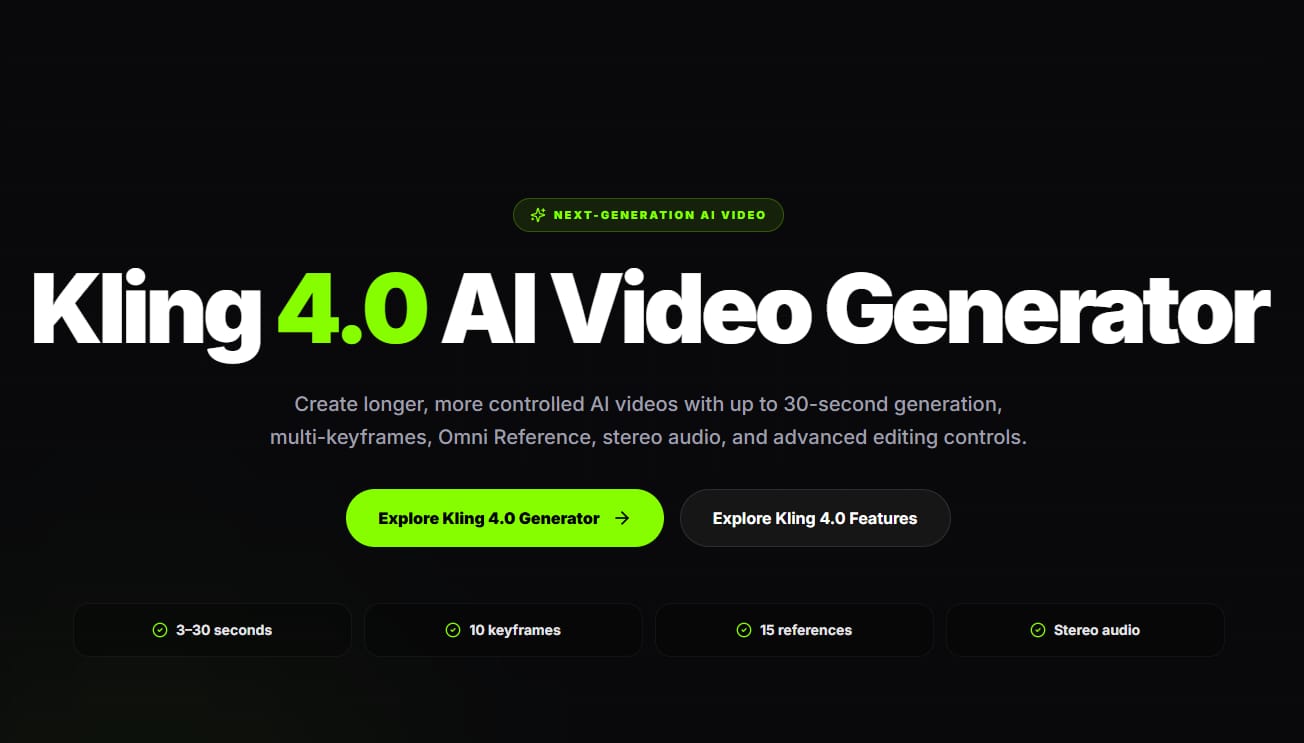
Kling 4.0 officially launched in October 2026, introducing longer video generation and more detailed reference controls.
Its announced capabilities include video generation of up to 30 seconds, up to 10 keyframe inputs, and combinations of up to 15 reference assets.
For a festive campaign, these controls may be useful when planning a transition from a wide room view to a closer product-focused composition.
The reference system can also help creators specify different aspects of a scene, such as the setting, visual style, or camera direction.
Creators exploring these workflows can review the features described on the Kling 4.0 product page, while confirming which capabilities are available through their selected service.
The important distinction is that greater generation control does not guarantee product accuracy.
A reference image can guide the model, but the generated result may still change the shape of an object, distort packaging, or introduce incorrect text.
For e-commerce teams, AI-generated material is often most useful as a creative draft, not as automatic proof of a product's real appearance or functionality.
4. A Practical Four-Day Production Plan
Small campaigns don't always need a complicated production schedule.
For a business with a limited number of products, a four-day workflow can help organize the process.
The following schedule is an illustrative plan, not a report of a completed campaign.
Day 1: Prepare the Creative Brief
Choose the featured product and define the main campaign message.
The brief should contain:
The product being promoted
The target audience
Two creative concepts
Required video formats
Approved product photographs
Verified promotional details
For a Diwali campaign, this is also the time to confirm discount terms, product availability, and delivery information.
Day 2: Create Visual Drafts
Use AI video tools to explore the setting, lighting, and intended scene movements.
Keep the initial experiments short and focused.
For example, one draft might test a slow camera movement through a festive room. Another might explore a transition from gift packaging to a product reveal.
The purpose is to select a creative direction rather than produce a large collection of unrelated clips.
Day 3: Check Product Accuracy
Compare the proposed footage with real product assets.
Look carefully at:
Shape, color, and materials
Packaging and accessories
Logos and readable labels
Claims about product performance
Prices, dates, and promotional details
If the generated video misrepresents an important product detail, replace that element with verified footage or rebuild the scene using a more dependable method.
Day 4: Prepare Channel-Specific Versions
Once the content passes review, prepare versions for the intended channels.
Instagram Reels may require vertical framing and an opening that communicates the message quickly.
WhatsApp campaign videos may benefit from concise messaging and a clear destination for customers.
If the campaign uses English, Hindi, or regional-language versions, have a qualified reviewer check translations, captions, pronunciation, and cultural appropriateness.
The goal is to adapt the same accurate campaign message without creating unnecessary production work.
5. What AI Video Should Not Be Responsible For
AI-generated video can provide convincing visual environments, but it should not be the source of truth for business information.
That matters during seasonal promotions.
A generated scene should not invent a discount, display an incorrect delivery date, or suggest that a product includes accessories that are not part of the offer.
Product claims should come from verified business records.
Images of recognizable people, copyrighted materials, and third-party brand assets also require appropriate permissions before being uploaded or used.
The same principle applies to customer-facing text.
AI-generated labels and captions may contain errors. For important details such as prices, coupon codes, or offer deadlines, it is safer to add verified text during editing rather than rely entirely on generation.
These checks may seem less exciting than experimenting with camera movements, but they protect the credibility of the business.
A beautiful advertisement is not successful if it gives customers the wrong information.
6. Use AI to Make Better Production Decisions
AI video generation can make visual experimentation more accessible for small e-commerce businesses.
A team can explore whether a campaign should feel warm and personal, playful and energetic, or simple and product-focused before arranging a full production shoot.
That flexibility is valuable during busy festive seasons.
However, the strongest workflow combines creative exploration with reliable product information.
Use AI to test visual ideas. Use original assets when accuracy matters. Keep the campaign brief simple enough that everyone understands what the final video must communicate.
For a small retailer preparing a Diwali promotion, success doesn't mean generating the largest number of clips.
It means choosing a clear message, producing content that customers can trust, and getting the campaign ready without unnecessary revisions.
Sometimes the most useful AI-generated video is the draft that helps a team decide what to film for real.