Bearings play an important role in keeping industrial machinery running smoothly. From manufacturing plants to steel mills and heavy engineering facilities, bearings support rotating components and reduce friction during operation.
However, bearing failure can cause unexpected downtime, expensive repairs and production delays. In many cases, these problems develop due to poor lubrication, contamination, excessive loads or improper maintenance.
Understanding the causes of bearing failure and selecting suitable industrial lubricants can help improve equipment reliability.
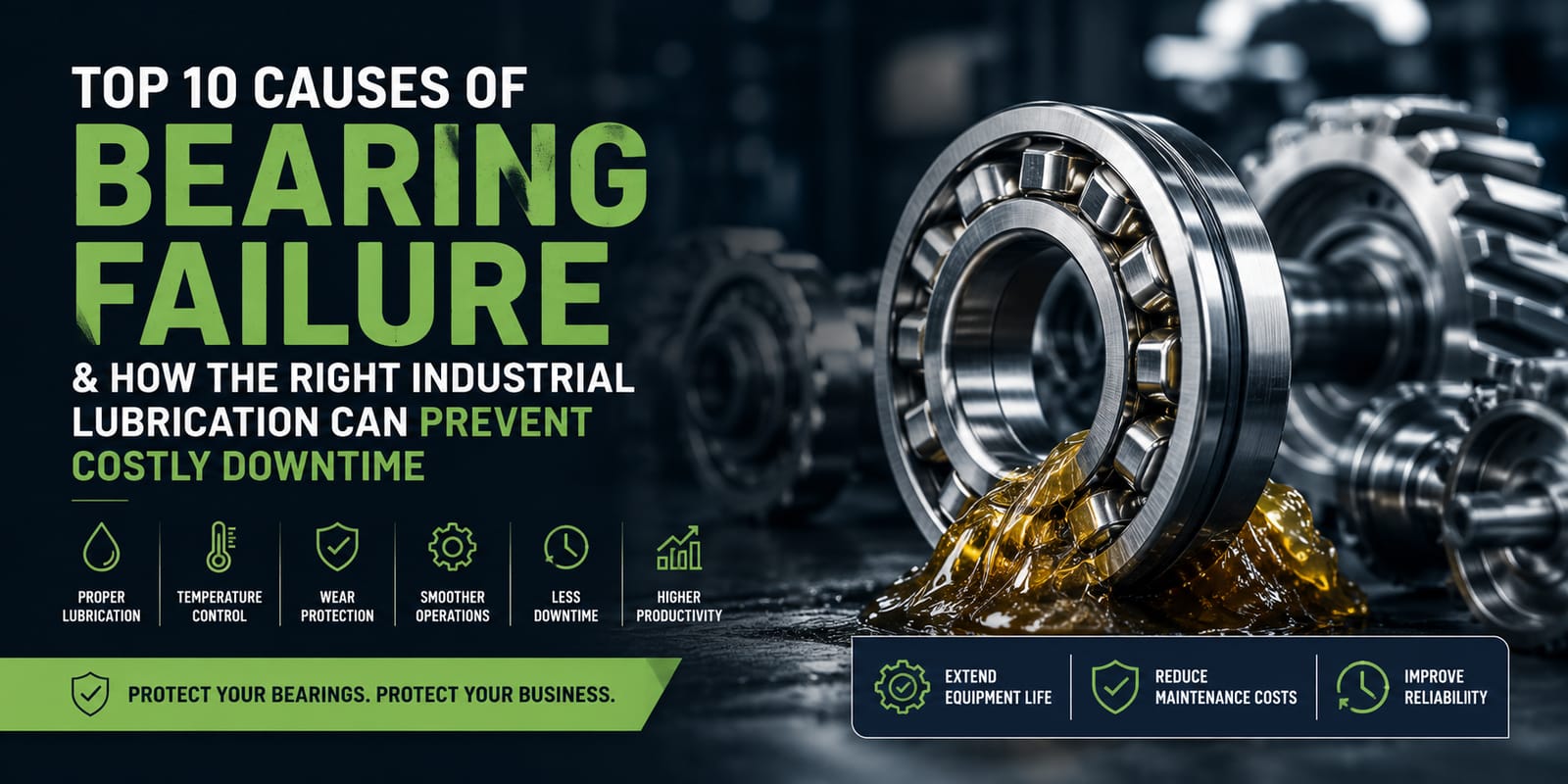
10 Common Causes of Bearing Failure
1. Inadequate Lubrication
Insufficient lubrication increases friction and heat between moving surfaces, leading to premature bearing wear.
2. Lubricant Contamination
Dust, dirt, moisture and metal particles can enter bearings and damage internal surfaces.
3. Excessive Operating Temperature
High temperatures can cause conventional lubricants to lose effectiveness, increasing the risk of mechanical damage.
4. Excessive Loads
When bearings operate beyond their designed load capacity, surface fatigue and premature failure can occur.
5. Incorrect Installation
Improper mounting techniques can damage bearing components and reduce their operating life.
6. Misalignment
Incorrect shaft alignment creates uneven pressure on bearing surfaces, increasing vibration and wear.
7. Corrosion and Moisture
Exposure to water, chemicals and humidity can lead to rust and surface deterioration.
8. Wrong Lubricant Selection
Using grease or oil that does not match the operating temperature, speed or load can accelerate bearing damage.
9. Excessive Vibration
Continuous vibration may cause surface damage, increased friction and premature bearing failure.
10. Poor Preventive Maintenance
Missed lubrication schedules and irregular inspections allow small problems to develop into major equipment failures.
How Advanced Industrial Lubricants Help Prevent Bearing Failure
Selecting the right lubrication material is an important part of bearing maintenance.
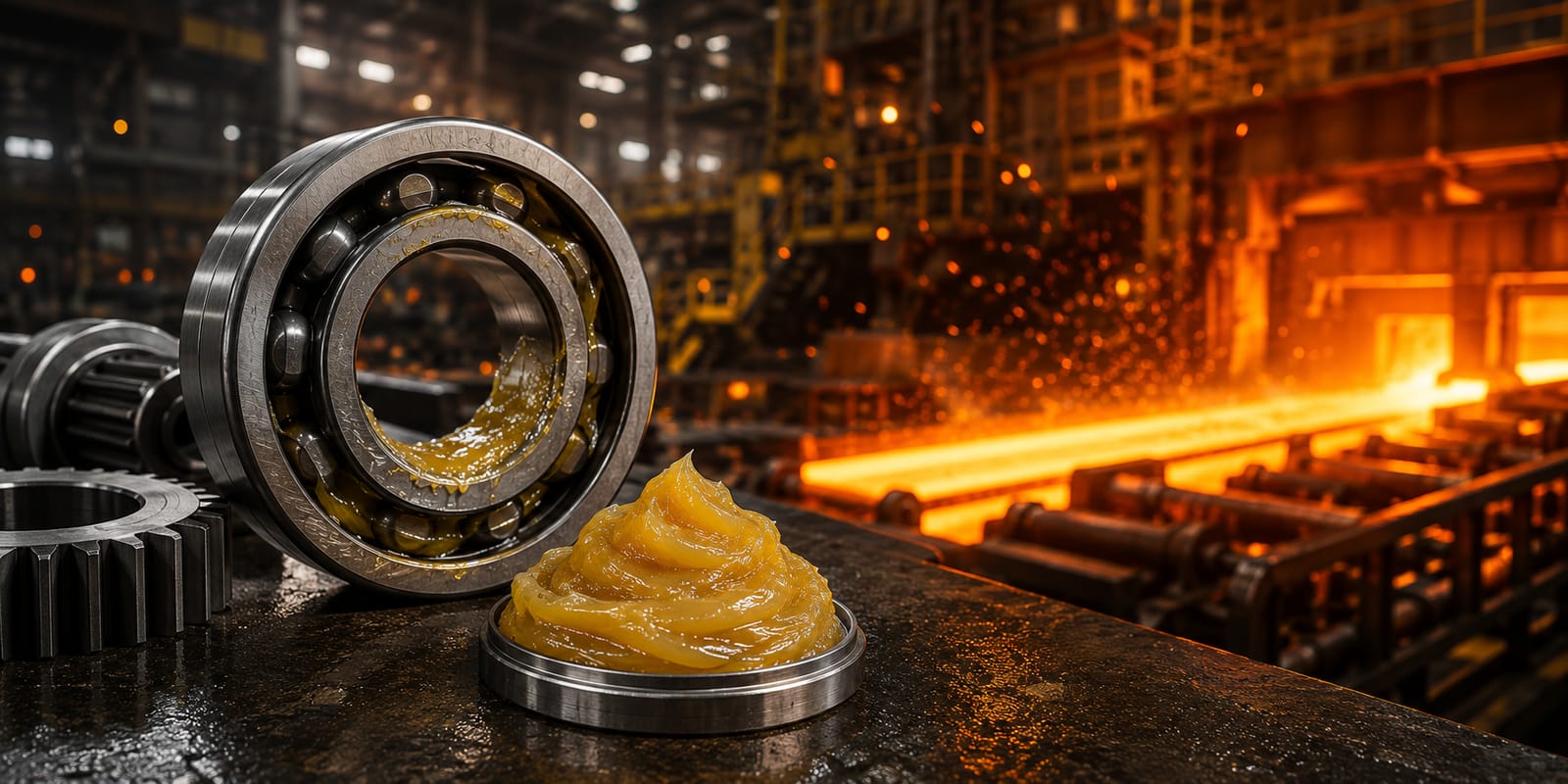
High-Temperature EP Grease is formulated for demanding operating conditions involving heat and heavy mechanical loads. Suitable grades can help protect bearings against friction and wear.
Explore High-Temperature EP Grease for industrial applications.
Molybdenum Disulfide (MoS₂) is a solid lubricant commonly used in grease formulations, coatings and heavy-duty machinery applications. Its layered structure helps reduce friction under high-load conditions.
Learn more about Molybdenum Disulfide (MoS₂) Powder.
Other specialty lubrication materials, including Tungsten Disulfide (WS₂), may also be used in selected high-performance lubricant formulations.
Simple Ways to Improve Bearing Life
Industrial maintenance teams can reduce the risk of premature bearing failure through a few practical measures:
Select lubricants suitable for operating temperature, speed and load.
Maintain proper lubrication intervals.
Protect bearings against dust and moisture.
Check shaft alignment and vibration regularly.
Follow equipment manufacturer maintenance guidelines.
Monitor bearing temperature and unusual operating noise.
Good lubrication works best when combined with correct installation, suitable seals and regular equipment inspections.
Jade Chemicals: Industrial Lubrication Solutions in India
Jade Chemicals, based in Bengaluru, India, supplies specialty lubrication materials for industrial machinery, manufacturing and engineering applications.
Its product range includes high-temperature EP grease, MoS₂ powder, WS₂ powder, hBN materials, dry lubricants and industrial anti-friction sprays.
Choosing the correct lubrication product can help industries manage friction, reduce wear and maintain reliable machinery performance.
Explore industrial lubrication products from Jade Chemicals to learn more about suitable solutions for demanding operating conditions.